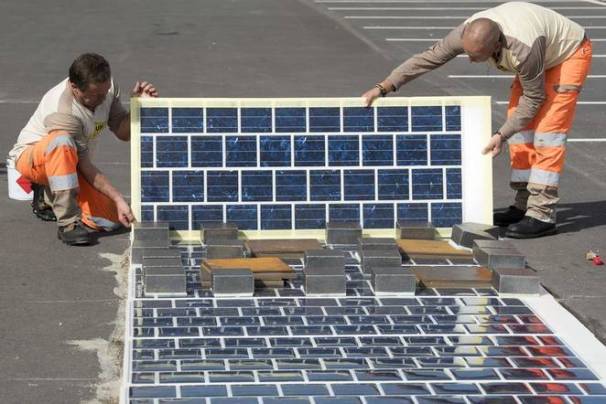
Wattway panels (treehugger.com)
What do you imagine when you think of a sunny road? Probably not anything resembling a landscape as literally solar as what you would find northwest of Amsterdam in the town of Krommenie, or soon enough in France.
Wattway panels (treehugger.com)
What do you imagine when you think of a sunny road? Probably not anything resembling a landscape as literally solar as what you would find northwest of Amsterdam in the town of Krommenie, or soon enough in France.
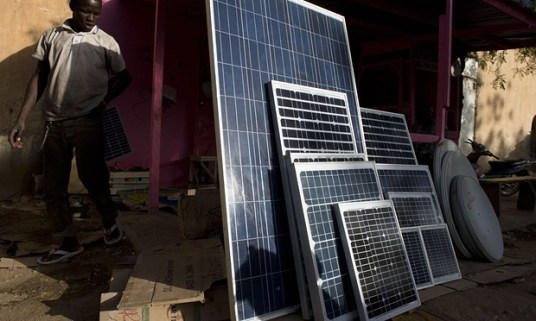
In addition to the successful planting of millions of trees and bushes in parts of Tigray, Ethiopia, and elsewhere in Africa as part of the African Forest Landscape Restoration Initiative (AFR100), the announcement of another ambitious initiative by several African countries during the United Nations’ summit of climate change in Paris could spearhead the continent to becoming the world’s cleanest in the following decades.
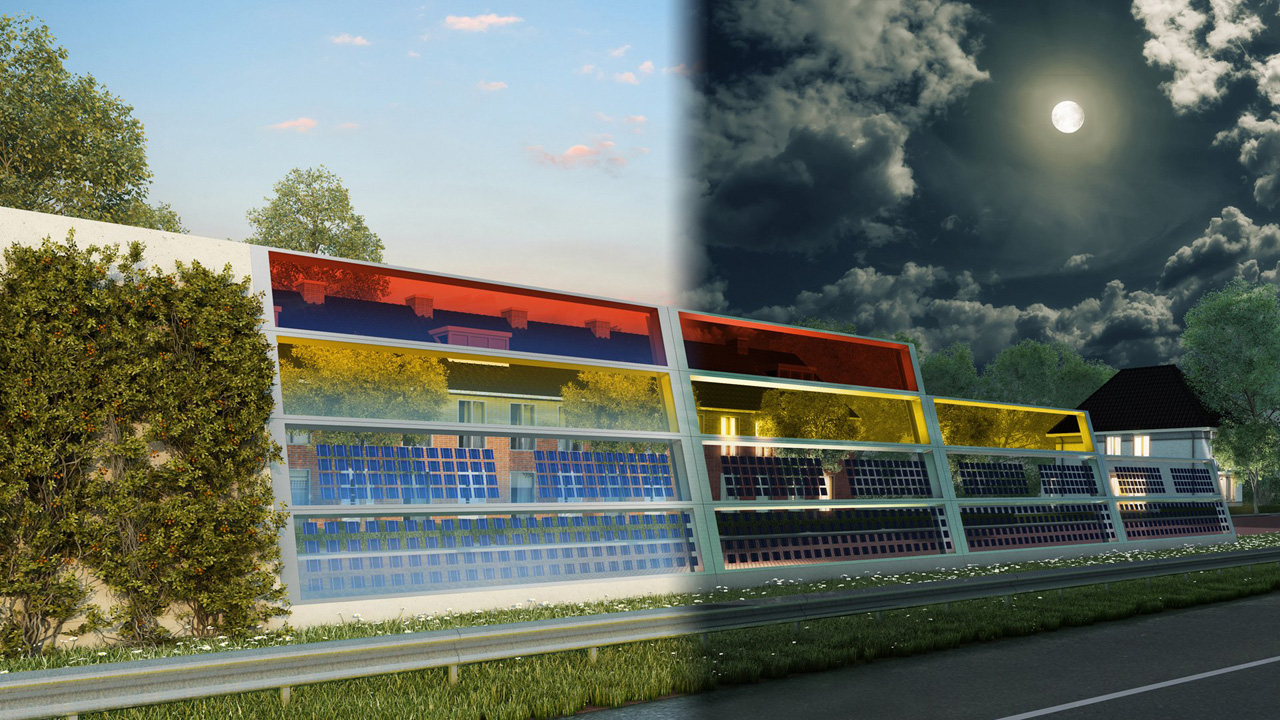
These beautiful, translucent barriers quiet traffic—and generate power at the same time
Driving the Dutch highways just got a lot more colorful. And this has to be one of the best Dutch ideas yet—roadside noise barriers that also generate solar power. Not only that, they work on cloudy days, and one kilometer (0.62 miles) provides enough electricity to power 50 homes. Continue reading

These solar “Palm Trees” in Dubai will charge phones at parks and beaches
Look at what’s installed and ready-for-use in Dubai this summer: “Smart palms” that store solar energy during the day and discharge power at night. Smart Palm, the company, has set up two so far—one on Surf Beach, another in a park near the waterfront. It plans to plant them in 103 locations under a contract with the United Arab Emirates city.
After the earthquake in Japan earlier this year, critics of nuclear energy are clamoring for the retreat to the ‘safe’ and ‘reliable’ fossil fuels so commonplace of this age – the fossil fuels which are rapidly depleting due to the glut and the delusion of surplus of today’s culture. Not enough critics of the world’s energy policies are on what we at Raxa Collective consider to be the ‘right side’ of the argument – the one keeping the environment clean and safe. Nuclear energy is perhaps cleaner than burning fossil fuels for electricity, but even the slim chances of a catastrophe like Japan’s are enough to sell the public back to the gas-guzzling camp. But who is fighting for the third choice? The safe, the clean, the green – wind and solar power, the still-in-development responsible option

for civic-minded citizens wanting to lower their carbon footprint.
As explained in the link above, Japan’s Kyushu University is currently researching the most efficient form of harnessing wind power, and is developing a simple and cost-effective solution to the problems posed by the widely used ‘tri-blade” wind turbines of today. The main issue at hand is that the common turbine’s blades are too heavy (which is the case because lightweight materials are too weak), and more wind energy is necessary to spin the turbine, producing less energy than the potential. Kyushu University’s solution? The Wind Lens – a simple but ingenious addition to either existing or modified turbine designs which can double (or even triple) the energy output of the devices. The mechanism, in essence a ring around the turbine’s blades, acts in respect to wind much the same way a magnifying glass does to light – it takes the existing wind power, and thanks to the physics of pressure, concentrates the energy in such a way that the wind is forced through the tunnel at a significantly increased speed, resulting in a great increase in energy output. Environmentalists, intellectuals, and a few key organizations. Also, the Japanese. Continue reading
 Organikos