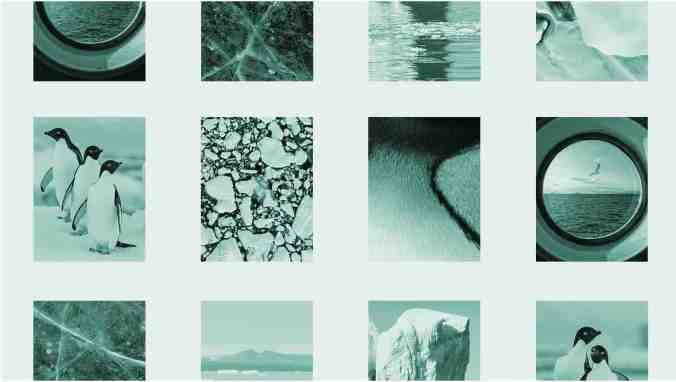
Antarctica Off The Bucket List

Illustration by The Atlantic. Source: Getty.

During my two years working in southern Chile I was close several times to going further south. In spite of my disappointment at the time, in hindsight I am fine with not having made the journey. Thank you, Sara Clemence, for getting that clear in my head:

Take Antarctica off your travel bucket list.

On the southernmost continent, you can see enormous stretches of wind-sculpted ice that seem carved from marble, and others that are smooth and green as emerald. You can see icebergs, whales, emperor penguins. Visitors have described the place as otherworldly, magical, and majestic. The light, Jon Krakauer has said, is so ravishing, “you get drugged by it.”

Travelers are drawn to Antarctica for what they can find there—the wildlife, the scenery, the sense of adventure—and for what they can’t: cars, buildings, cell towers. They talk about the overwhelming silence. The Norwegian explorer Erling Kagge called it “the quietest place I have ever been.” Continue reading
Thwaites & Us

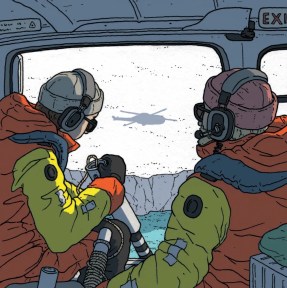
Probes beneath the ice could shed light on the fate of the world’s coastlines. Illustration by Owen D. Pomery

Most of us do not spend much time thinking about what is happening there, but Antarctica’s future is now very much entwined with the future of the rest of the planet.  All of us. So, thanks to David W. Brown for this travelogue:

Journey to the Doomsday Glacier

Thwaites could reshape the world’s coastlines. But how do you study one of the world’s most inaccessible places?

I first saw our icebreaker, the RV Araon, when we were due to leave for Antarctica. The largest icebreakers are more than five hundred feet long, but the Araon was only the length of a football field; I wondered how it would handle the waves of the Southern Ocean, and how it would fare against the thick sea ice that guards the last wilderness on Earth. Continue reading

Under The Southern Ice

Antarctica has not featured in these pages as much as tropical places, where we mostly work. The closest my work has come to Antarctica was between 2008-2010 when I worked with entrepreneurs in the Magallanes region of Chile, which includes Antarctica. Even then, the portions of my work in Tierra del Fuego were still 600+ miles from the northern most point of the Antarctic Peninsula. By contrast my work in Yakutia took me within the Arctic Circle. But in both places my work was always above ground, and never brought me close to the scientists working below ice shelves. So, thanks to Mother Jones for this:

Antarctic Stunner: Mysterious Creatures Discovered Under a Half Mile of Ice

Scientists taking sediment samples found animals nobody thought could survive there.

Bivouacked in the middle of the Filchner-Ronne Ice Shelf—a five-hour flight from the nearest Antarctic station—nothing comes easy. Even though it was the southern summer, geologist James Smith of the British Antarctic Survey endured nearly three months of freezing temperatures, sleeping in a tent, and eating dehydrated food. The science itself was a hassle: To study the history of the floating shelf, he needed seafloor sediment, which was locked under a half mile of ice. Continue reading

A World Apart*

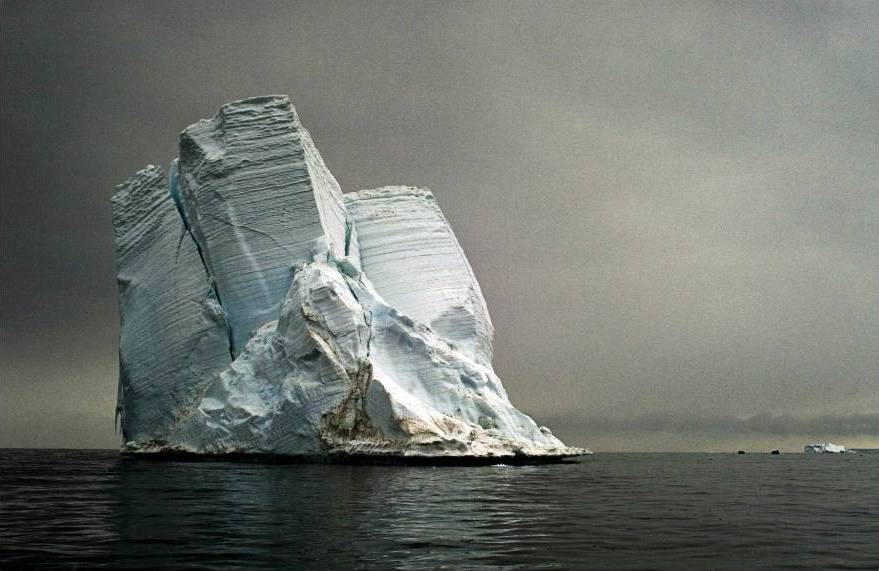
Stranded Iceberg III, Cape Bird Antarctica, December 2006, Camille Seaman

2011 TED fellow Camille Seaman has been photographing Icebergs for 10 years.  In her talk below she speaks of her first visceral response to their immensity and their fragility.  Her images tell the stories of their births, as they face their environments as distinct individuals, and poignantly of their deaths, as they each move toward their inevitable end. Continue reading