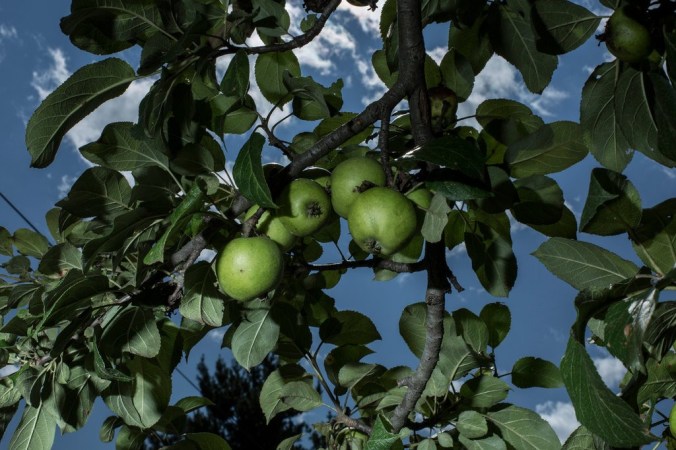
The Harrison apple tree that Thomas Vilardi found near Newark in the fall of 2015. “I knew I had seen apples on a tree,” he said. “I wasn’t expecting to find a Harrison.” Credit Bryan Anselm for The New York Times
Thanks for this article to Rachel Wharton, who is batting 1000 for our taste in food writing:
George Washington was among the many fans of Newark cider, a long-missing treat now being recreated by a former ad man on a mission.
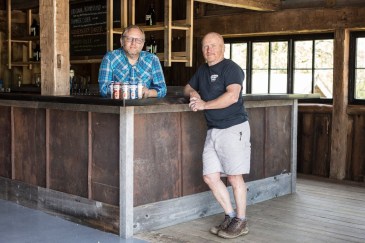
Charles Rosen, left, and Cameron Stark in the new taproom they opened last week at Ironbound Hard Cider in Asbury, N.J. It will serve limited-edition ciders made by Mr. Stark, the head cider maker.CreditBryan Anselm for The New York Times
ASBURY, N.J. — Ironbound Hard Cider may seem an odd name for the business Charles Rosen has built here on 108 acres in central New Jersey. The farm, where a new taproom offers pastoral views of the still-ripening fruit, doesn’t appear to share much with the Ironbound, an industrial neighborhood 50 miles to the east in Newark.
Yet they do have common roots, thanks to four very old apple varieties now growing on Mr. Rosen’s land.
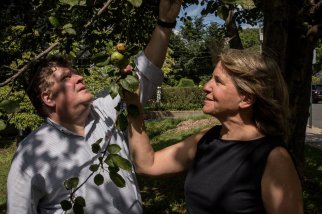
Mr. Vilardi and Fran McManus at the old apple tree he found three years ago. An apple expert connected him to Ms. McManus, who had written an article about Newark cider in 2010. Credit Bryan Anselm for The New York Times
Mr. Rosen, the former chief executive of a Manhattan advertising agency that promoted Svedka vodka and Mike’s Hard Lemonade, wants to reintroduce Newark cider, an 18th- and 19th-century alcoholic drink once famously compared to Champagne.
Newark cider was both a point of pride and big business for the region — requested by name, reportedly lauded by George Washington and produced by dozens of Newark-area cideries with acres of orchards. The secret wasn’t a recipe, but the blending of a quartet of superior apples born in the region: Campfield, Poveshon, Granniwinkle and Harrison, the most celebrated of the four.
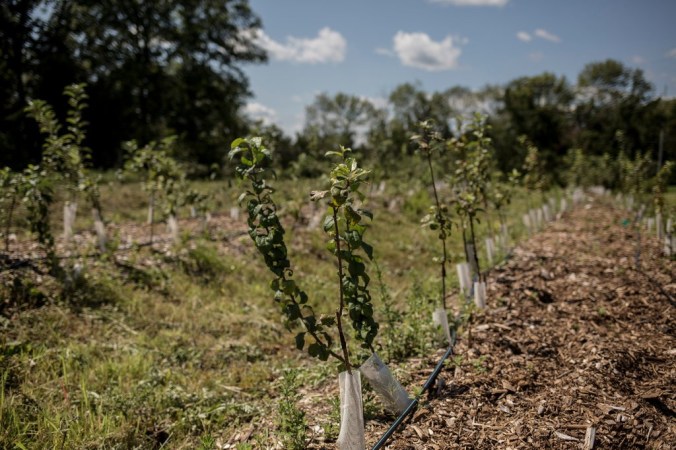
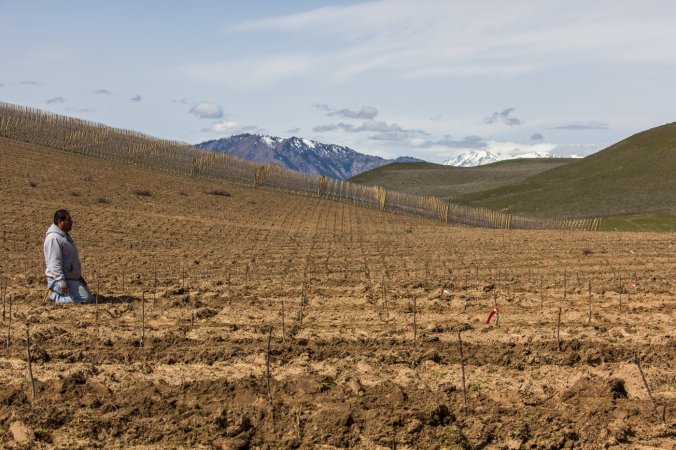
The 1- and 2-year-old apple trees in Ironbound Hard Cider’s nursery include the Harrisons shown here and Poveshons, a New Jersey-born variety thought to be extinct until 2015. Credit Bryan Anselm for The New York Times
As a result of urbanization and then Prohibition, when many of the nation’s remaining cider orchards were destroyed, Newark cider hasn’t been made for at least a century. But after years of planning and planting — not to mention the accidental discovery of two lost apple trees and the investment of what Mr. Rosen called “100 percent of all the money I ever had in my entire life” — Ironbound Hard Cider is on the precipice of bringing it back. Continue reading →

 Organikos