The Arctic Struggles

p043qgl8

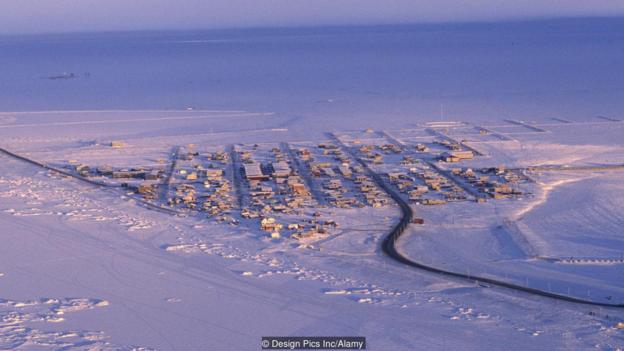
Barrow, Alaska. All photos from: BBC Earth

There is plenty of news on the alarming reduction of polar ice caps and the detrimental effect it has on polar bear populations. However, there is another, hidden problem that is hurting a different community just as much as these giant bears, and it is affecting the humans living in the northernmost town in the United States: Barrow, Alaska.

The big unspoken worry in the north is that large deposits of chemical pollutants are trapped within the ice.

For decades that was not a problem. But now rising temperatures are causing the ice to melt faster than ever. The area of summer sea ice has shrunk by 10% per decade since 1979, and in May 2016 the ice extent was the smallest in 38 years.

That means trapped chemicals like polychlorinated biphenyls (PCBs) are escaping and infecting animals like seals, the prey of choice for everything from polar bears to people.

Many of these chemicals have been banned for decades. They have been confined deep in the ice all this time and are perfectly preserved, like the sap-stuck mosquitos in Jurassic Park.

A study published in 2015 followed subsistence hunts from 1987 to 2007 and found significant amounts of PCBs in the internal organs and blubber of locally-harvested seals. The researchers concluded that, while levels of older banned contaminants are dropping, modern pollutants are rising.

That is problematic, because native Alaskans’ diets are largely comprised of seal.
Continue reading

More Good Fishery News in Arctic

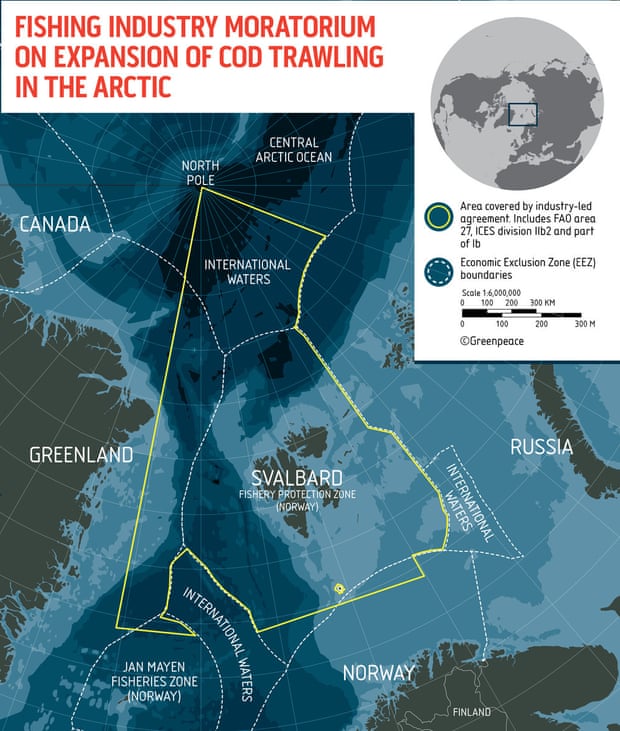
Map of the area of northern Barents Sea including the waters around Svalbard where some of the world’s largest seafood and fishing companies have committed not to expand their search for cod into. Photograph: Greenpeace

We read yesterday about countries agreeing to stand against piracy in fishing, which is great, and The Guardian is continuing its optimistic reporting by sharing news on leading seafood-consuming companies have decided to source from industrial fisheries that don’t target a particularly pristine Arctic region. Jessica Aldred reports:

Fishermen and seafood suppliers struck a major deal on Wednesday that will protect a key Arctic region from industrial fishing for cod.

Companies including McDonald’s, Tesco, Birds Eye, Europe’s largest frozen fish processor, Espersen, Russian group Karat, and Fiskebåt, which represents the entire Norwegian oceangoing fishing fleet, have said their suppliers will refrain from expanding their cod fisheries further into pristine Arctic waters.

“From the 2016 season the catching sector will not expand their cod fishing activities with trawl gear into those areas where regular fishing has not taken place before,” the deal reads.

Continue reading

What Warm Temperatures in the Sub-Arctic Mean

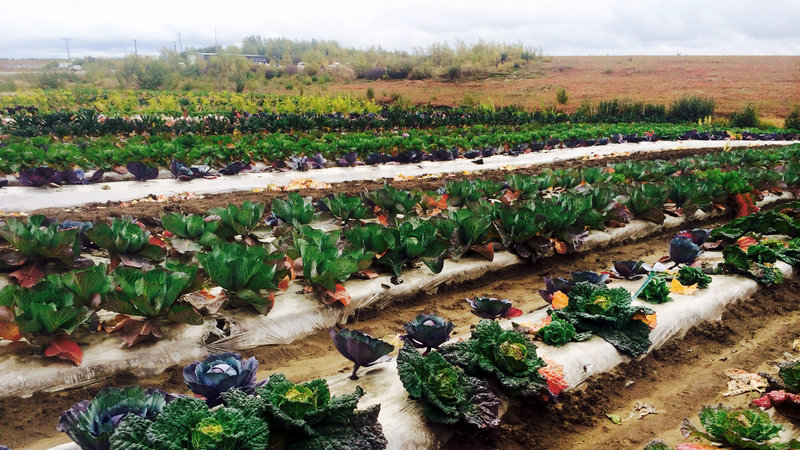
A field near harvest time at Meyers Farm in Bethel, Alaska, can now grow crops like cabbage outside in the ground, due to rising temperatures. PHOTO: Daysha Eaton/KYUK

A field near harvest time at Meyers Farm in Bethel, Alaska, can now grow crops like cabbage outside in the ground, due to rising temperatures. PHOTO: Daysha Eaton/KYUK

Farming in the Arctic? Well, it can be done. The reasons are many. For one, the climate is changing: Arctic temperatures over the past 100 years have increased at almost twice the global average.

On a misty fjord in Greenland, just miles from the planet’s second largest body of ice, Sten Pedersen is growing strawberries. Yellowknife, a Canadian city 320 miles below the Arctic Circle, hosted a farmers market this summer. And a greenhouse in Iqaluit, the capital of the vast Canadian Inuit territory of Nunavut, is producing spinach, kale, peppers and tomatoes. The frozen tundra of the Arctic is experiencing something of an agriculture boom. More

Continue reading

Opening the Arctic Vault

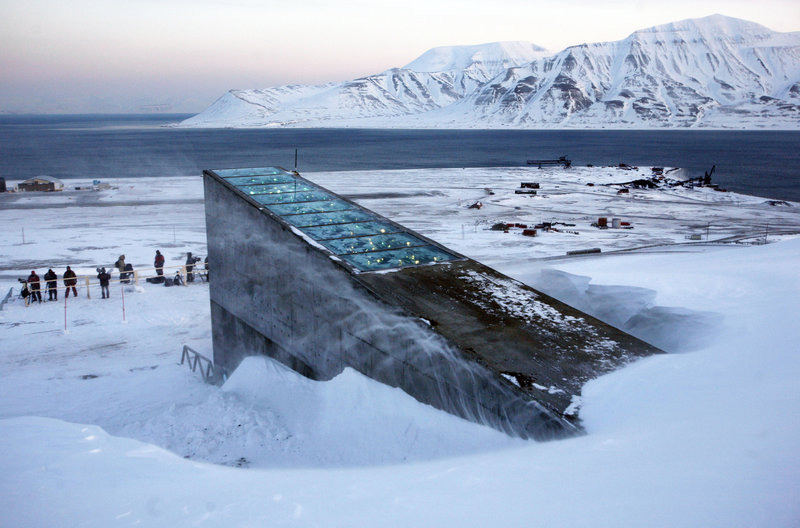
The Svalbard Global Seed Vault was inaugurated in 2008. The "doomsday vault" lies inside an Arctic mountain in the remote Norwegian archipelago of Svalbard. For the first time, scientists are taking some seeds out. PHOTO: John McConnico/AP

The Svalbard Global Seed Vault was inaugurated in 2008. The “doomsday vault” lies inside an Arctic mountain in the remote Norwegian archipelago of Svalbard. For the first time, scientists are taking some seeds out. PHOTO: John McConnico/AP

The ongoing civil war in Syria has led to the first-ever withdrawal from the Svalbard “doomsday” Global Seed Vault, a giant storage unit for plant seeds that’s tucked into the side of a frigid mountain in Norway. In the seven years since the Vault opened, hundreds of thousands of seed samples have gone into its icy tombs. And not one has come out—until now. This week the International Center for Agricultural Research in Dry Areas asked for the return of 325 little black boxes of seeds it had stored in the Svalbard vault. For many years, the center housed its own seed bank near Aleppo, Syria. Now, its scientists hope to use the Svalbard samples to regenerate that collection outside of their war-torn home.

Continue reading