Ring of Fire

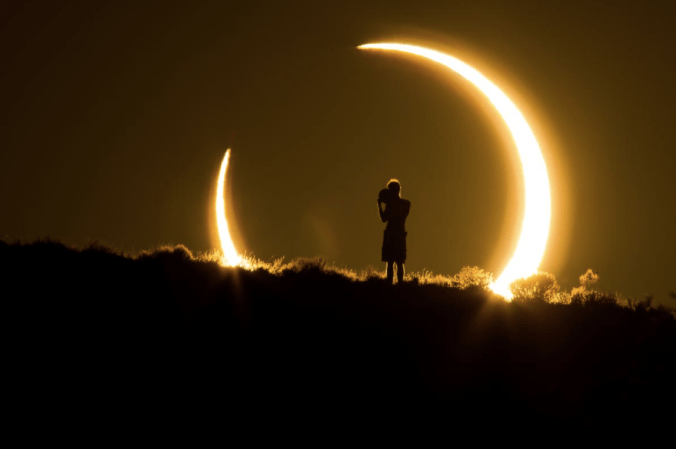
An onlooker watches an annular solar eclipse from New Mexico.

For the past few years it seems that August is the month to amaze and astonish on the astronomical front. Although the Perseid Meteor Shower happens annually, last year there were an unusually high number of meteor “outbursts” because Jupiter’s gravity has tugged some streams of comet material closer to Earth.

While solar eclipses aren’t technically rare, an annular solar eclipse is more so, when the moon is too far from Earth to obscure the sun completely, leaving the sun’s edges exposed and producing the ‘ring of fire’ effect. What’s particularly special about the upcoming August 21st eclipse is the path from which it can be viewed.

The August eclipse will be the first to go coast to coast across the U.S. since 1918, offering viewing opportunities for millions of people.

Sky-watchers across the United States are gearing up for the best cosmic spectacle in nearly a century, when a total solar eclipse will race over the entire country for the first time since 1918. On August 21, tens of millions of lucky people will be able to watch the moon completely cover the sun and turn day into night for a few fleeting minutes.

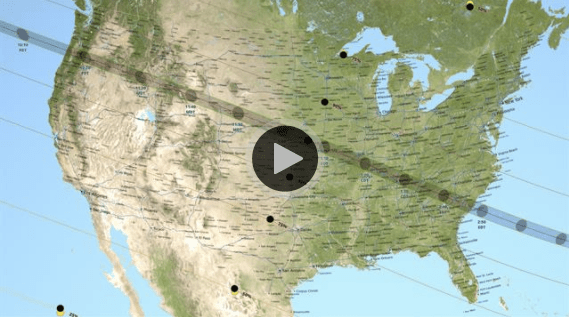
The main event will be visible from a relatively narrow path, starting in Oregon and ending in South Carolina. In between, the total eclipse will cross multiple cities in 12 states, prompting plans for countless watch parties, cosmic-themed tours, and scientific observations. (Also see “100 Years of Eclipse-Chasing Revealed in Quirky Pictures.”)

Click on the image above to FOLLOW THE ECLIPSE ON ITS COAST-TO-COAST TOUR
Continue reading

Lapham’s Quarterly, Now On Soundcloud As A Podcast

ship2

IMAGE: Discovery En Route to Antarctica (detail), by Vincent Alexander Booth, 2014. © Private Collection / Bridgeman Images.

Lewis Lapham has shown up in our pages here exactly once in the past. Mainly because, in the six years we have been posting on this platform, his own publication was not as accessible as others we have been linking to. Surely there was a purpose to the walls constructed around it, but we are happy that, for whatever reason, they have come down. Just the illustration above and the quotations below should make you want  to read more:

Evolution has arranged that we take pleasure in understanding—those who understand are more likely to survive.
—Carl Sagan

I’m sorry I know so little; I’m sorry we all know so little. But that’s kind of the fun, isn’t it?
—Vera Rubin

Lapham

We sample the opening two paragraphs after the jump below, and recommend savoring his writing, but we also have been on the podcast bandwagon since we started on this platform. If you have already been enjoying Lewis Lapham’s publication, and wishing it were available in an audible format, today is your lucky day (click the soundcloud banner here to listen). Continue reading

For Lunar Phenomena, Tonight’s The Night Of A Lifetime

12supermoon-super-superjumbo

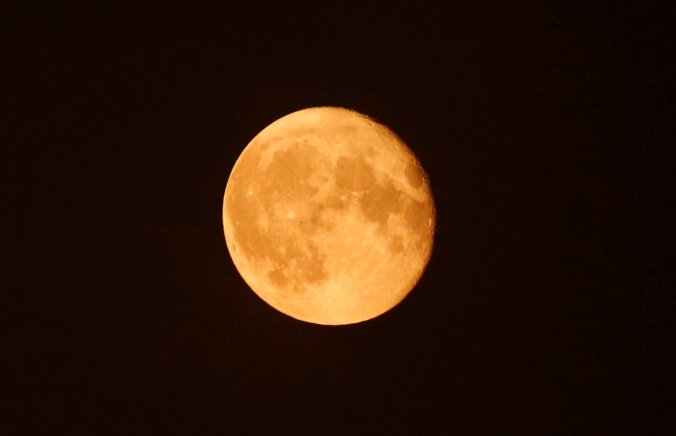
A supermoon seen above Cairo in October. Credit Amr Abdallah Dalsh/Reuters

Thanks to the New York Times for this reminder:

The Supermoon and Other Moons That Are Super in Their Own Ways

By NICHOLAS ST. FLEUR

Shrug off the supermoon.

Yes, it’s true that on Sunday and Monday nights the full moon will be at its closest to Earth in nearly 70 years. But to the casual observer, it probably won’t look much different from a regular full moon. Yet headlines heralding the event as some sort of don’t-miss spectacle are everywhere. Continue reading

Strawberry Moon

04a

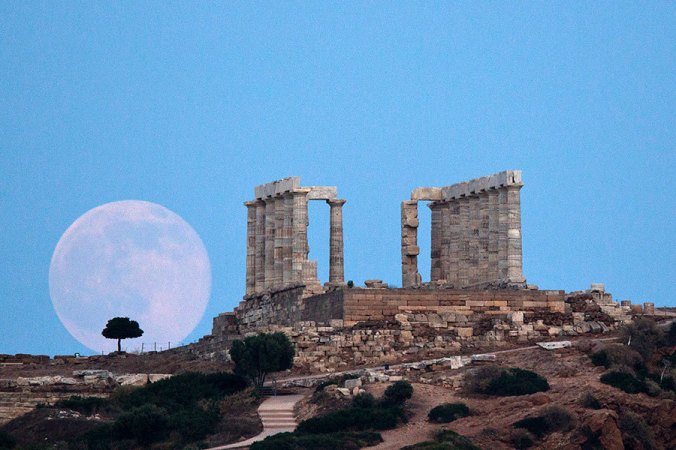
The full moon rises behind a tree next to the ancient marble Temple of Poseidon at Cape Sounion, southeast of Athens, on the eve of the summer solstice on Monday. The temple, built in 444 BC, was dedicated to Poseidon, god of the sea. Petros Giannakouris/AP

Thanks to the CS Monitor for bringing this image to our attention in their “Photos of the day” series, which are always worth a visit.  The moon, we have been reading in the Monitor and various other news outlets, is a variety that occurs every 46 years. Wishing we might have seen it where Mr. Giannakouris saw it, but by the time we learned about this phenomenon it was already time for morning coffee in Kerala.

PhotoSingularities: Eclipse

This year, the earliest hours of April 15 provided a somberly luminescent spectacle in the sky for viewers in North America. To the naked eye, a round dark shadow grew imperceivably across the face of the moon, within hours consuming the lunar glow entirely. Just as slowly, the shadow passed, the bright crest of the familiar full moon growing back into the dawn. The phenomenon witnessed was a lunar eclipse – one of four such that our satellite will experience in this year.

15/4/14

While not as rare or shockingly magnificent as the total solar eclipse, total lunar eclipses offer a very special view of our place in the solar system. The strange red shadow that creeps across the bright white moon is that of our own planet – the earth briefly passes between the sun’s line of sight of the moon, cutting off the solar light that is usually reflected so strongly by our closest companion. While lunar eclipses are frequent occurences, total lunar eclipses are less common, as the entire moon falls into the earth’s shadow, rather than any portion. Continue reading