Beware Of “This Is Big” & Other Snappy Catchphrases

https://youtu.be/0ytOnwTqwF0

The Miniature Science series of ads, created last year by the very talented folks at BBDO on behalf of their client ExxonMobil, are snappy.

https://youtu.be/vZdAShbHMHI

By now most people who pay attention to climate science are aware of ExxonMobil’s active role in creating doubt about the emerging facts that their own scientists established about mankind’s impact on climate. In addition to actors like that giant petrochemical company, there are also behind-the-scenes, complicit creatives who have provided essential messaging to strengthen the deception. In a new essay, Bill McKibben turns his attention to those folks, and expects accountability:

If money is the oxygen on which the fire of global warming burns, then P.R. campaigns and snappy catchphrases are the kindling. Illustration by Lia Liao

When “Creatives” Turn Destructive: Image-Makers and the Climate Crisis

Past sins are past no more: an overdue historical recalibration is under way, with monuments being pulled down, dorms renamed, restitution offered. People did things, bad things; even across the span of centuries, they’re being held to account, and there’s something noble about that. The Reverend Robert W. Lee IV, for instance, recently backed the removal of his famous ancestor’s statue from Richmond, Virginia. The memorial, he wrote, “is a hollow reminder of a painful ideology and acts of oppression against black people. Taking it down will provide new opportunities for conversations, relationships and policy change.” Such a response raises an uncomfortable question: What are we doing now that our descendants will need to apologize for? Might we be able to get ahead of the sin this time? Continue reading

Reanimating Coffee

fuel-gauge-coffee-mugConsidering the coffee farming and roasting operation, not to mention all the coffee served at Chan Chich Lodge; also considering the constant search for new options relevant to ecologically sensitive operations, this catches our attention. Thanks to Anthropocene and Prachi Patel:

A simpler route to biodiesel from used coffee grounds

The world produces almost 10 million tons of waste coffee grounds every year. Researchers have now discovered an efficient way to turn that waste into a green fuel. Their simple one-step process, outlined in the Journal of Environmental Chemical Engineering, would save time and the cost of producing biodiesels from coffee. Continue reading

Biofuels: Worse than Petroleum-based?

Image via thehindubusinessline.com

Image via thehindubusinessline.com

A few years ago, I wrote about two cases of industrialized biofuel production, based on corn and sugarcane in the US and Brazil, respectively. Both of these sources are first-generation biofuels, and there is no doubt that second- and third-generation sources, which often don’t require land conversion or threaten food security, are better alternatives to petroleum-based fuels. A new study funded by the American Petroleum Institute and carried out by the University of Michigan Energy Institute has created headlines declaring biofuels to be non-carbon neutral, but many find the research to be too limited. Prachi Patel reports:

Biofuels have for years divided energy experts and environmentalists. Critics say that they displace farmland and cause deforestation. Proponents argue they are a green, low-carbon alternative to petroleum-based fuels.

A new analysis adds fuel to the incendiary topic. Researchers report in the journal Climatic Change that biofuels might harm the climate more than petroleum. Substituting petroleum fuels with biofuels in American vehicles has led to an increase in net carbon dioxide emissions over the eight years covered by their study, they calculate.

Continue reading

News(Paper) Power

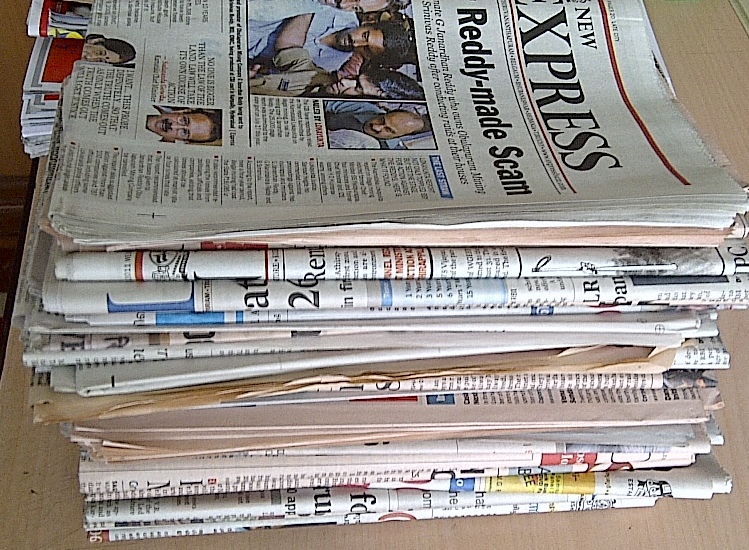
Despite the now ubiquitous use of the internet to follow both local and world news, newspapers continue to exist for many people as their daily connection to current events.  In many countries that’s not their only use of course.  We’ve written about the recycling initiatives of newspaper bags and baskets, as well as their use as wrappers and packaging in markets around the world.  But used for fueling our cars?  Now that’s news!

Tulane University associate professor of cell and molecular biology Dr. Mullin and his team have just applied for a patent for a method to produce the biofuel butanol from organic material.  Continue reading