Climate Change As Understood By Helen Czerski’s Macro Physics

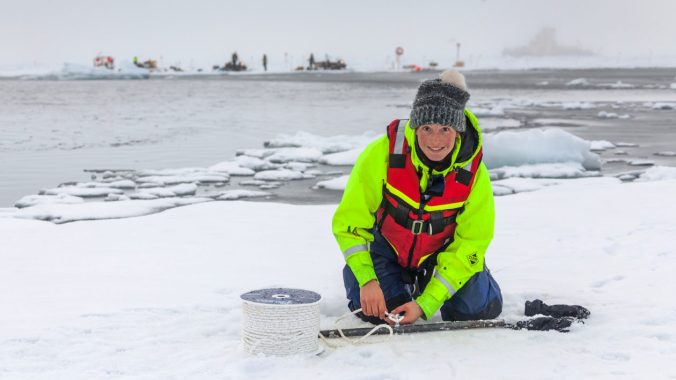
Helen Czerski on a 2018 ocean research expedition to the North Pole. MARIO HOPPMANN

We non-scientists have learned much from the scientists who study climate change, and surprises keep coming, this one from physicist Helen Czerski:

The Pacific Ocean, as seen from space. NASA

The Planet’s Big Blue Machine: Why the Ocean Engine Matters

The ocean is an enormous engine, turning heat energy into motion, says physicist Helen Czerski. But human activity is threatening that machine — depriving the seas of oxygen, increasing stratification, and potentially changing the currents that influence global weather.

Photographs of Earth taken by astronauts in space more than half a century ago revealed a blue planet dominated by oceans and billowing with clouds. Continue reading
Blue Carbon Collaboration

Scientists fixed bio-logger tags equipped with cameras on tiger sharks in the Bahamas to map the ocean’s seagrass meadows. Photograph: Diego Camejo/Beneath the Waves

We thank Laura Paddison for this underwater news, published in the Guardian, that has implication for climate change mitigation:

Scientists discover ‘world’s largest’ seagrass forest – by strapping cameras to sharks

New study, carried out using tiger sharks in the Bahamas, extends total known global seagrass coverage by more than 40%

Tiger sharks are notoriously fierce. The huge animals, which can grow to more than 16ft, are ruthless predators and scared of absolutely nothing – recent research found that while other shark species fled coastal waters during strong storms, tiger sharks “didn’t even flinch”.

But recently they have a new role that could help burnish their reputations: marine scientists. Continue reading

Colombia’s Blue Carbon Initiatives

Thanks to YaleE360 for this brief explanatory note on Blue Carbon Projects from a Colombian perspective:

New Approach to Blue Carbon Projects Underway in Colombia

A mangrove preservation project along Colombia’s Caribbean coast is using a more comprehensive method to calculate how much carbon is stored in coastal and marine ecosystems, potentially boosting global efforts to conserve so-called blue carbon. Continue reading