Wild Periyar – Mud Puddling (Butterflies)

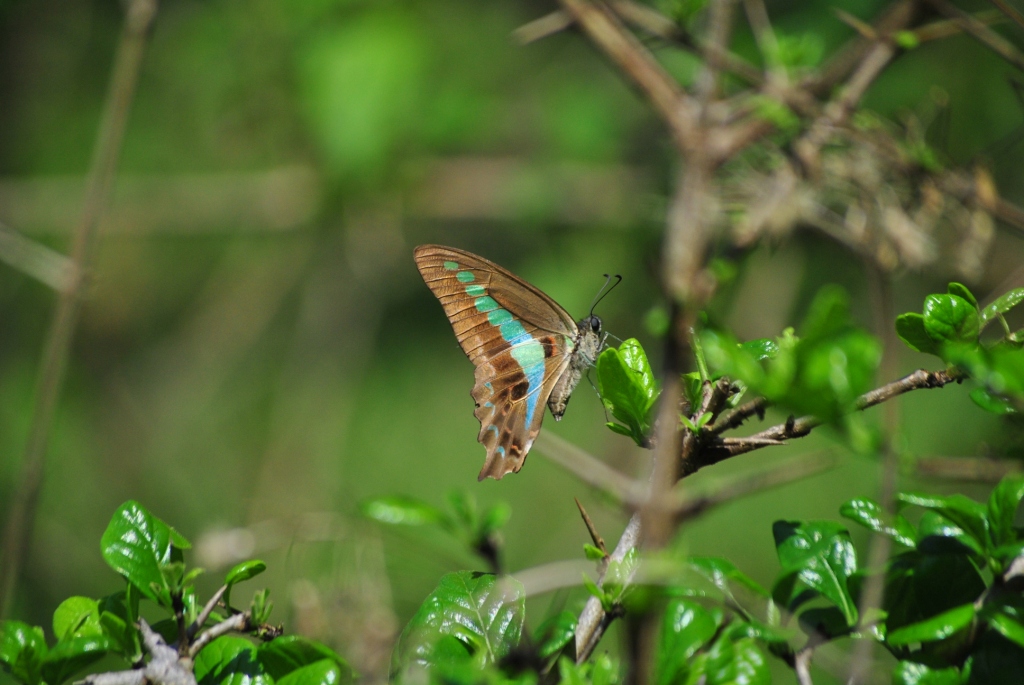
Common Blue Bottle; Graphium sarpedon

Mud puddling is a social insect activity usually involving newly hatched males where several butterflies of one or more species gather on moist banks of sand or mud. Mud puddling butterflies often spend a long time on these damp patches, where they suck salts along with water to obtain nutrients. Continue reading

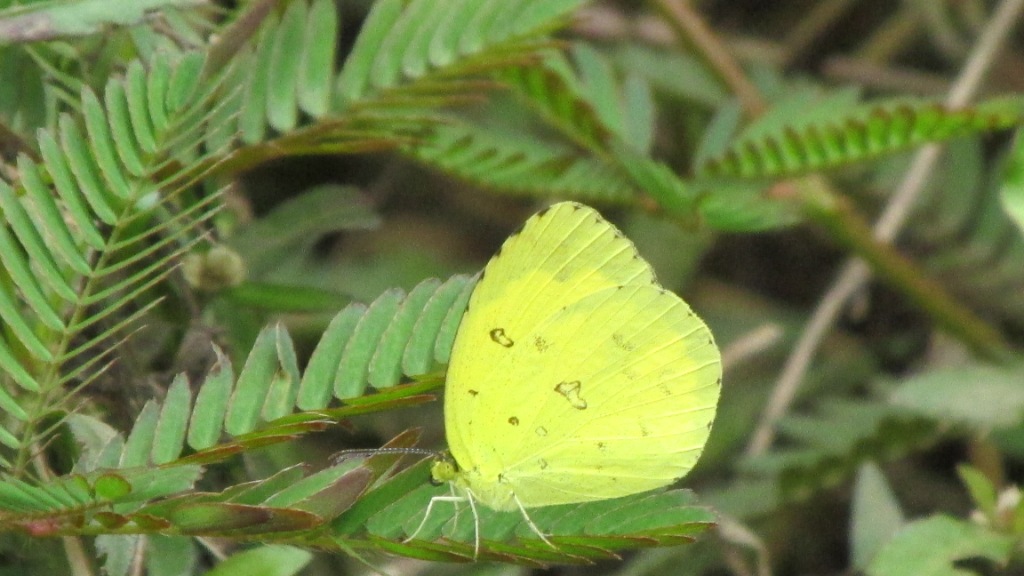
Common Grass Yellow (Eurema hecabe)

The Common Grass Yellow butterfly is one of the most common and abundant butterflies in India recognizable by its bright lemon yellow wings with black bordering on the upper side and brown markings on the lower side. The females are larger than males. These butterflies are found flying close to the ground along grassy patches.Cassia fistula, Cassia lora, Albizzia, Cassia alata, Cassia sothera and Cassia mimosoides are the favorite food plants for this species.

Continue reading

Red Helen Butterfly (Papilio helenus)

The Red Helen is the third largest butterfly in India. The wings are dark in colour with a creamy white patch on its prominent “swallowtail” hind wings. These butterflies are mostly seen in the evergreen forests of the Western Ghats. Citrus tress, evodia and roxburghiana are the favorite food plants for these butterflies.

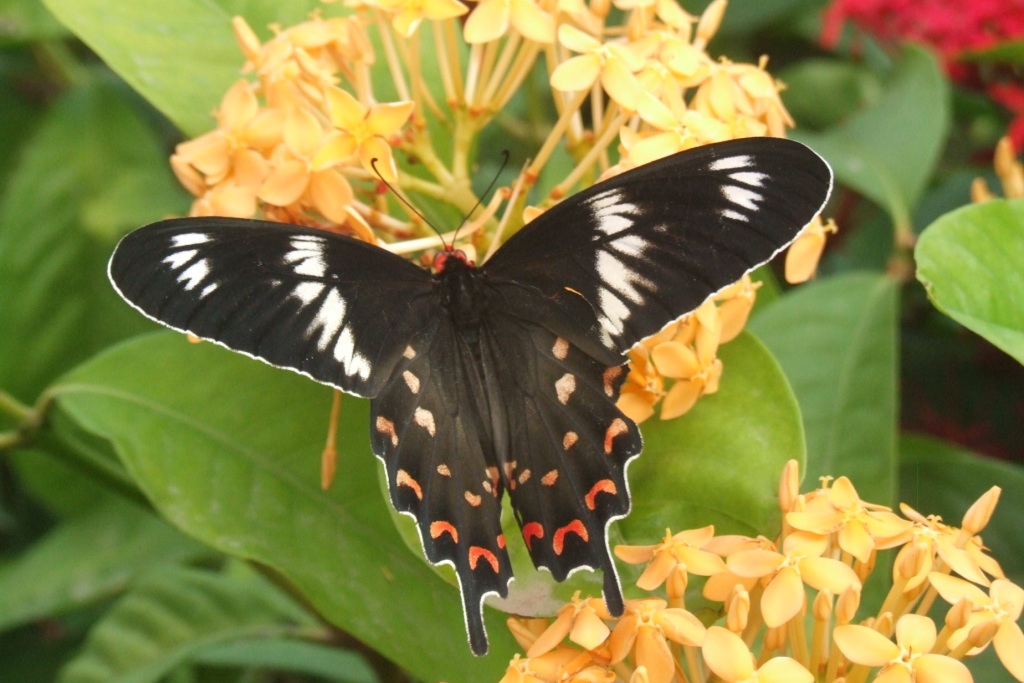
Crimson Rose Butterfly (Pachliopta hector)

photo by Ramesh Kidangoor

With a wingspan of 80-120 mm, the Crimson Rose Butterfly is one of the most spectacular species of swallowtail. It is commonly found along the Western Ghats, especially in small mountain tops and open plain lands. Ixora, lantana and pagoda flowers are favorite for this butterflies. The upper side of the wings are shining black with red and white markings that include a fine white line outlining the distinctive swallowtail wing shape. Its body is red in colour.

Continue reading

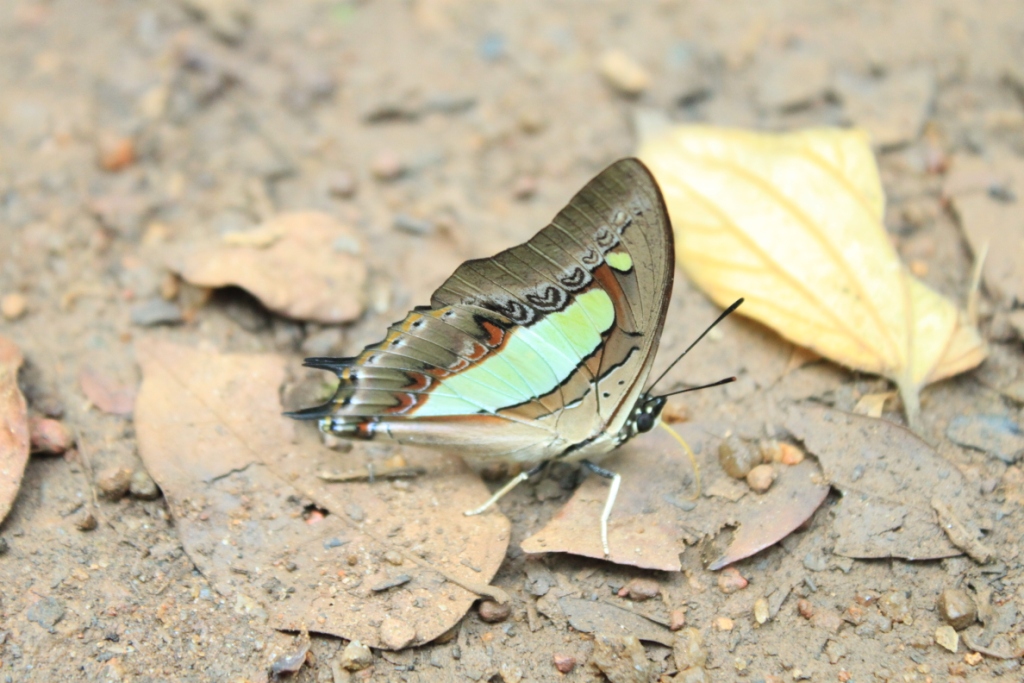
Common Nawab (Polyura athamas)

Nawab Butterflies are frequently found inside the forest, in damp patches as well as open areas such as pathways and fields. The butterflies have yellow and green patches on both side of the wings. Continue reading

Blue Mormon Butterfly

Blue Mormon Butterflies are commonly found in and around forest paths, streams, lake sides and forest patches of the Western Ghats. Female butterflies are usually larger. These butterflies are endemic to the Western Ghats and Sri Lanka. They can be found flocking around nectar rich blossoms such as Ixora and pagoda flowers

Continue reading

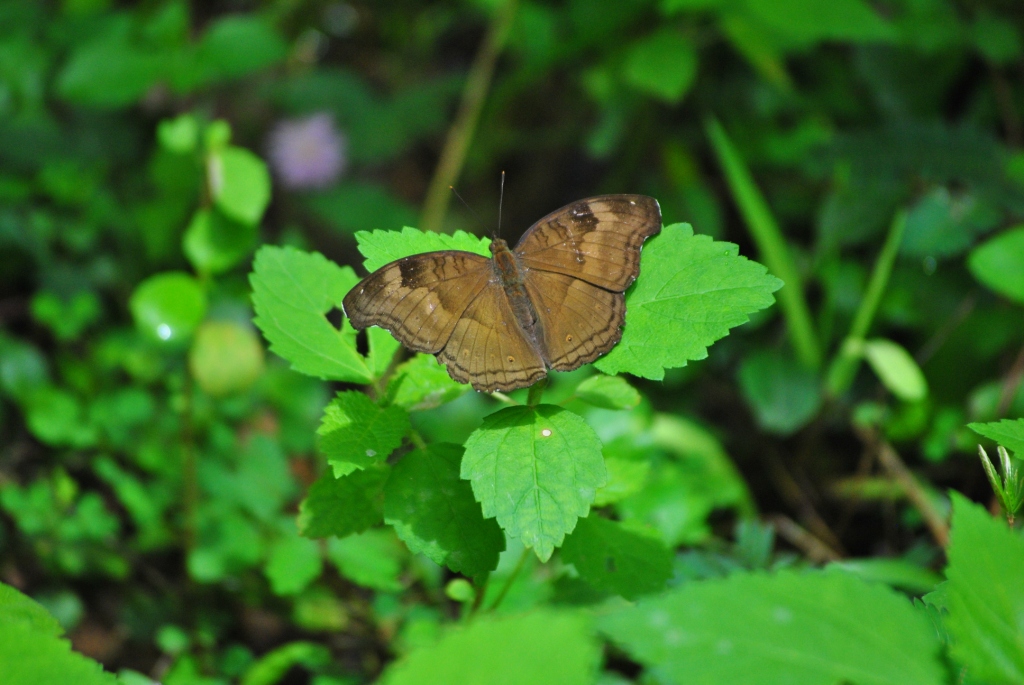
Chocolate Pansy (Junonia Iphita)

Chocolate Pansy butterflies are common in nature reserves as well as urban areas. These butterflies have the habit of opening their wings wide to sunbathe while resting. The wings of this butterfly are chocolate in colour with small eyes spots on their lower side.

Continue reading

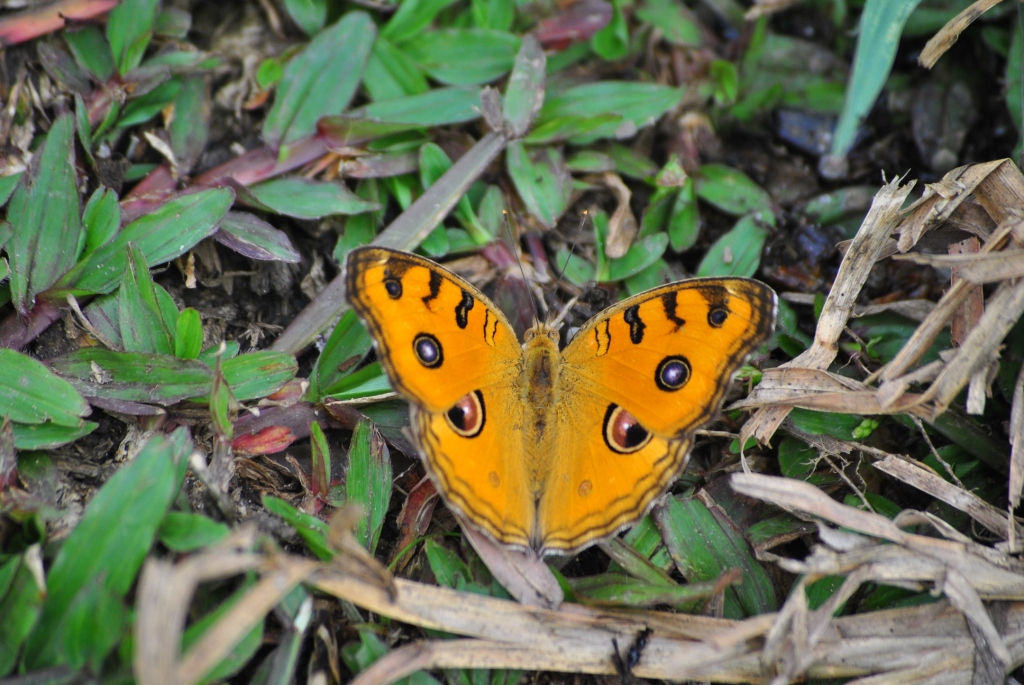
Peacock Pansy Butterfly (Junonia Almana)

Peacock Pansy Butterflies are frequently found in an around lakesides, grass lands and semi-evergreen patches of the Western Ghats, especially in the Periyar Tiger Reserve, basking in sunny patches in the early part of the day.  This beautiful butterfly has pale yellow and orange coloured wings with large eyes spots on the upper side of its hind wings and smaller ones on the forewings. Females of this species are usually larger. Lantana and ixora flowers are the favorite for these butterflies.

Continue reading

Common Bluebottle Butterfly (Graphium Sarpedon)

Common Bluebottle butterflies are frequently found in and around the wooded regions of the Western Ghats, especially in the Periyar Tiger Reserve. This handsome butterfly has a pale blue or greenish band running across the middle of its brown wings on the both sides. Continue reading

Common Map Butterfly (Cyrestis thyodamas)

I have found this butterfly inside the core area of Periyar near Thannikudi-  a wireless station situated to the northern side of the reserve.  This butterfly is confined to the cool moist forests of the Western Ghats. It visits flowers as well as damp patches.  Continue reading

Malabar Raven (Papilio dravidarum)

Endemic to the Western Ghats of South India, the Malabar Raven butterfly is common in the Periyar Tiger Reserve. Despite their rounded wing shapes, these medium sized black-brownish tailless butterfly are in the swallowtail family. Continue reading

Post-Estuarial Paddling +

In “Kayak Surfing with a Friend,” I described the surfing in words and included a short video. Here is some longer and better footage of the experience, this time including Pierre (brown hair), me (black hair), and Bismar (green shirt). We have concluded, after experimentation with the paddles and waves, that this activity would be a great post-estuary kayak experience if the tide is right. Since I had mentioned this to Bismar (a Morgan’s Rock guide) he decided to join Pierre and me after completing his estuary tour with some guests, so that he could see for himself.

Continue reading

Anteating Howler Butterflies

While walking to Morgan’s Rock’s lobby yesterday morning, Pierre heard some rustling in the bushes on our right. We looked for the source and were stunned to see an anteater standing on its hind legs, spreading its arms and swaying about like a drunkard but in fact trying to dissuade us from attacking it by trying to appear larger (it was bigger than a very fat house cat, but not by much). I immediately pulled my video camera from my pocket and started filming, and although the anteater had ceased his humorous movements and started climbing a very thin sapling, the footage was incredibly fortunate and very entertaining.


Since the tree he decided to grasp was so young, it started to bend as he climbed higher, reminding me of cartoons where characters are catapulted out of the branches after a certain point. The anteater was less than a meter away and at times looked like a teddy bear, but as a wild animal—and one with claws in full display at that—we refrained from touching him and were satisfied with a video. Eventually, the formicary raider descended the sapling and chose a better escape tree (in a pose reminiscent of the boa’s in a previous post), and we left happy with the sighting of what I thought I’d only be able to see in the summer when foliage was less dense. Continue reading

Finca Work

I had more butterfly luck this morning when, exiting the trail from my lodgings onto a dirt road, I spotted a Hamadyas glauconome glauconome, commonly known as the Guatemalan or Glaucous Cracker, on a tree nearby. Although I didn’t know it at the time, the males of this species can create a cracking sound while flying. I had heard this sound from flying insects several times as I biked along the road during my stay here, but had never been able to identify the source. The specimen photographed here was a female, however, because once I got close enough to take the shot, it flew away silently. After breakfast, I was crossing the long suspension bridge that leads to the bungalows and one of the trees next to the railing, whose canopy was roughly level with the bridge, had flowers that had attracted another butterfly. Despite the length of time that the butterfly stayed at the flowers to collect nectar, I have not been able to identify it from the various photos I took, because it never opened its wings to show the markings that would give it away in a guidebook.

However, one animal I have been able to identify is a little lizard that I found while walking a trail. More specifically of the family Polychrotidae, or an anole lizard, the species I was lucky enough to encounter was the indigo-throated anole, Anolis sericeus. I have learned that all anoles have at least some ability to change color, they all have dewlaps, which are cartilaginous frills below the neck, and, like many lizard families, they can relieve themselves of their tail if sufficiently threatened. Fortunately my presence was only frightening enough for the anole to reveal its beautiful frill and, as I approached for a close-up, run off.

When I was done with my little hike, I headed to the finca, where I was to see the recently planted saplings and the cleaning of last year’s crop area. Continue reading

Sunset Hill

The right arm of the Ocotal cove, the hill directly visible from the restaurant and beach, is just as important a landmark as Morgan’s Rock itself, since it is actually part of the property and is not hidden from view at certain angles. When one looks out at the ocean from the ecolodge, one sees this hill first; the rocks at its base withstand the constant onslaught of thundering waves, and the steep rocky slope is almost completely covered in verdure.

The prominence might be called Sunset Hill, due to its function as the lookout point for guests who wish to watch the sun descend into the ocean from a high vantage point. From most locations on the property, viewing a full sunset is impossible since the Hill is in the way.

I left the ecolodge in the morning today to climb Sunset Hill and see what the trail was like without the dim lighting that would accompany a sunset. Before approaching the hill, I found two low-hanging coconuts and cut them with some stem as handles—I knew it would be a hot and long climb and wanted some refreshment at the top. Despite the additional weight, the climb was not too difficult, but I was left sweating when I reached the first stop: a bench set in the trough of the two wave-like hills with a view of the whole cove and ecolodge. Setting the larger coconut aside, I grabbed the other and used my pocket-knife (Wenger Swiss Army, Patagonian Expedition Race Edition) to cut a channel through to the small orb holding the water. The can-opener proved the perfect tool for this job, since the blade was short enough to present little danger to my fingers in case of a mishap, and I could also apply significant pressure to leverage chunks of husk out of the way without fears of bending or breaking the metal.

After a few minutes I had reached my goal. This fact was drawn to my attention mostly by the popping sound and burst of water that sprayed up to soak my face. Setting my dripping glasses aside (I only wear my old pair while hiking, in preparation for these unforeseeable events) to dry, I widened the hole slightly and titled the large vessel back to drink the refreshing water.

I am used to drinking coconut water from the fruit itself, but in a very different fashion: street-vendors in Central America and India use a machete to hack the top off the coconut and stick a straw in the near-perfect circle they’ve created. Using my tiny tool to pry open the fruit’s tough skin and press my lips to it like a certain Tom Hanks character made me feel much less touristy than I do when I buy a street-coconut. After all, I had not only selected the fruit off the tree myself, but had also carried it up a significant slope and used its water to cool off before continuing the climb to the Sunset Summit.

To reach the summit, one merely has to climb the stairs set into the hill. This is not a great challenge, but in what was now a midday heat, the stairs were unwelcome. However, compared to the tall limestone steps of Tikal temples, or the uneven sandstone tomb-paths of Petra, these simple wooden planks set into the earth were nothing—a mere ten-minute task, if that. When I completed my ascent, it was instantly clear why the hill has been chosen as a sunset lookout. The height of the hill, along with its projection from the mainland by roughly a kilometer, presents a worthy view even without the sun setting over the water. A little lizard, which I later identified as a rose-bellied spiny lizard, was resting in the full sun that fell on the top of a railing post.

I enjoyed my second coconut in a cooler location: the middle of the stairs, where the overhanging branches of bushes and trees create a tunnel blocking the sun. A little more cautious, I avoided getting sprayed, and slowly consumed my drink before descending the hill and returning to the beach. On my way there, I saw a pair of mating butterflies that I believe to be Papilio thoas nealces, and once I got to the beach I found a Draedula phaetusa. As I walked from the beach to the road, a Microtia elva fluttered along the path and rested a while on a nearby bush. It was a lucky day for butterflies, and I look forward to photographing and identifying more of them, especially once I have a camera that can zoom!