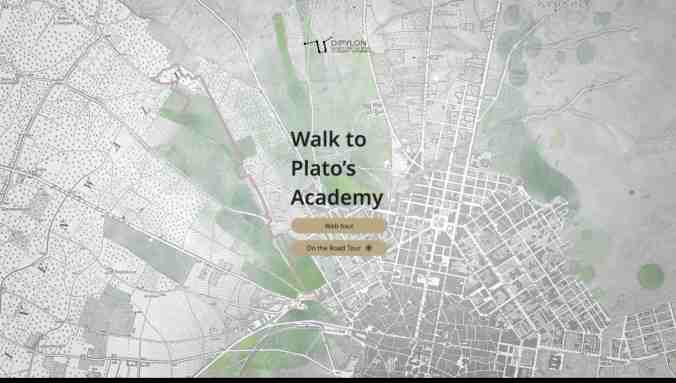
Archeologists + Cartographers = Dipylon

If you click on the image above you will experience through a short video what can happen when technically skilled map-makers, using GIS, combine forces with scholars of antiquity. Better yet, go straight to the software they have created. In advance of travel commemorating 40 years since two of us met, my daily omnivorous media diet brought me to Dipylon, via a profile by Nick Romeo, which I highly recommend (to better understand the origins and workings of Dipylon) whether or not you are planning to visit Athens:

Illustration by Eleni Kalorkoti

The Hidden Archeologists of Athens

By collecting long-forgotten archeological data, a new project reveals the researchers who toiled unrecognized.

In Don DeLillo’s 1982 novel “The Names,” an American businessman living in Athens can’t quite bring himself to visit its most iconic monument. “For a long time I stayed away from the Acropolis,” he says. Continue reading

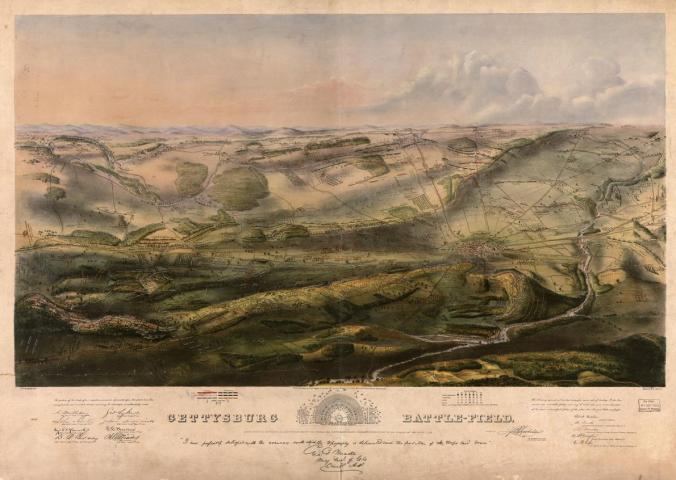
The History of America’s National Parks through Maps

03_gettysburg_battlefield-adapt-1190-1

A map depicting the three-day battle of Gettysburg. Source: Library of Congress

Later this week, on August 25th, will be the U.S. National Park Service centennial (more about that on the day in question). So for all history buffs out there, you might enjoy the following article by National Geographic that provides a historical context to several topographical maps of the national parks (a somewhat contrasting view to yesterday’s post on fictional map creation) and their uncharted contribution to historians many years later.

By Betsy Mason

CAMBRIDGE, Mass.—John Badger Bachelder arrived at Gettysburg before the soldiers’ bodies were buried. He spent the next 84 days studying the battlefield by horseback and filling notebooks with the accounts of injured soldiers from both sides of the battle. He even took some of the wounded back to the scene so they could point out their positions and recount what had happened.

Continue reading

Mapping Iceland

In my last post on the subject I mentioned that portions of Iceland on contemporary maps all the way up to the early 20th century remained blank. The main culprit for explorers, travelers, and cartographers was the great glacial region of Vatnajökull, at 3,139 sq. mi (8,130 sq. km) the largest glacier in Europe, and now a national park in southeast Iceland. Terrible snowstorms, heavy rains, unreliable ice, and poor local knowledge of the frigid plateau contributed to the failure of multiple expeditions by many men into the interior of the “Glacier of Rivers,” and during the late 1800s it became clear that there was frequent volcanic activity in the area as well.

1906 geological map by Icelandic geographer/geologist Þorvaldur Thoroddsen, who is credited with being the first to map the interior of the Icelandic Highlands in 1901, which is when this map was first published. The different colors represent different compositions of the island, such as basalt, liparite, volcanic ash, etc.

Continue reading