Another Night Excursion at Chan Chich

1

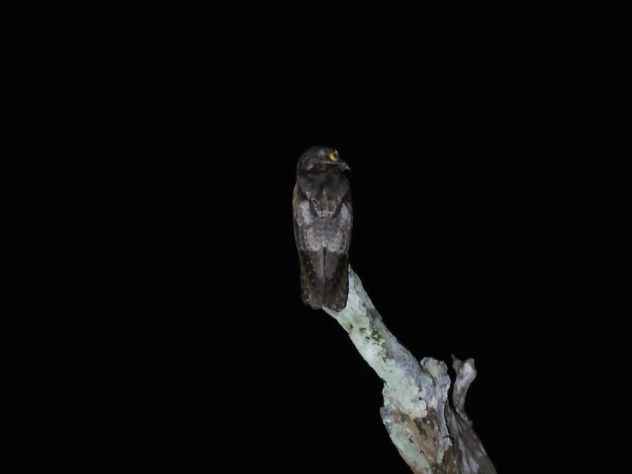
A Northern Potoo on a tall exposed limb seen during the outing

A few nights ago we went out on another night drive, to look for nocturnal animals. Seeing wildlife in the dark is always a challenge, and one has to be prepared to come back relatively empty-handed, especially in comparison to a lengthy jaguar sighting. This second time around, we saw fewer birds and just one mammal apart from deer: a young gray fox, but it was still a very pleasant ride through the forest at night, feeling the cool breeze and looking up to see the stars.

Continue reading

Chan Chich Spider Monkeys

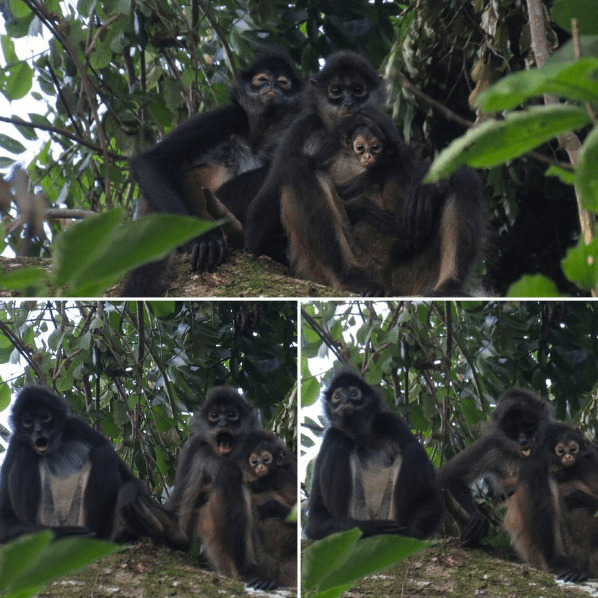
Pretty much any time you walk out in the woods at Chan Chich Lodge, at some point during your hike you should be able to hear the rocking branches that are a sign of either spider monkeys or howler monkeys moving or eating in the treetops. And if you’re lucky, the swinging simians might stop and watch you with an uncannily familiar curiosity (or boredom), interrupting their normal activity for a minute or two before continuing on their way.

During the period in which we observed the family of three in the video above, the father yawned at least nine times, while the mother did so at least five times. Continue reading

Cycling through the Belize Forest

img_0970_zpsbst6nigh

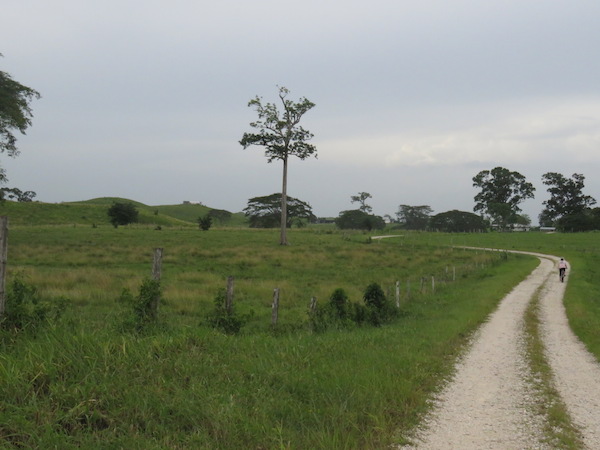
There are plenty of activities at Chan Chich Lodge that will expose you to a variety of forest wildlife and immerse you in the nature of Belize, such as the walking tours, horseback riding, canoeing, or the driving tours. But one of the lesser known activities that can also provide the same thrill as the other ones is bicycling.

I went on my first bike ride along the main road a week ago.  For the first mile starting from the compound area, the paved road offered a smooth ride past the suspension bridge and up until the “Y” intersection. I turned the handlebar to the left and my bike dropped a half-inch to the lower, limestone gravel road. The gravel pebbles started out small, boosting my confidence that I would make it to edge of cattle pastures of Gallon Jug estate, about five miles out. Continue reading

The Chan Chich Lodge Night Sky

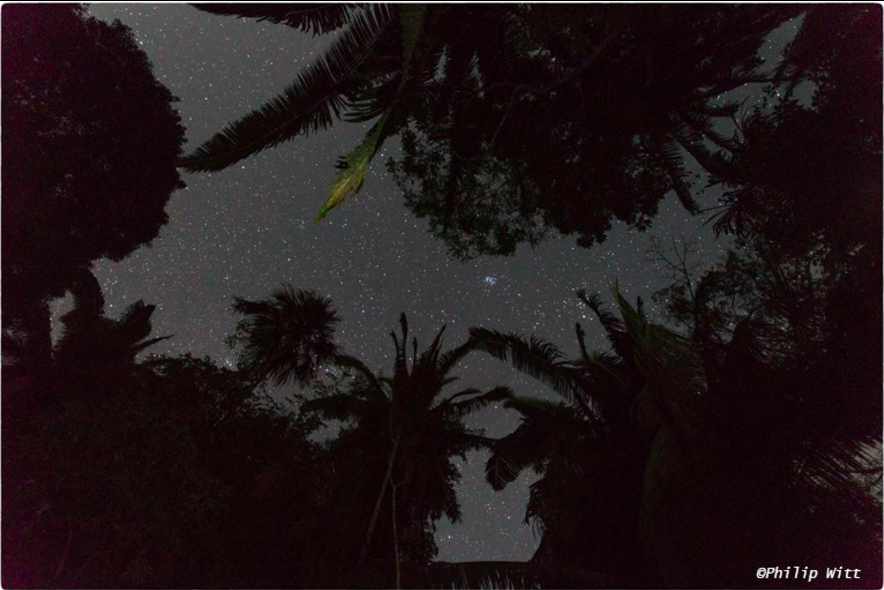
Night Sky by Chan Chich Lodge guest Phillip Witt

Night Sky by Chan Chich Lodge guest Philip Witt

A ping from my electronic calendar recently reminded me of the upcoming appex of the Perseid Meteor Shower between August 11th and 12th. I’d specifically marked it because this will be one of the first times I’ll be in a location so beautifully free of light pollution.

Although we do much of our work in remote locations, it’s surely a matter of luck to be in one of them at just this moment and this year,  when scientists say the meteor fall will be of the greatest density in 20 years. Chan Chich Lodge is located in the midst of 33,000 acres of private land, with the only infrastructure other than the lodge itself being a small village and the farming operations of Gallon Jug. 9-plus miles of trails branch off from the lodge, as well as simple gravel access roads. Continue reading

Chan Chich Field Notes: Black Howler Monkey

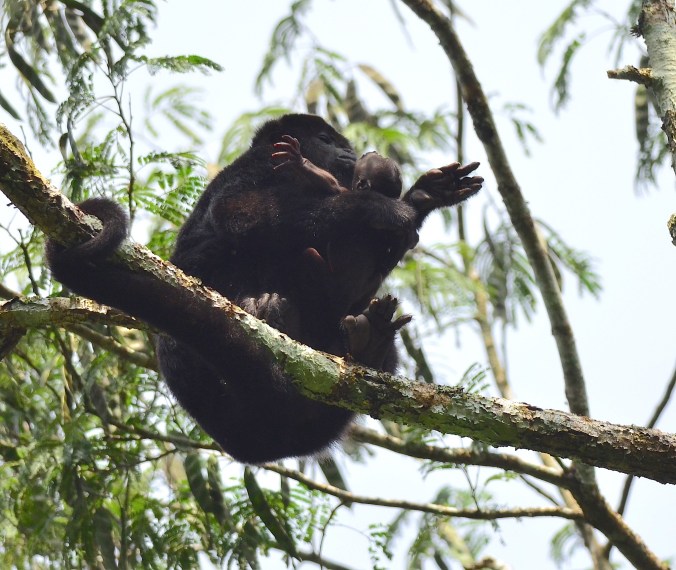
Female howler monkey with newborn by Emil Flota - La Paz Group

After my morning shift I went for my usual walk with my camera on Sylvester Village Road, looking at the beautiful surroundings and listening to the sounds of the forest. I heard something very unusual, which was a little frightening when I realized the sound was coming from above me. I looked up just in time to see a howler monkey giving birth. It was a very emotional moment, and when I finally felt calm enough to lift my camera I caught the mother bringing the baby up to her face on film.  Continue reading

Panthera onca

video taken by author on August 5th

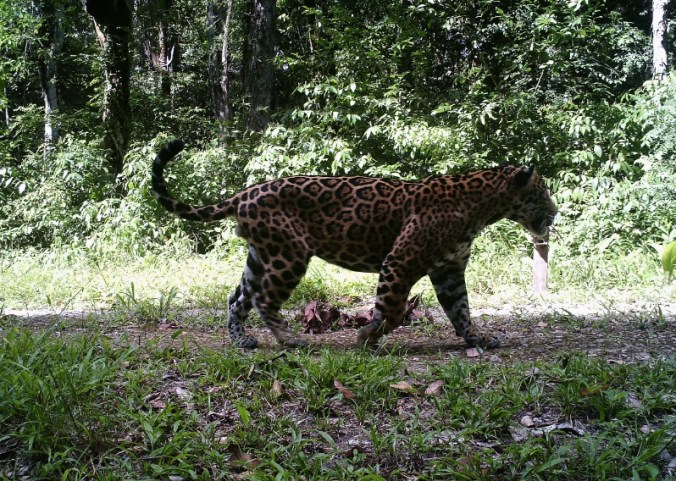
Chan Chich is known for being pretty much the best place in Belize to spot a jaguar (scientific name, Panthera onca) in the wild, given the Lodge’s huge amount of protected land (30,000 acres) adjacent to hundreds of thousands of acres similarly preserved, or under government conservation that together form the international Jaguar Corridor Initiative.

The word Panthera comes from the ancient Greek pánthēr (πάνθηρ), which essentially means “predator of everything,” and is a scientific genus comprised of the five big cat species in the world: snow leopards, tigers, lions, jaguars, and leopards. The latter four of these are the only cats that can roar, given morphological differences in their bones and throat.

Continue reading

Tropical Kingbirds Make Good Parents, Part Two

Yesterday I wrote and shared a video about this particular flycatcher’s protective nature, but it’s important to note that this behavior isn’t limited solely to the Tropical Kingbird. Neither is the rigorous feeding displayed in the video below. Most birds take good care of their young, whether by bringing meals every couple minutes or by picking up their poop and depositing it away from the nest – which you can see the parent kingbird do at 00:30 and 2:31. I apologize for publishing this in low resolution and pixelating the cuteness, but it’s the best one can do when off-grid in the middle of the Belizean jungle!

Continue reading

The Jaguar in the Night

Jaguar by Seth Inman

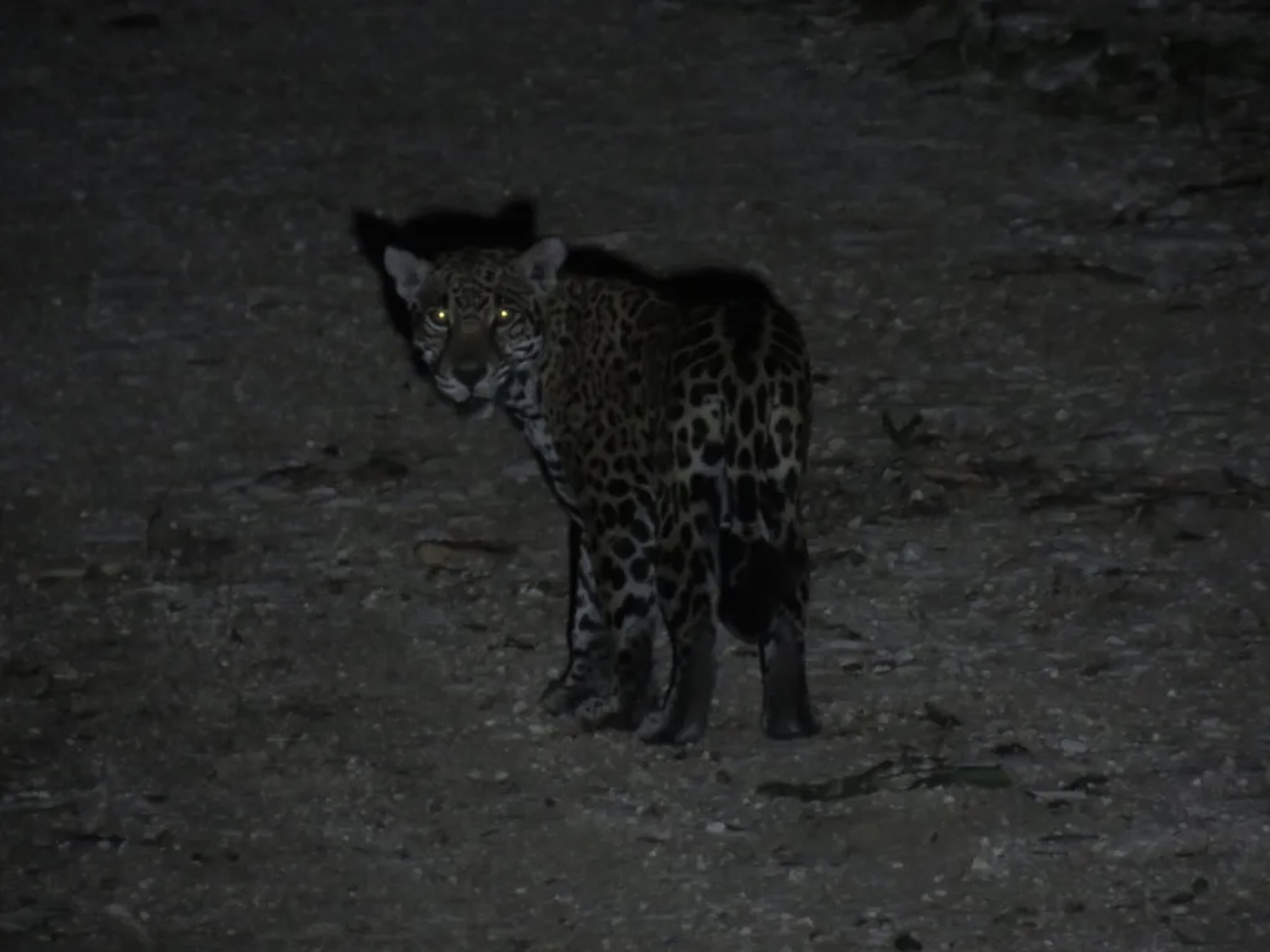
The night drive is one of the most popular tours at Chan Chich Lodge because it is arguably the best opportunity for spotting a jaguar, ocelot, margay, or puma. Of the four forest cats, last night our tour group was fortunate to see the beloved jaguar.

The drive started at 7:30pm. Eight of us climbed up the back of the truck and took our seats along the cushioned benches facing out to the road. We were instructed by Luis, our tour guide, to look for “eyes,” and thereafter, the truck rumbled to a start and Luis began to point his flashlight in all directions, up at the tree branches and down at the forest undergrowth. The aftermath from Hurricane Earl was evident as the truck drove between broken tree stumps and overhanging branches, but this also allowed wildlife to appear in places that it had not been seen before.

Continue reading

Tropical Kingbirds Make Good Parents, Part One

Just a few days ago, I was working from my laptop in one of the Chan Chich Lodge common areas when I saw an Ocellated Turkey on the road – not a peculiar sight at all – that walked a few steps before suddenly doing a swift yet panicked pirouette  – a slightly less usual occurrence, in my brief experience with the scintillant species. I grabbed my camera, which doesn’t leave my side here at the Lodge, and recorded the following video, in which the turkey gave a new meaning to the chicken-dance, albeit as an unwilling partner:

Continue reading

Living with Jaguars

Note: Mr. Flota was born in the village of San Lazaro in the Orange Walk District of northern Belize. He works at Chan Chich Lodge in Gallon Jug, which is situated in a protected private forest that has one of the highest densities of jaguars in the world. He is the bartender and horse wrangler for the Lodge. Mr. Flota related this story to Jacalyn Willis, a biologist working in the tropics and at the Lodge. She wrote down his story as he told it.

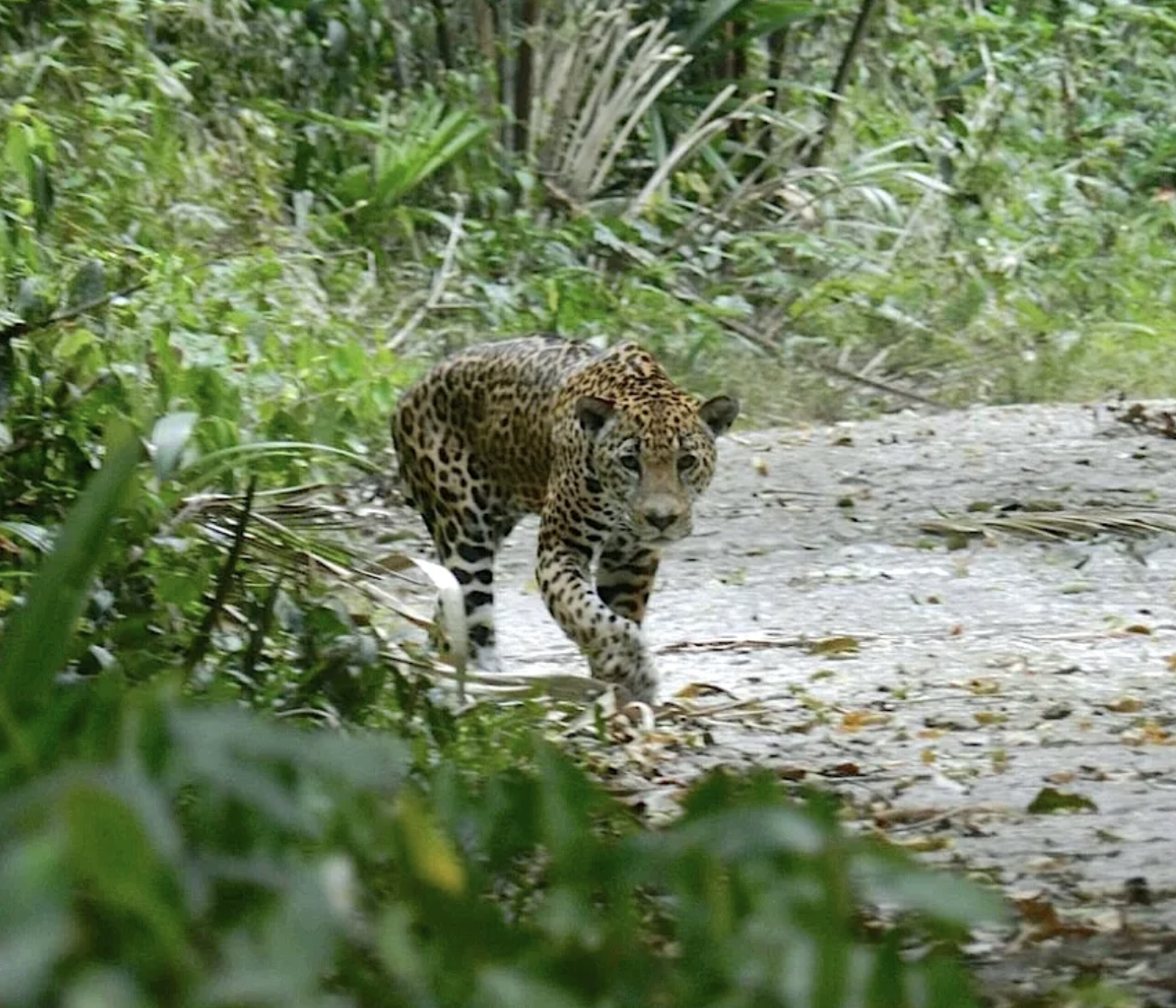
One sunny morning in July I decided to take a walk on the old limestone road here called Sylvester Village Road. It cuts through forest that has been selectively logged, leaving a mixed habitat good for birds. I took my binoculars and camera. As I came out of the little housing area where I live at Chan Chich Lodge, and swung around a bend in the path to get onto the road, I saw a jaguar walking ahead of me in the same direction. Now, we live in jaguar territory in a private preserve in northern Belize, so it happens fairly often that someone will see a jaguar, which usually disappears quickly. But this jaguar had not yet noticed me and was about 30 yards ahead.

Continue reading

My First Encounter with Chan Chich Lodge

img_9736_zpscnhylmqj

Chan Chich Lodge is camouflaged deep within the Belizean forest and within the ancient ruins of a Mayan structure. When you are driving along a rocky one-way limestone road through a variation of open cattle pastures and the dense forests for several hours, you don’t realize you have reached the lodge until you have driven past the welcome sign and are passing by one of the twelve wooden cabañas. Disclaimer: perhaps this first impression is singular to me because I first arrived to the hotel via ground transportation, at dusk, and in a drowsy state. Continue reading

A Tiger’s Tale Redux

Photo credit: Sudhir Shivaram

Photo credit: Sudhir Shivaram

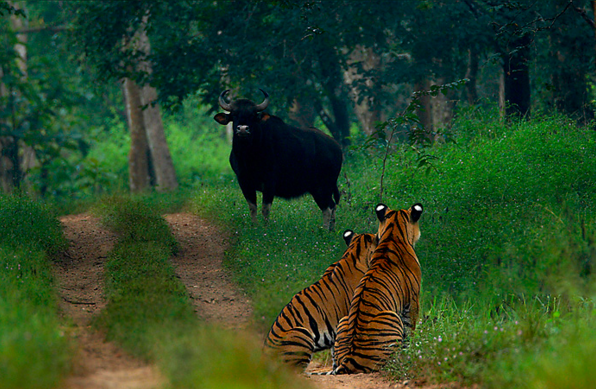
International Tiger Day is my excuse to remember this post from three years ago, as a continued reminder of the importance of doing whatever we can to save these amazing creatures in the wild.  Meeting wildlife photographer Sudhir Shivaram, and some talented participants of his master bird photography workshop, (many of whom now contribute to this site), has consistently given all of us a window into wildlife viewing that few of us have the privilege to enjoy.

I actually write this from Chan Chich Lodge in Belize, a location that offers the amazing opportunity to be in the habitat of “new world” cats such as jaguar, puma, ocelot, margay and jaguarundi. We’ll write about what we’ve seen so far and what the fantastic staff has shared with us in separate posts – as here we want to honor the tiger. Continue reading

Gallon Jug, Conservation The Belizean Way

Screen Shot 2016-07-01 at 8.46.22 AM

Two months ago I had the opportunity to visit Chan Chich Lodge in Belize, something I had wanted to do for decades.  Sometime in the 1990s I first heard of it, from various visionaries in Costa Rica who considered it to be a model on which to base development, both at the property level and for the destination as a whole. Chan Chich was mentioned frequently in conversations, in Costa Rica and throughout Mesoamerica, when the notion of sustainable tourism was first being developed. Continue reading

Pristine Nature

Chan Chich

In writing about Belize recently, I had mentioned time spent with a tapir, favored in the diet of jaguar throughout Central America. The photo above was taken on property at the lodge my posts were referring to. Rule of thumb, it seems to me, is that a jaguar population requires relatively pristine nature to be sustainable, and that seems to be the case where this photo was taken. But what do I know, really? I am dedicated to entrepreneurial conservation but I am not a biologist so I depend on experts to inform my thinking, and to discipline it with a heavy dose of realism. In reading this post from earlier today I am better prepared to think about the mission of Chan Chich Lodge (more on which in a subsequent post), and the history of the 30,000 acre wilderness conservation area that it sits on:

Gallon Jug

At one time, the venerable 150 year old Belize Estates Company owned roughly one fifth of the entire country, about one million acres including much of the northwest corner of the country. From the turn of the century until the 1960’s, timber, mainly mahogany, cedar and santa maria, were selectively logged from this area. Gallon Jug, originally a logging camp located where the current GJ offices are, was named after a B.E.C. foreman, Austin Felix, discovered many discarded items from a Spanish camp, including a number of ceramic gallon jugs. Continue reading

Forward To The Past

crist and boys tikal.jpg

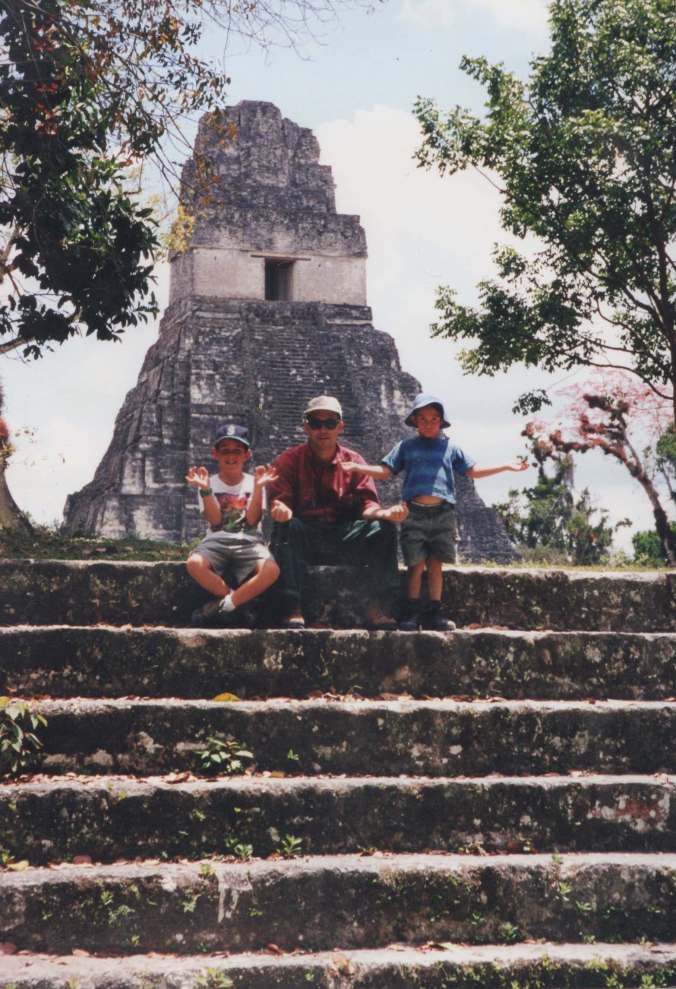
A few days ago I mentioned, in reference to my recent visit to Belize, an earlier visit to Tikal in Guatemala. In the photo above, taken in 1999, three future La Paz Group contributors (Seth Inman, me, and Milo Inman from left to right) were getting our “om” on in preparation to climb the stairs in the background.

Amie Inman, who took that photo, reminds me that she and I had been to Tikal earlier, without our two sons. On both occasions we had the kind of mystical experiences for which this location is known. We had climbed the temple in advance of sunrise, as recommended (no photos from that with us currently, so credit for the photo below goes to a fellow wordpress blogger; click the photo for attribution).
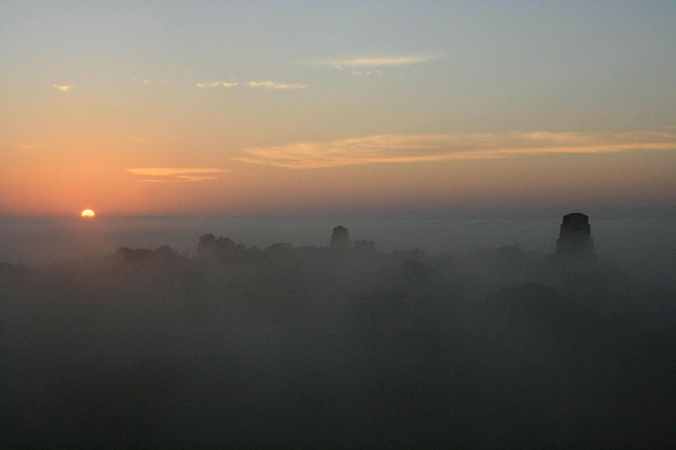
sunrise-in-tikal

What we all remember about our visits to Tikal, and on a separate journey to Copan in Honduras we had the same sense, was how the archeologists and the relevant authorities in these particular national parks had done just the right amount of excavation. Some things were left to the imagination. Seth and Milo, in a conversation we overheard, said that Tikal was much better than Disney World, because it was real – it was like being Indian Jones. Our understanding of “real” was “unspoiled” in the sense that one could see plenty of uncovered evidence of Mayan culture, and also see that these artifacts of that culture eventually were swallowed by the jungle. Continue reading