Us & Them, Then & Now

A cartoon from the mid-1800s, using apparently sophisticated insects to satirise French society (Credit: Getty Images)

Thomas Moynihan, a research fellow at Forethought Foundation and St Benet’s College, Oxford University offers this entertaining treatment of how Western culture has seen and thought about its insect co-habitants of the planet.
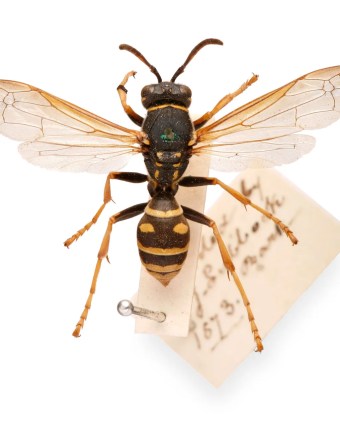
Lubbock’s wasp, described by one journalist as “a little gentleman in a brown overcoat, with black and yellow nether garments” (Credit: Alamy)

How insect ‘civilisations’ recast our place in the Universe

When looking to other creatures for signs of intelligence, insects are rarely the most obvious candidates, but as the historian Thomas Moynihan writes, it wasn’t always so. What can the early-20th Century fascination with bug societies tell us about our own?

It is 1919, and a young astronomer turns a street corner in Pasadena, California. Something seemingly humdrum on the ground distracts him. It’s an ant heap. Dropping to his knees, peering closer, he has an epiphany – about deep time, our place within it, and humanity’s uncertain fate. Continue reading
Adriatic, The Experience & The Book

When I first set foot in Croatia more than two decades ago it was for a project to assist the country in defending the coastal areas from the pressures of mass tourism development. Within a couple of years I was doing similar work in Montenegro. Before too long we were enough in love with the region to make it our family’s home for a year.

So seeing this book about the future importance of the region, by an eminent scholar, is both heartwarming and concerning:

“[An] elegantly layered exploration of Europe’s past and future . . . a multifaceted masterpiece.”—The Wall Street Journal

“A lovely, personal journey around the Adriatic, in which Robert Kaplan revisits places and peoples he first encountered decades ago.”—Peter Frankopan, author of The Silk Roads

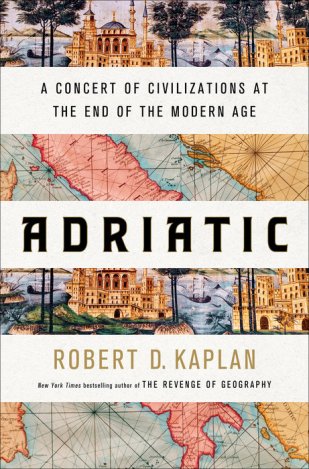
In this insightful travelogue, Robert D. Kaplan, geopolitical expert and bestselling author of Balkan Ghosts and The Revenge of Geography, turns his perceptive eye to a region that for centuries has been a meeting point of cultures, trade, and ideas. Continue reading

The Incas and their Hand-built Roads

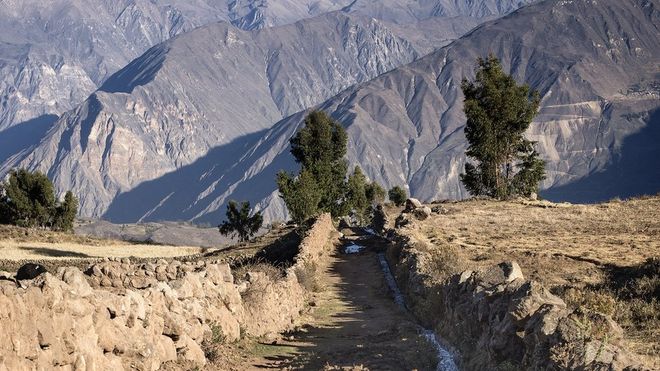
An exhibition at the National Museum of the American Indian concludes that the ancient Incas were great environmentalists. PHOTO: BBC

An exhibition at the National Museum of the American Indian concludes that the ancient Incas were great environmentalists. PHOTO: BBC

The Inca Road is one of the most extraordinary feats of engineering in the world. By the 16th Century it had helped transform a tiny kingdom into the largest empire in the Western hemisphere. And to the envy of modern engineers, substantial parts of the 24,000-mile (39,000-km) network survive today, linking hundreds of communities throughout Argentina, Bolivia, Chile, Colombia, Ecuador and Peru. Incredibly, it was constructed entirely by hand, without iron or wheeled transportation. A new exhibit at the Smithsonian Institution in Washington DC shows why the Incan kingdom built a lasting infrastructure.

Continue reading