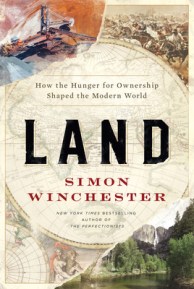
 Land acquisition, for the purpose of conservation, is a subject that we touch upon from time to time. The bigger arc of land acquisition’s history, as well as its future, helps with perspective. The book to the right (linked to an independent bookseller’s website), potentially important for such perspective, is reviewed by Francisco Cantú in Human History and the Hunger for Land, as excerpted below (you can listen to the review by clicking the start button here):

From Bronze Age farmers to New World colonialists, the stories of struggle to claim more ground have shaped where and how we live.
Territorial expansion once meant conquest, but other modes are being explored. Illustration by Vincent Mahé
The final piece of terrain to be incorporated into the contiguous United States was an oddly shaped strip stretching from Las Cruces, New Mexico, to Yuma, Arizona. Known as the Gadsden Purchase, the area was obtained from Mexico in 1854 for ten million dollars, adding nearly thirty thousand square miles to a nation still drunk with Manifest Destiny expansionism. The motivations for acquiring the land were many—it contained huge deposits of ore and precious metals, held vast agricultural potential in the soils of its fertile river valleys, and, most important, had an arid climate that could allow a rail route to connect the coasts while remaining free from snowpack year-round. Continue reading

 Organikos