We’ve mentioned Cabo Pulmo here several times in the context of marine conservation, as well as from a personal visit. Although I still haven’t had a chance to go out on a scuba diving expedition here, a couple weeks ago Jocelyn and I were able to accompany some Villa del Faro guests on a snorkeling trip outfitted by Cabo Pulmo Sport Center, which is run by members of the Castro family mentioned in the posts linked above. The tour took two hours, but I’ve condensed the experience into almost fifteen minutes of video that I took on a rented GoPro:
Coral Reef
“Kissing” Corals
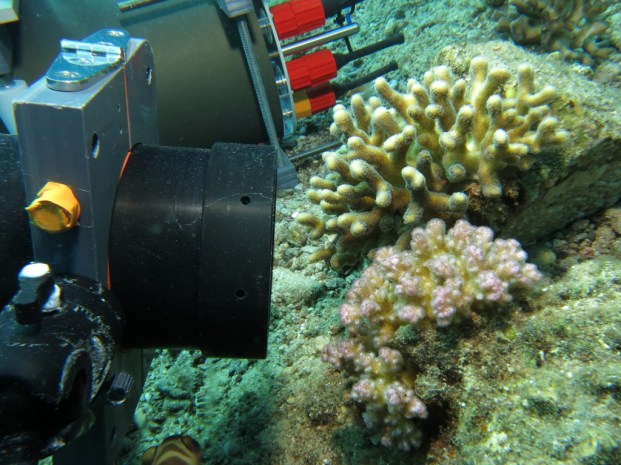
Source discovermagazine.com
You don’t have to be a romantic to appreciate the underwater rainbow canvas that is a coral reef and marvel at the fact that these organisms have been spotted exchanging an underwater embrace, a behavior researchers have termed “polyp kissing.”
A first-of-its-kind underwater microscope that can observe coral polyps at resolutions of up to 2 micrometers while still remaining a safe distance away allowed marine biologists to watch coral behavior in real time. Not only did they see two species of coral fighting for territory (a previously observed behavior), but also two corals entwine their gastrovascular openings in the act of “polyp kissing” (a previously unknown behavior). Continue reading
A Sperm Bank for Coral Reefs

An example of a coral spawning, in this case, the species Orbicella faveolata, or mountainous star coral. Credit: Schmahl/FGBNMS
Ocean health matters to us, and the state of our corals is one of the most at-risk elements of marine ecosystems. So many species depend on coastal communities of these strange lifeforms, and with acidification and pollution of sea waters, the reefs are in danger of slowly but surely dying out. Thankfully, there are efforts underway to conserve coral in an unusual way – freezing and storing their sperm. Julie Liebach reports for Science Friday:
You’ve heard of seed banks—precious vaults that keep plant genetic material frozen for posterity’s sake. But what about coral banks?
For more than a decade, marine biologist Mary Hagedorn has been cultivating the art of carefully freezing coral sperm through a process known as cryopreservation. Her goal is to bank as many species as possible for use in future research and restoration, and to train other scientists to follow her lead.
A Lone Couple, a Desert Island, and Turtles

Despite living in utter isolation on an island for 40 years, one couple has overcome disability and blindness to make a difference. PHOTO: BBC
Isn’t there a line about finding heroes in the most unlikely places? This is the setting of Daeng Abu’s and his wife Daeng Maida’s inspirational story: a desert island off the coast of Sulawesi in Indonesia, disabilities in Abu being blind and facing leprosy, their days spent raising sea turtles and speaking against the cyanide and dynamite fishing that is devastating Indonesia’s reef.
Neither knows how old they were when they entered their arranged marriage on nearby Pulau Pala (Nutmeg Island) – they currently believe they’re in their 80s – but Abu thinks he was older than 20 and Maida remembers it was the dry season. Her uncle fired three shots in the air; she walked over to his family’s home; Abu built a shack from bamboo and palm leaf; and married life began. Little did they know at the time – the couple was bound to become a rather unlikely pair of environmental activists.
Who’s Taking Over Coral Reefs?
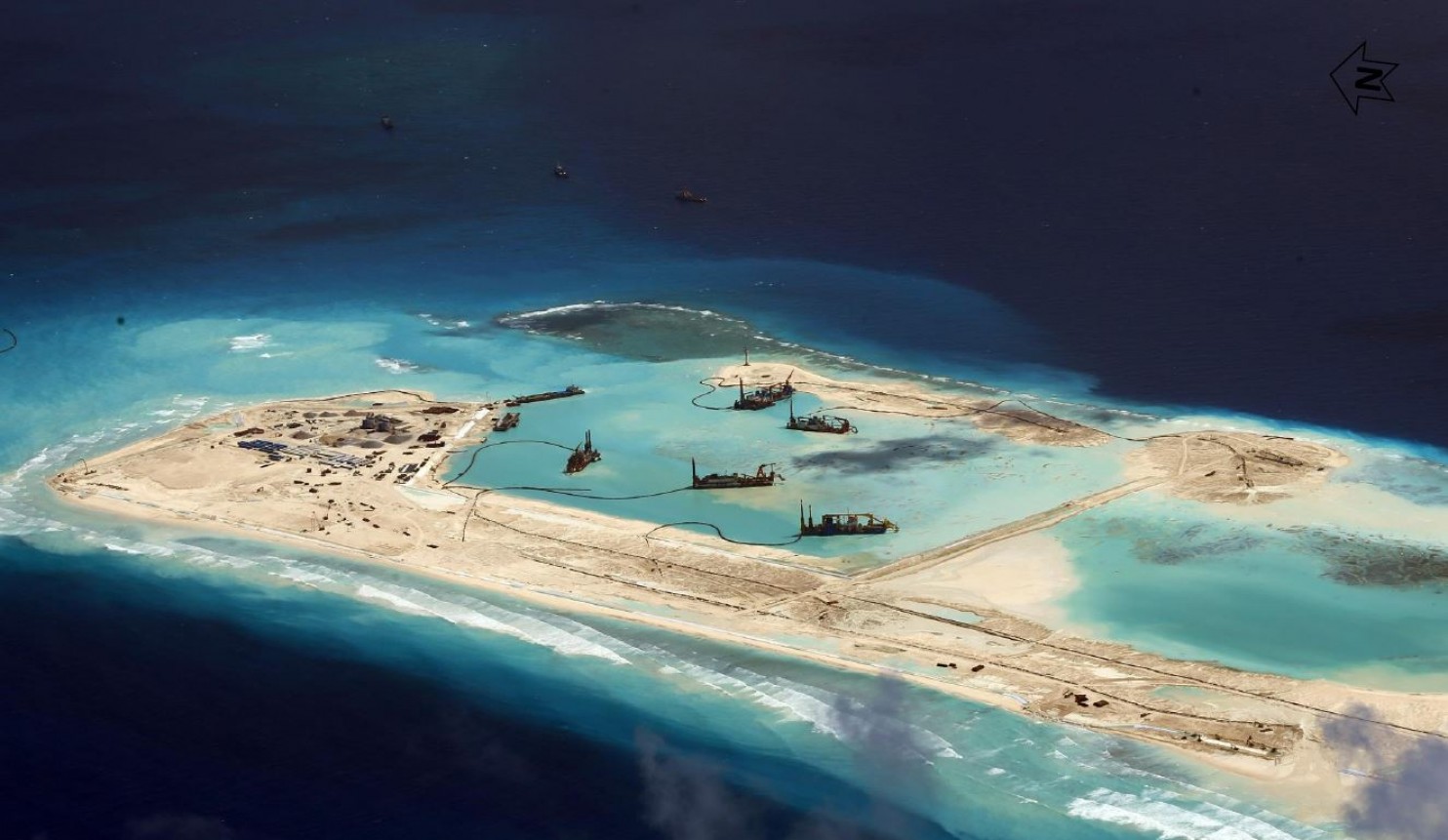
Between August and November in 2014, Chinese dredgers created a land mass on Fiery Cross that spans 3,000 meters long and 200 to 300 meters wide. PHOTO: Washington Post
Here are some figures for China’s military strength. Here is also the fact that much of the country’s military building is concentrated in the high seas. Especially in waters that once hosted biodiversity hotspots in coral reefs.
As China races to extend its military reach, it is turning pristine habitats into permanent islands. Satellite images of the South China Sea show rapid destruction of some of the most biodiverse coral reefs in the world. The reclamation of land in the contested Spratly archipelago to build runways, military outposts and even small towns is endangering ecosystems that are key to maintaining world fish stocks and biodiversity.
Getting Social Underwater

A coral grouper (Plectropomus leopardus) being cleaned by a cleaner shrimp (Urocaridella antonbruunii), in the Maldives. — Image by © Jason Isley – Scubazoo/Science Faction/Corbis
Let’s talk social behavior. We know much about human relations and the social activities of animals like the chimpanzee. But how about underwater? Yes, the waters, too, are filled with social interactions if rapport between coral groupers and giant moray eels are anything to go by. Several studies have followed how the duo teams up to hunt and have their own ‘code’ of vigorous shimmying, head-stands and head-shaking to communicate about prey. Now, while gestures are commonplace among humans and are expected of intelligent animals like monkeys and dogs, how do fish manage this complex communication with their tiny brains? Redouan Bshary may be the man with the answers.
Citizen Science in Belize: Part 2/2 – If You Can’t Beat’em, Eat’em

Photo by Alexander Vasenin

Lionfish sushi – Photo © World Lionfish Hunters Association (click on photo to visit their website)
In Part 1 of this post I talked about the lionfish invasion that is threatening coral reef and other marine ecosystems throughout the Caribbean, Gulf of Mexico, and Southern Atlantic Seaboard of the United States. Scientists, environmental groups and governments that are studying the problem have all come to the conclusion that it is probably impossible to eradicate lionfish in the Atlantic – they are here to stay. Continue reading
Citizen Science in Belize: Part 1/2
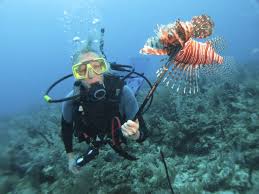
Photo © ReefCI
It might seem strange to accompany a posting about marine conservation with a photo of a fish on a spear, but in this case, it is entirely warranted.
I recently returned from the Sapodilla Cayes Marine Reserve in Southern Belize, where I spent two weeks working as a volunteer with ReefCI, a NGO dedicated to coral reef ecosystem conservation. Located 30 miles off the coast of Belize on the southern tip of the Mesoamerican Barrier Reef (the second largest in the world, after Australia’s Great Barrier Reef), the Sapodilla Cayes constitute a unique ecosystem.
Along with other volunteers, I assisted the ReefCI marine biologist with population surveys of conch, lobster, and commercial fish species, as well as coral reef health checks. At least one, and sometimes two surveys were carried out each day. The data collected is provided to the Belize Fisheries Department as well as to other cooperating NGOs.
Now about that fish on a spear. One of ReefCI’s projects is lionfish control. Spears Continue reading
 Organikos