 Gerald Durrell, somehow, has escaped mention in 11,281 previous posts over the last decade+ on this platform. Today is the day to begin correcting that oversight. His novelist brother Lawrence is worthy of his own post here another day. And the family name was recently popularized on television. While Gerald’s own legacy is not easy to categorize, a good starting point is to look at Durrell Wildlife Conservation Trust and his related conservation work. Books are a big part of the legacy and the one to the right has had a tangible influence:
An Ark for Vanished Wildlife
Derek Gow’s maverick efforts to breed and reintroduce rare animals to Britain’s countryside.
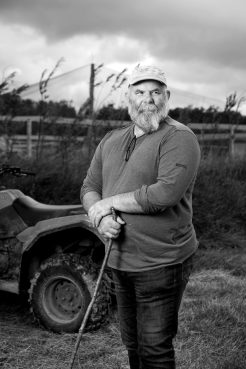
Derek Gow wants his farm to be a breeding colony, a seedbed for a denuded island. Photograph by Jonny Weeks / eyevine / Redux
Derek Gow decided to abandon conventional farming about ten years ago, not long after the curlews left. At the time, Gow, who is thickset and white of beard, had a flock of fifteen hundred breeding ewes and a hundred and twenty cows, which he kept on a three-hundred-acre farm of heavy clay close to the border between Devon and Cornwall, in southwest England. He was renting an extra field from a neighbor, and a pair of curlews had come to forage for a few days. A farm worker spotted the distinctive brown birds; they have long beaks that slope downward, like violin bows. “He didn’t even recognize what they were,” Gow told me.
Curlews are Europe’s largest wading bird. Continue reading
 Organikos