Trumpet Tail

Mature female Trumpet Tail (Acisoma panorpoides) photographed in the Periyar Tiger Reserve. Unfortunately well camouflaged (at least for their prey and photographers), this species is another exceptionally small one. The good news for me was that Trumpet Tails, due perhaps to their small stature (and presumably metabolism) cannot fly for long distances, and therefore are easy to chase and photograph.

I find the abdomen’s structure to be quite beautiful – certainly more so than the straight-and-narrow ones of say, gliders or marsh hawks.  Sadly, although I found the male to be more attractive Continue reading
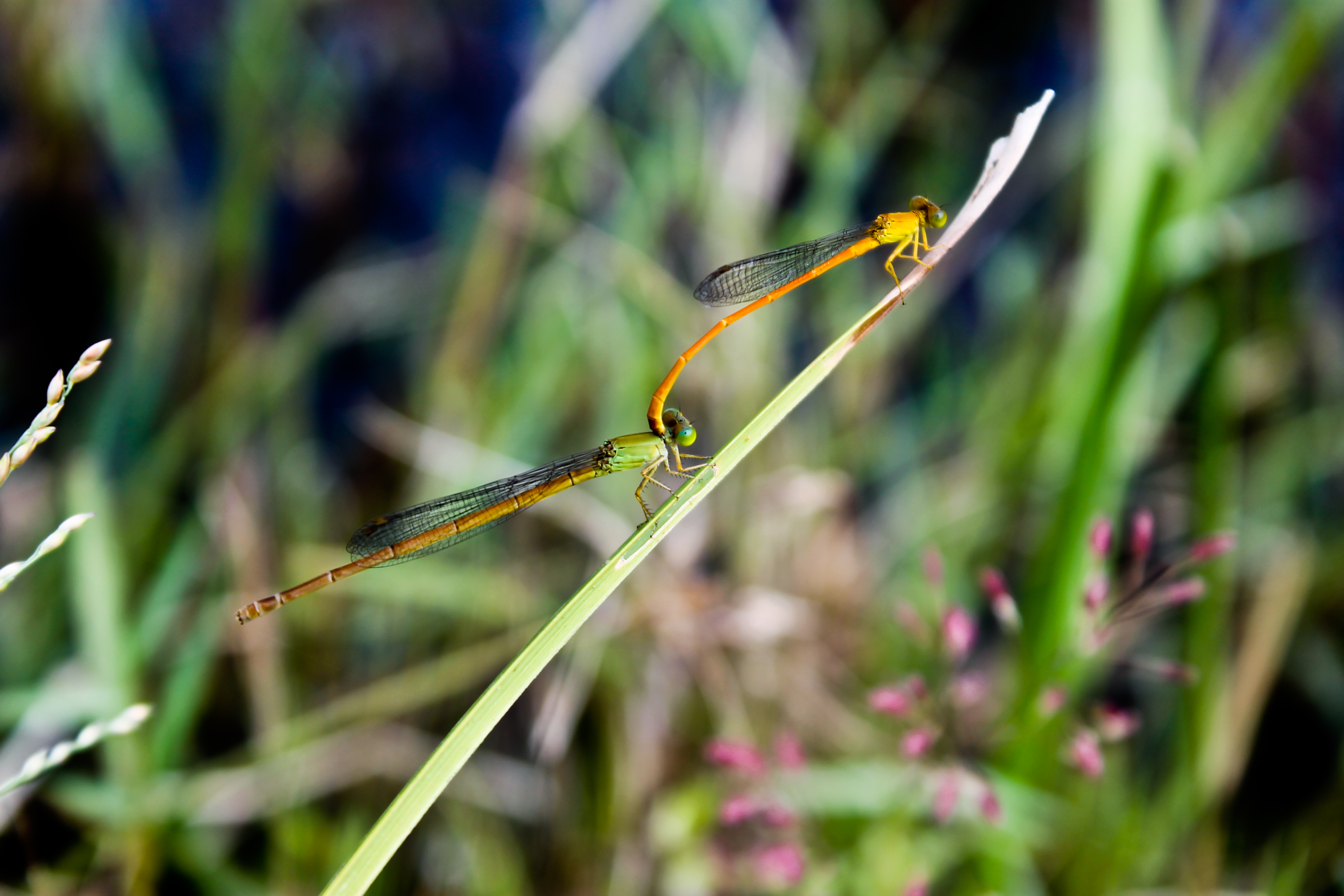
Orange Marsh Dart

Orange Marsh Darts, Ceriagrion rubiae in copula, photographed in the Periyar Tiger Reserve. The male is mostly golden, while the female is more olivaceous. I’m unsure whether this is exclusive to this species or in all damselflies Continue reading

Blue-Tailed Yellow Skimmer

A mature male Blue-Tailed Yellow Skimmer,  also known as Asian Widow (Palpopleura sexmaculata) shot in the Periyar Tiger Reserve. This is undoubtedly the smallest species of dragonfly I’ve photographed, scaling it at close to under an inch long. The dragonfly’s abdomen is unique – not only in length, but in breadth and shape. The Trumpet-Tail is another uniquely-abdomened dragonfly I’ve spotted in Periyar – pictures of her next time.

For some reference to size, here’s a short anecdote Continue reading

Scarlet Basker

Teneral (young) female Urothemis signata spotted in the Periyar Tiger Reserve. Her male counterpart is a rich scarlet color throughout, with some black coloration and partially amber-tinted wings.

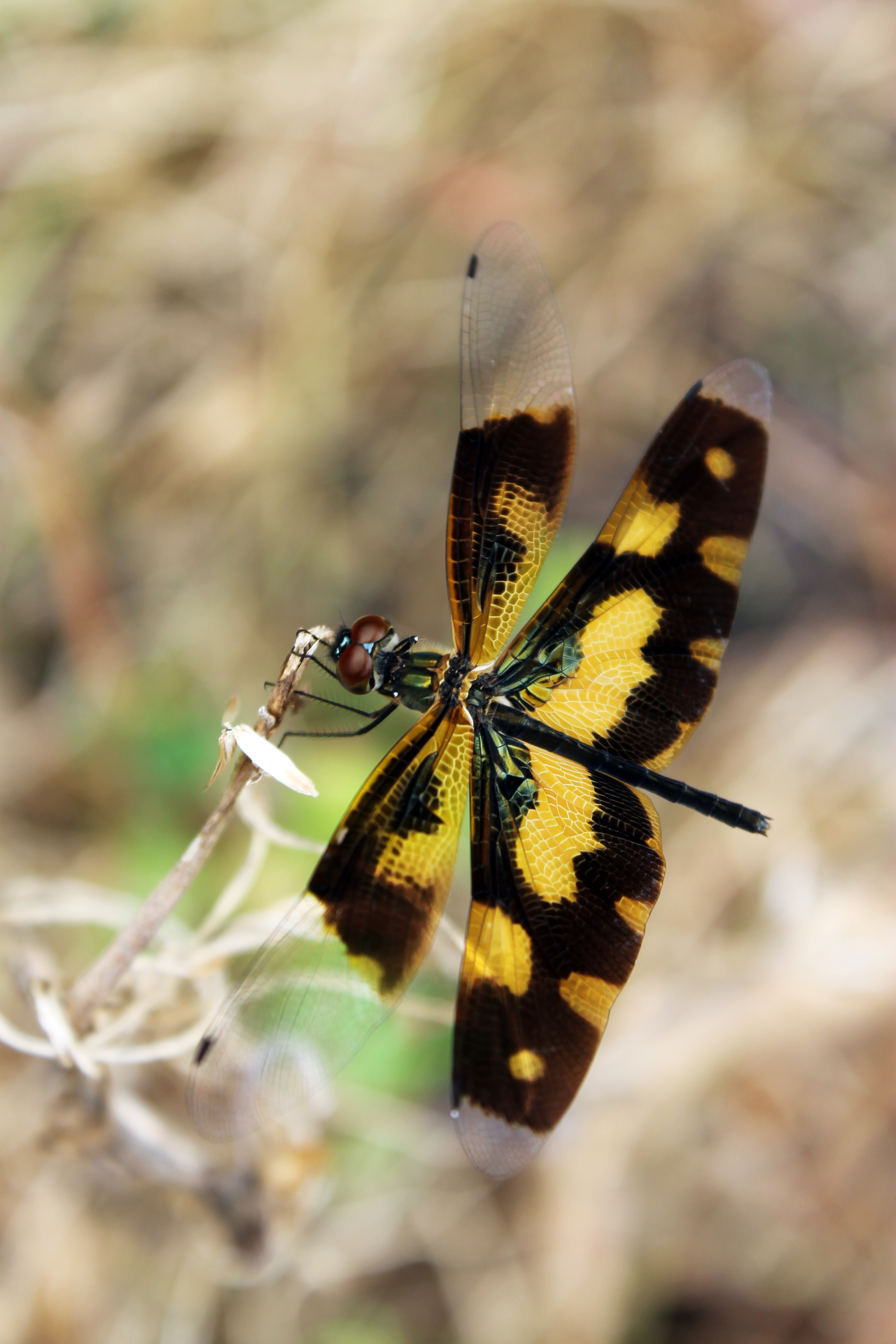
Rhyothemis variegata

Field guides and online  descriptions of this dragonfly dub her the ‘Common Picture Wing’. I ask you to take a good look at her delicate wings – the architecture of the joints on the back of her thorax, and the colored patterns of the papery wings that carry her so gracefully through the air. I ask you to ask yourself – why is it called the Common Picture Wing?


Oxygen & Odonata

300 million years ago, the world was a very different place. Besides the severe geological changes and the sudden appearance of invertebrates, the Paleozoic Era was host to a severe change in atmospheric composition – namely the extreme increase of oxygen levels, and a drastic drop of carbon dioxide. The atmosphere, changing so radically, caused one or two ice ages, a few extinctions, and a natural development of what we today would consider very strange creatures indeed.


Scientists today, curious about (or perhaps inspired by) the fossils of dragonflies with 2-foot wingspans that zipped and zoomed (or whooshed, rather) through the Paleozoic skies, have been conducting experiments on the effects of atmospheric oxygen levels on short-term adaptation in a variety of insects.  In late 2010, results were produced – on a large scale.