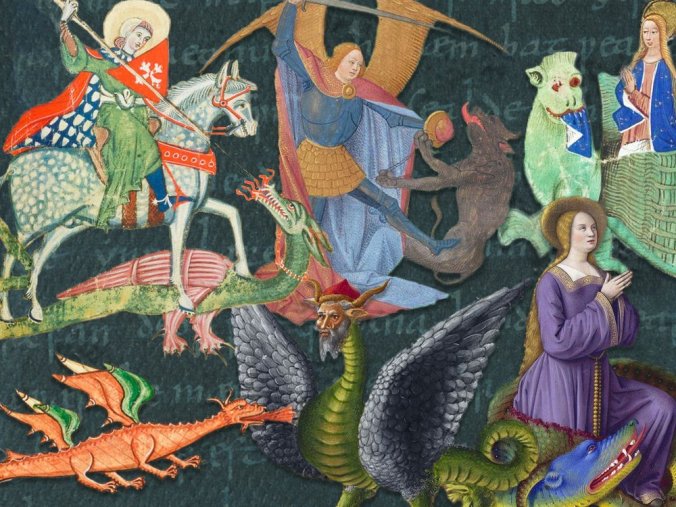
During the Middle Ages, dragons more often figured in accounts about the lives of saints and religious figures than stories of heists and adventures. Photo illustration by Meilan Solly / Photos via Wikimedia Commons and British Library under public domain
Dragon flies had a run in our pages, and we have featured some real life reptilian dragons, as well as a fruity dragon, but the mythical type never found its way here until now. As a cultural phenomenon it is as interesting as any other kind of dragon:
Why Dragons Dominated the Landscape of Medieval Monsters
The mythical beasts were often cast as agents of the devil or demons in disguise
David M. Perry and Matthew Gabriele
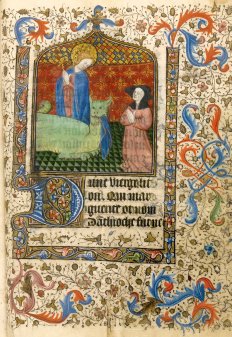
Illuminated manuscript featuring Saint Marina and the dragon Public domain via Wikimedia Commons
The dragon resting on its golden hoard. The gallant knight charging to rescue the maiden from the scaly beast. These are images long associated with the European Middle Ages, yet most (all) medieval people went their whole lives without meeting even a single winged, fire-breathing behemoth. Dragons and other monsters, nights dark and full of terror, lurked largely in the domain of stories—tales, filtered through the intervening centuries and our own interests, that remain with us today.
As Halloween approaches, we’re naturally thinking about scary stories. Continue reading
 Organikos