Citizen Science Deepdive

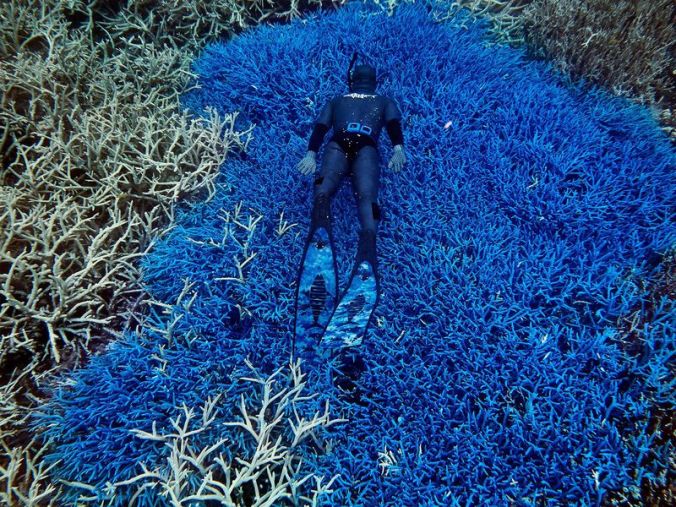
By collecting images and GPS data from citizen divers, scientists can get a better sense of the health of the entire Great Barrier Reef. (Damian Bennett)

Citizen Science has been a common thread for us on this site, linking creatures of land, sea and air as subjects of study. Marine Ecosystem citizen science has especially  fascinated us in terms of the creative thinking applied to problems of invasive species.

The collaborative goal of documenting such a vast ecosystem as the Great Barrier Reef, and using creative solutions to combat threats to this wonder of the natural world is inspiring, to say the least.

Massive Citizen Science Effort Seeks to Survey the Entire Great Barrier Reef

Only about 1,000 of 3,000 individual reefs have been documented, but the Great Reef Census hopes to fill in the gaps

The majority of individual reefs that make up the Great Barrier Reef have not been directly surveyed. (Damian Bennett)

In August, marine biologists Johnny Gaskell and Peter Mumby and a team of researchers boarded a boat headed into unknown waters off the coasts of Australia. For 14 long hours, they ploughed over 200 nautical miles, a Google Maps cache as their only guide. Just before dawn, they arrived at their destination of a previously uncharted blue hole—a cavernous opening descending through the seafloor.

After the rough night, Mumby was rewarded with something he hadn’t seen in his 30-year career. The reef surrounding the blue hole had nearly 100 percent healthy coral cover. Such a find is rare in the Great Barrier Reef, where coral bleaching events in 2016 and 2017 led to headlines proclaiming the reef “dead.”

“It made me think, ‘this is the story that people need to hear,’” Mumby says.

The expedition from Daydream Island off the coast of Queensland was a pilot program to test the methodology for the Great Reef Census, a citizen science project headed by Andy Ridley, founder of the annual conservation event Earth Hour. His latest organization, Citizens of the Great Barrier Reef, has set the ambitious goal of surveying the entire 1,400-mile-long reef system in 2020.

“We’re trying to gain a broader understanding on the status of the reef—what’s been damaged, where the high value corals are, what’s recovering and what’s not,” Ridley says. Continue reading

This Earth Hour Could Be Epic

Screen Shot 2016-03-18 at 4.01.10 PM

This Earth Hour, join the biggest solar revolution ever – go solar!

This Earth Hour, switch off your lights and switch on the power of the sun. Find out how you can join the biggest solar revolution ever, right here in India, and be a part of the global climate action!

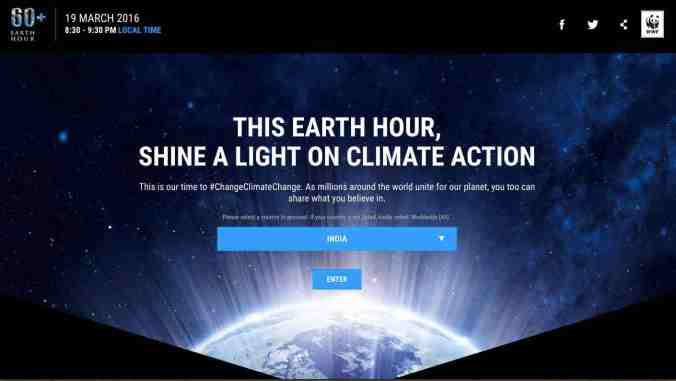
We clicked on the India option first (since so many of our own initiatives are there), which led us to India’s activities related to Earth Hour. Next, Costa Rica. If you visit the website WWF set up to explain and promote Earth Hour, you will get the simple explanation:

As the world stands at a climate crossroads, it is powerful yet humbling to think that our actions today will decide what tomorrow will look like for generations to come. This Earth Hour, ​switch on your social power​ to shine a light on climate action. This is our time to #ChangeClimateChange…our future starts today.

Earth Hour is on Saturday, 19 March 2016 8:30 p.m. local time. Continue reading

Earth Hour 2014 at Xandari

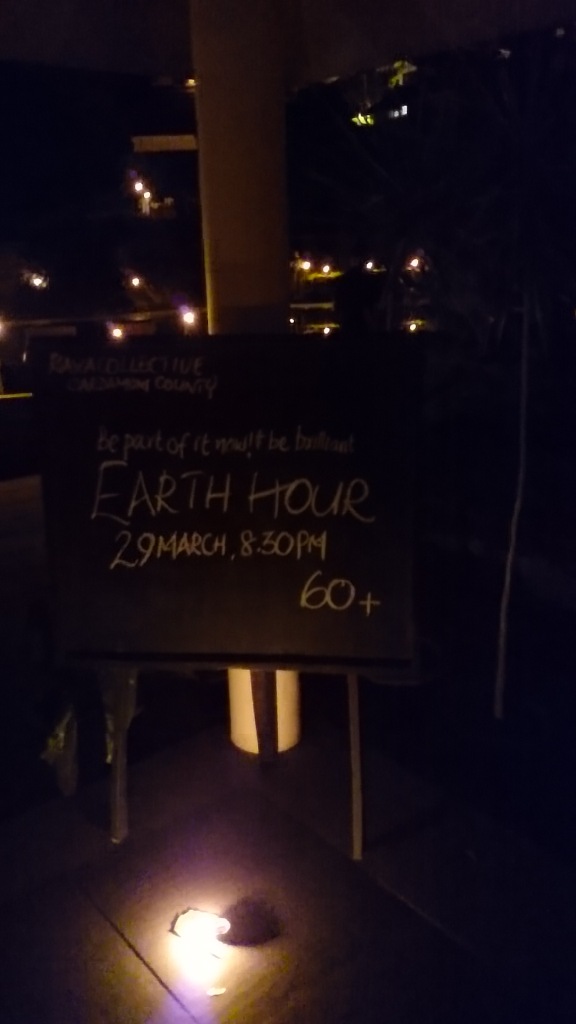
This past March, on the 29th, Xandari supported the 60+ Earth Hour movement by hosting a candle-lit dinner and inviting guests to turn off their lights between 8:30-9:30PM to join hundreds of millions of people around the world in saving energy. In 162 countries and around 7,000 cities, people joined Earth Hour and the World Wildlife Fund for Nature to symbolically pledge to do more for the environment and engage in energy-saving efforts throughout the year. Watch the video below for some footage of national monuments around the world flipping the switch for an hour, and learn more about the 60+ movement.  Continue reading

Earth Hour 2014


Earth Hour

Earth Hour

RAXA Collective properties joined the millions of people around the world celebrating Earth Hour on March 29th. Earth Hour is a voluntary movement with the goal to highlight global activism about energy consumption. One hour staggered in local time across the globe people come together and switch off all their electricity. Continue reading

“I Will!”

What began as a WWF Australia project to focus public attention on climate change has turned into an international movement that has become the largest voluntary action ever witnessed, reaching 1.3 billion people across the globe.

In the best possible way the movement has gone viral, expanding exponentially, bringing people together in a celebratory atmosphere that represents the power of social media and a good idea. Continue reading