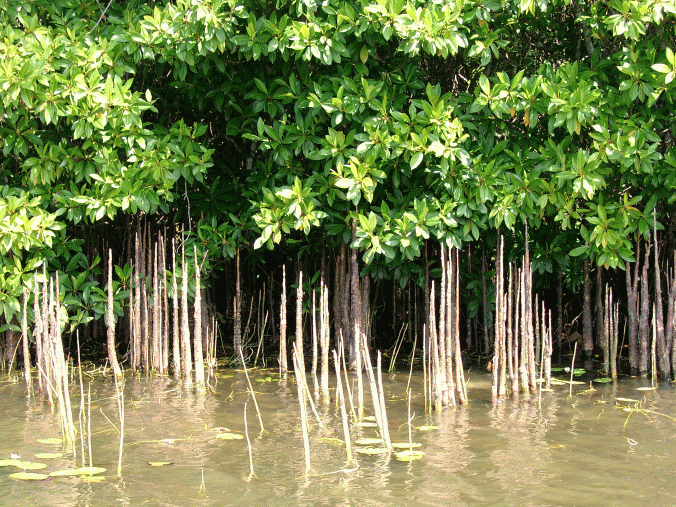
The new national scheme aims to set up 1,500 community groups around Sri Lanka’s 48 lagoons, which will offer alternative job training and micro-loans to 15,000 people. The groups will be responsible for the upkeep of designated mangrove forests. PHOTO: Outdoor Conservation
Big news for the environment: Sri Lanka’s new government just took the unprecedented, historic step to protect all of its mangroves. The move, the first of its kind anywhere in the world, will provide long-term environmental, social and, last but not least, economic benefits to the Indian Ocean island nation, and provide a model for other vulnerable tropical nations to follow. Whose are the champions of this mission? Women.
Started in the 1970’s and gaining in much popularity during the next two decades, ecofeminism seeks to foster a connection between repression of women with the damage caused to nature and natural resources. It is based on the philosophy that both women and nature exhibit the same values and characteristics like nurturing and hence see it as the responsibility of women to undertake ecological causes. One of the most memorable events of ecofeminism occurred in Kenya when rural women planted trees as part of a soil conservation effort to avert desertification of their land as a part of the Green Belt Movement formed by Wangari Maathai. The women of Greenham Common Peace Camp were instrumental in the removal of nuclear missiles there, a fight lasting for over ten years. Sometimes ecofeminism has also been an avenue through which minority and repressed communities like the Native Americans have found their voice. Mohawk women along the St. Lawrence River established the Akwesasne Mother’s Milk Project to monitor PCB toxicity while continuing to promote breastfeeding as a primary option for women and their babies. More.
 Organikos