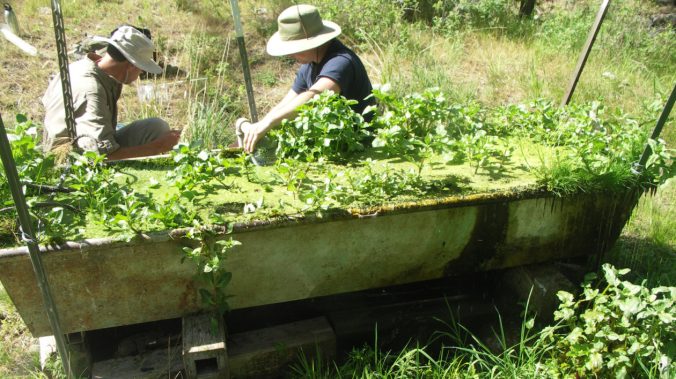
Hydrologists Zach Freed (The Nature Conservancy) and Hank Johnson (U.S. Geologic Survey) measure water chemistry of the spring from the inflow pipe to the old trough, which is filled with emergent aquatic vegetation. Photo © Allison Aldous / The Nature Conservancy
Thanks to Lisa Feldcamp at the Nature Conservancy for this story:
Sharing Water: How I Met the MacGyvers of Water Use
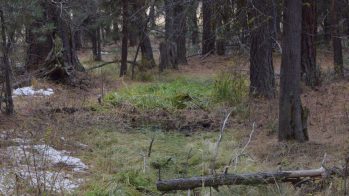
Down the stream at Sand Spring you can see an elk wallow. Photo © Lisa Feldkamp / The Nature Conservancy
“It’s like leaving the kitchen faucet on all year for one glass of water,” says Zach Freed, a hydrologist for the Nature Conservancy in Oregon. That’s how people in Oregon and throughout the US West have traditionally used spring water.
When European homesteaders first came west, spring water must have seemed like an endless resource. Homesteaders could find a potable spring and turn on the tap to provide water for their families and livestock. As the generations came and went, old ranches failed, and new ones sprang up. Springs came in and out of use, but it often happened that nobody ever turned off the tap. Continue reading
 Organikos