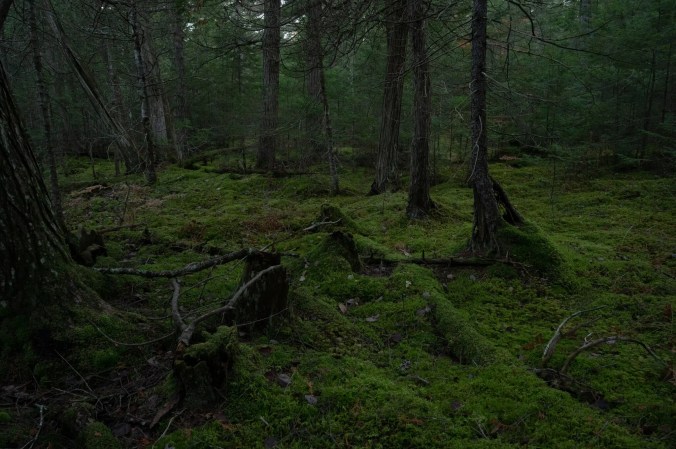
Dawn rises over a forest outside Orono, Me. Researchers want to understand what leads mice, voles and other small animals to bury seeds that become forests.
There really are coincidences that have nothing to do with the overreach of internet companies who see what you are reading in one place and put something in front of you instantly, and for a long time following, based on that first subject. In this case, I was reading about the endless quest for a better mousetrap, and then came upon this fascinating article about the ecosystem services that mice convey. This was as smile-inducing a juxtaposition as my reading has provided me lately. I hope I am correct that this pure chance and not some creepy algorithm, which would wilt my grin:
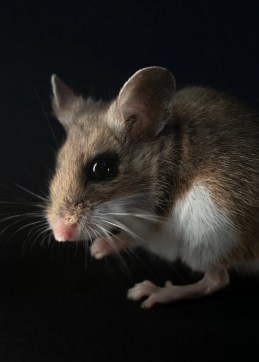
A deer mouse, temporarily captured for a behavioral test before being rereleased to the grounds of a study site at the University of Maine in late October.
Meet the Mice Who Make the Forest
Scientists are unearthing a quiet truth about the woods: Where trees grow, or don’t, depends in part on the quirky decisions of small mammals.
It’s easy to look at a forest and think it’s inevitable: that the trees came into being through a stately procession of seasons and seeds and soil, and will replenish themselves so long as environmental conditions allow.
Hidden from sight are the creatures whose labor makes the forest possible — the multitudes of microorganisms and invertebrates involved in maintaining that soil, and the animals responsible for delivering seeds too heavy to be wind-borne to the places where they will sprout. Continue reading


 Organikos