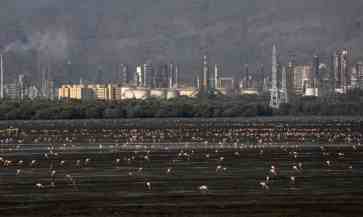
Flamingos eat plankton in front of an industrial area at Sewri mudflats, Mumbai. Photograph: Divyakant Solanki/EPA-EFE
Payal Mohta reported from Mumbai for this story in the Guardian that caught our attention with images of urban flamingos. An unusual beauty can be the result of a common problem. As it is important to understand nature in wilderness areas, which is our strong preference, it is also important to understand these man-made phenomena:
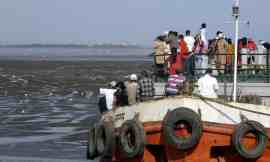
People watch flamingos from a boat during the Bombay Natural History Society’s flamingo festival. Photograph: Hindustan Times/Hindustan Times via Getty Images
There is an air of anxious excitement among the urban professionals and tourists on board our 24-seater motorboat as we enter Thane Creek.
A chorus of “oohs” and “aahs” breaks out as we spot the visions in pink we came to see – hundreds of flamingos listlessly bobbing in the murky green water – followed by the furious clicking of cameras.
Flamingos at Sewri. Photograph: Hindustan Times/Hindustan Times via Getty Images
Then, almost as one, the birds skim the water and take off in sync. “They always stay together,” says Prathamesh Desai, who has been organising birding excursions in the city for seven years. “They are an extremely gregarious species.”…
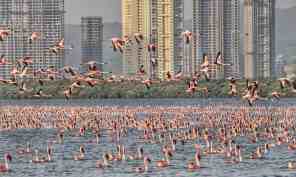
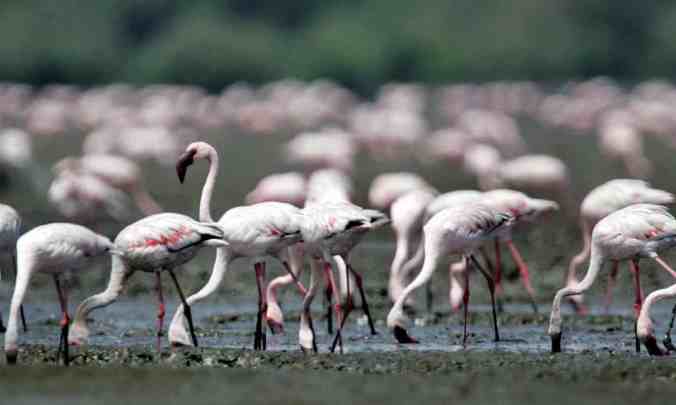
Flamingos at Sewri. Photograph: Hindustan Times/Hindustan Times via Getty Images
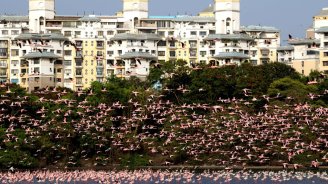
Flamingos flock to Mumbai between September and April, but this year there are almost three times more birds than the amount that usually flocks to the area.
Bachchan Kumar/Hindustan Times via Getty Images
That story continues after the jump below. First, thanks to National Public Radio (USA)’s Audrey Nguyen and Sarah Oliver for producing and bringing this story to our attention with this opening line (which goes on to credit the Guardian story as its source):
Around this time every year, tens of thousands of flamingos flock to Mumbai to feed. But this year, there are almost three times more than the normal amount in the city — about 120,000.
The reason for the influx is currently a mystery. But some scientists believe that pollution in the birds’ natural habitat might be one factor at play… Continue reading
 Organikos