Glass Eels & Industry

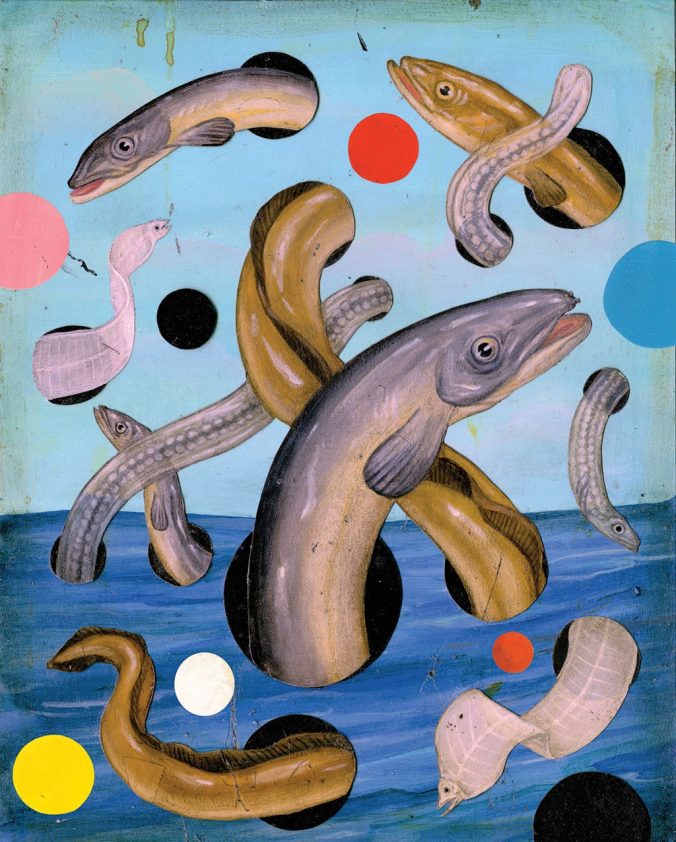
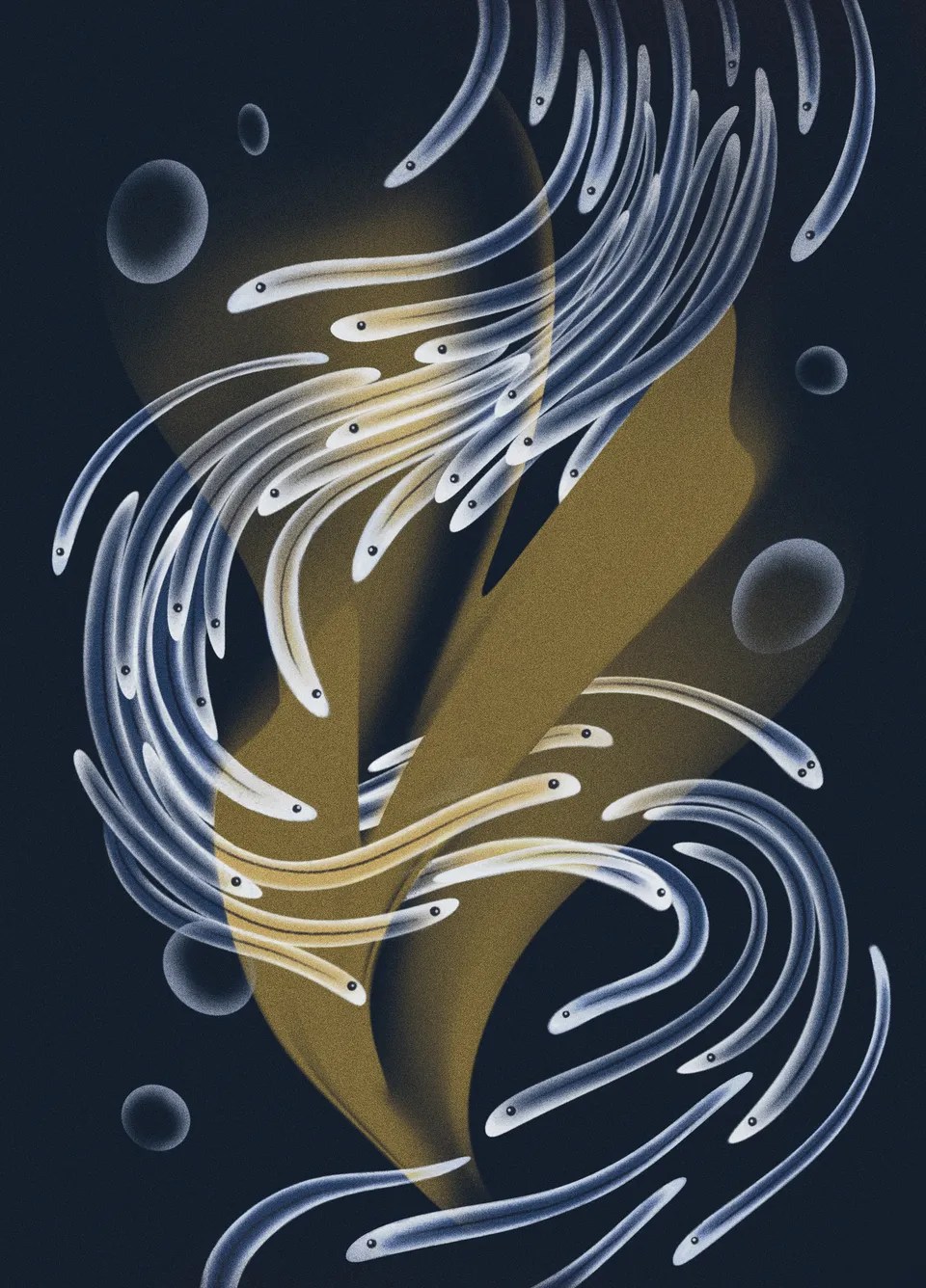
A lot of Mainers want badly to win the elver lottery. This year, more than forty-five hundred people applied for sixteen available licenses. “It’s an industry, not a fucking cult,” a fisherman said. Illustration by Agnes Jonas

Salty language comes with the territory in this story; we thank Paige Williams as always for her excellent reporting at the intersection of natural history and current environmental affairs:

Inside the Slimy, Smelly, Secretive World of Glass-Eel Fishing

Each spring, hundreds of millions of baby eels swarm the waterways of coastal Maine. Soaring global demand incited an era of jackpot payouts and international poaching.

The Sargasso Sea, a warm, calm expanse of the North Atlantic Ocean, is bordered not by land but by four strong currents—a gyre. Vast mats of prickly brown seaweed float so thickly on the windless surface that Christopher Columbus worried about his ships getting stuck. Continue reading
One More Eel Mystery Revealed

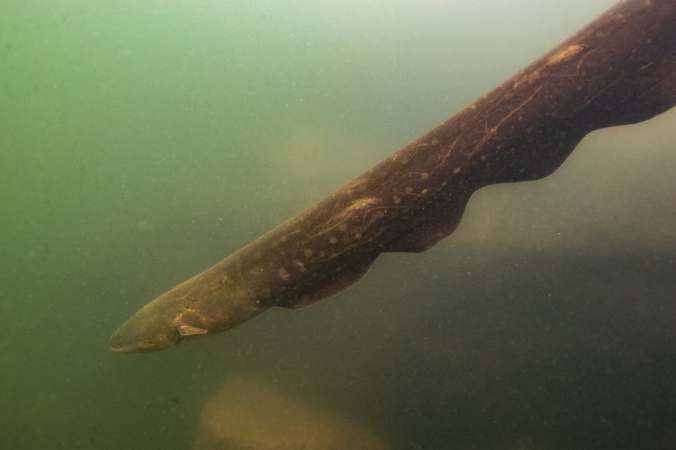
A Volta’s electric eel in the Xingu River in northern Brazil. L. Sousa

Our attention to eels is only occasional, but the mysteries keep coming.  The article contains an amazing video of this pack-hunting phenomenon. Thanks to Annie Roth for this:

Electric Eels Hunt in Packs, Shocking Prey and Scientists

The behavior, used by wolves and orcas to run down fast prey, is rarely seen in fish.

In August 2012, Douglas Bastos, then a graduate student at Brazil’s Instituto Nacional de Pesquisas da Amazônia, was exploring a remote waterway in the Amazon rainforest when he came across a small lake teeming with electric eels. Continue reading

Mysterious Eels

BookOfEelsThis book (click the image to the left to go to the publisher) has become an unexpected bestseller. The other times we have posted on the topic of eels, a couple of them were artistic in nature and the other were scientific in nature. I would not have predicted that a whole book on the topic was something I would want to read, let alone that a very sizable audience would develop. I would expect that if there were to be more than four posts mentioning eels in the nine years we have been posting, we might have covered the topic of aquatic agriculture. But, no.

BookOfEelsNPRWhen I listened to a conversation (click the image to the right to go to the podcast) with the author of The Book of Eels it reminded me that I had already read a review of the book by Brooke Jarvis a few months earlier. And that we should post more on eels The illustration adorning the review was fun. The opening paragraphs were compelling:

200525_r36517

The mysterious creature has attracted avid detectives since ancient times. Illustration by Jason Holley

In the spring of 1876, a young man of nineteen arrived in the seaside city of Trieste and set about a curious task. Every morning, as the fishermen brought in their catch, he went to meet them at the port, where he bought eels by the dozens and then the hundreds. He carried them home, to a dissection table in a corner of his room, and—from eight until noon, when he broke for lunch, and then again from one until six, when he quit for the day and went to ogle the women of Trieste on the street—he diligently slashed away, in search of gonads. Continue reading

Electric Eels Can Paralyze Prey

Photo via National Geographic

We’ve seen eel art before, but actually don’t know much about these fish or their biology. Electric eels are even more fascinating for obvious reasons, but of course are also that much more mysterious to us. National Geographic science writer Ed Yong fills us in with the help of Vanderbilt University biologist Ken Catania below:

A fish swims in the Amazon, amid murky water and overgrown vegetation. It is concealed, but it’s not safe. Suddenly, two rapid bursts of electricity course through the water, activating the neurons that control the fish’s muscles. It twitches, giving away its position, and dooming itself. Now, it gets zapped by a continuous volley of electric pulses. All its muscles contract and its body stiffens. It can’t escape; it can’t even move. Its attacker—an electric eel—moves in for the kill.

Continue reading