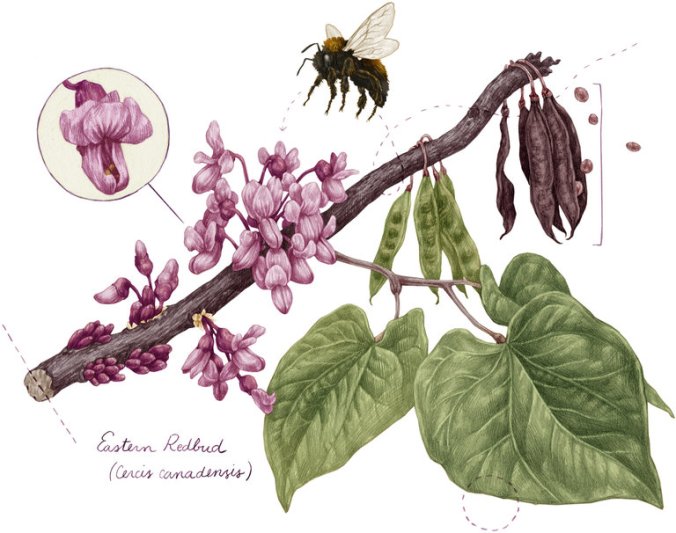
Popkin’s Arboreal Editorial

27popkin-master768

Credit Zoe Keller

Economic value from trees is as old as mankind. Timber for homes and ships and all variety of implements. Nutritional value also: olives and their oil; figs; nuts. In the last year while in the forests of northwest Belize we were on the lookout for something new, something we had not yet known, something that would reveal new value within the forest; we had no clue what it might be. We were looking for the intersection between economic, nutritional and ecological value.

And finally a few months ago we came upon a nut that was new to us, and the trees it grows upon are particularly valuable from an ecosystem perspective. And an ethnobotanical perspective. So we are on the lookout for tree stories, especially those that overlap with themes we tend to in these pages–ecological, cultural and edible. We have linked to articles by Gabriel Popkin a couple of times previously, so we are not surprised by this editorial fitting our schema so well:

For several years, I’ve led tree walks in Washington, D.C. I start by asking participants who they are and why they want to spend precious hours looking at trees. My students are nearly all highly educated, successful people who work impressive jobs, speak multiple languages and effortlessly command sophisticated computers and phones. Yet most know barely the first thing about the trees around them. They want to change that. Continue reading
Lost Rice, Found Alive

image005_custom-74fcf2c593047698233b11f237300862d88e143a-s1400-c85.jpeg

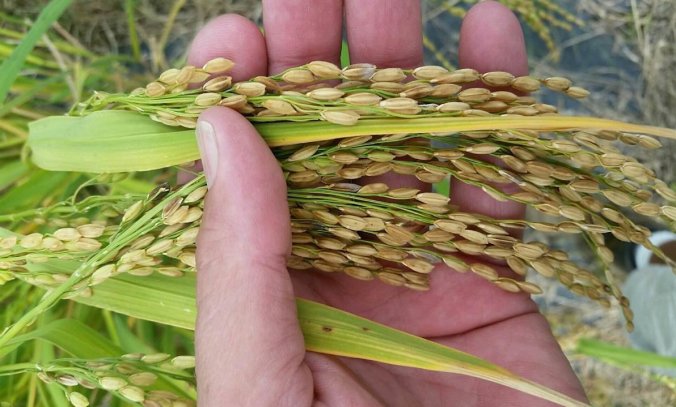
An upland rice strain. Courtesy of Brian Ward

Thanks to the salt and National Public Radio (USA) for this story about the strain of a grain means so much to billions of people around the world:

A grain of rice, like a grain of sand, sifts through your hands with a mysterious and lovely sameness. Mostly white or tan, hundreds or thousands of grains pour smoothly out of buckets, out of burlap, into bowls, with a sound like small waterfalls. Rice seems so simple, really. And yet, because it plays a central role in world cuisines, these modest grains can carry the weight of history. Sometimes that history is deeply surprising. Continue reading

Indigenous-Outing

160808_r28495-1200

Mr. Anderson’s work is often, like his colleague Elizabeth Kolbert’s, unusually thick in detail, and often kind of heavy. This item is heavy, detailed, but fascinating. His writing is often without illustration yet this piece is reported with abundant and excellent photography. Read a snippet below to get a sense of the interior of the article:

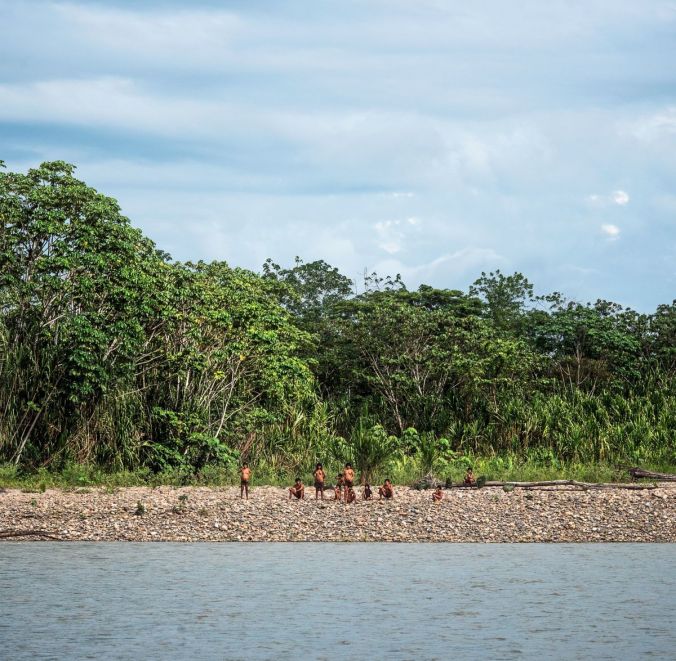
AN ISOLATED TRIBE EMERGES FROM THE RAIN FOREST

In Peru, an unsolved killing has brought the Mashco Piro into contact with the outside world.

By Jon Lee Anderson

…The Ministry of Culture’s team gathered a few months ago in Cuzco, high in the Andes, where a van was loaded with provisions. The leader was an anthropologist named Luis Felipe Torres, a slim man in his early thirties with an aquiline face and the unassuming manner of a professional observer. He was joined by Glenn Shepard, an American ethnobotanist. A youthful-looking man of fifty, Shepard had lived for a year in the nineteen-eighties among the Matsigenka people, who shared territory with the Mashco; he had learned their language and returned many times since. Shepard worked at the Emílio Goeldi Museum, an Amazonian-research center in Brazil, but he travelled to Peru frequently as an informal adviser to Torres’s department.

Continue reading