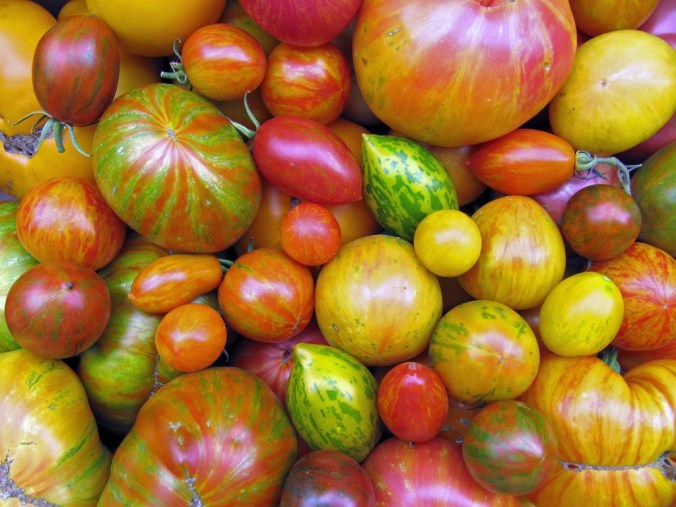
Mr. Gates sells about 60 of his own open-pollinated varieties, many with especially bright colors and unusual shapes, and shares growing tips online. Credit Wild Boar Farms
From our perspective, many agricultural “developments” deserve quotations. The Agricultural Industrial Complex of Monsanto and their ilk more frequently serve to further their own economic gain rather than preserve species or better the health and livelihoods of the farmer or consumer.
Preserving the genetics of fruit and vegetable species down to their paleo-botanical ancestry is an entirely different story, and may be our best chance to overcome the obstacles of harsher and harsher weather conditions.
Reinventing the Tomato for Survival in a Changing World
Like other small farmers and researchers, Brad Gates is trying to ensure a future for the tomato by breeding hardier varieties and persuading more Americans to grow their own.
NAPA, Calif. — In a borrowed van, Brad Gates of Wild Boar Farms sped south on Interstate 680 with hundreds of fuzzy tomato seedlings bumping around in the back, their trembling leaves, warmed by the sun, filling the cab with the smell of summer. It was one of a half-dozen deliveries on his to-do list.
Born and raised in Northern California, Mr. Gates has been organically farming tomatoes in the region for 25 years, working on small leased plots and introducing new varieties with cult followings, like the dark, meaty Black Beauty and the striped, rosy-pink Dragon’s Eye.
For most of that time, he sold his tomatoes to top restaurants, including Chez Panisse in Berkeley. But a few years ago he completely rethought his work. Galvanized by climate change, he joined a growing number of farmers who are trying to find a future for their threatened crops — in his case, the queen of the farmers’ market.
As Mr. Gates bred tomatoes, he noticed that many of his orange and yellow varieties were unusually heat-tolerant. Credit Wild Boar Farms
Mr. Gates now grows thousands of tomato plants each year, selling the young ones to local shops and the seeds all over the country through his website and catalogs, encouraging people to grow their own at home. He believes that the tomato’s survival and continued deliciousness depend on the plant’s diversity, and he considers breeding hardy, cold-tolerant and heat-tolerant varieties an essential part of his work — not just to provide food, but also to expand the number of places where the plant can flourish. Continue reading

 Organikos