
A cartoon from the mid-1800s, using apparently sophisticated insects to satirise French society (Credit: Getty Images)
Thomas Moynihan, a research fellow at Forethought Foundation and St Benet’s College, Oxford University offers this entertaining treatment of how Western culture has seen and thought about its insect co-habitants of the planet.
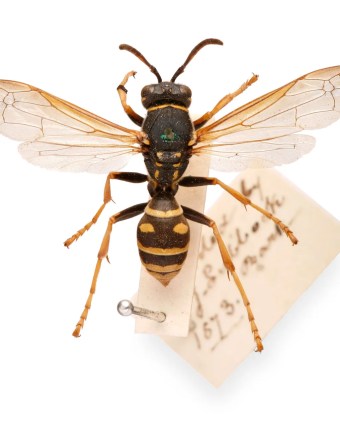
Lubbock’s wasp, described by one journalist as “a little gentleman in a brown overcoat, with black and yellow nether garments” (Credit: Alamy)
How insect ‘civilisations’ recast our place in the Universe
When looking to other creatures for signs of intelligence, insects are rarely the most obvious candidates, but as the historian Thomas Moynihan writes, it wasn’t always so. What can the early-20th Century fascination with bug societies tell us about our own?
It is 1919, and a young astronomer turns a street corner in Pasadena, California. Something seemingly humdrum on the ground distracts him. It’s an ant heap. Dropping to his knees, peering closer, he has an epiphany – about deep time, our place within it, and humanity’s uncertain fate. Continue reading
 Organikos