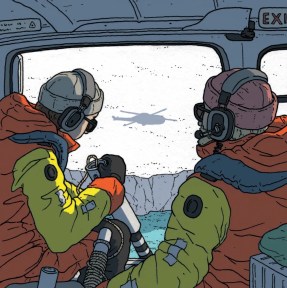
Thwaites & Us

Probes beneath the ice could shed light on the fate of the world’s coastlines. Illustration by Owen D. Pomery

Most of us do not spend much time thinking about what is happening there, but Antarctica’s future is now very much entwined with the future of the rest of the planet.  All of us. So, thanks to David W. Brown for this travelogue:

Journey to the Doomsday Glacier

Thwaites could reshape the world’s coastlines. But how do you study one of the world’s most inaccessible places?

I first saw our icebreaker, the RV Araon, when we were due to leave for Antarctica. The largest icebreakers are more than five hundred feet long, but the Araon was only the length of a football field; I wondered how it would handle the waves of the Southern Ocean, and how it would fare against the thick sea ice that guards the last wilderness on Earth. Continue reading

Kiwis Were Diversified by Glaciers in NZ

Tasman Lake, which is fed by melt water from the retreating Tasman Glacier. Photo by Trevor Chinn

The kiwis referred to here are cute, small, fluffy, brown birds, not to be confused with small fuzzy brown fruit nor with the people who live in New Zealand. These flightless and nocturnal birds used to be divided in three to five species, but new DNA evidence from extensive blood sampling conducted over the last couple decades in their island home is indicating that there is in fact much more genetic diversity – which is often separated geographically – than previously thought, perhaps even enough to declare new species, or at the very least certainly new subspecies. And this might affect conservation strategies for these birds, which are all either endangered or vulnerable to endangerment. Ed Yong reports:

Several million years ago, a small bird flew to New Zealand. Arriving there, it found few threats and plenty of opportunities. In the absence of mammals, its descendants gradually lost the ability to fly, as island birds are wont to do. They also evolved to fill those niches that mammals typically occupy, rootling around the leaf litter in search of worms and grubs. They transformed into that icon of New Zealand—the adorable, bumbling kiwi.

Or rather, they transformed into the kiwis.

Continue reading

The Whole Picture

Did you take these for just some stunning water colors? Well, these are hard data on climate change. An artistic expression of an ugly, oft overlooked truth. Jill Pelto, the artist, who graduated in December from the University of Maine with a degree in earth science and studio art, created these paintings based on graphs of data on the environmental effects of climate change.

Continue reading