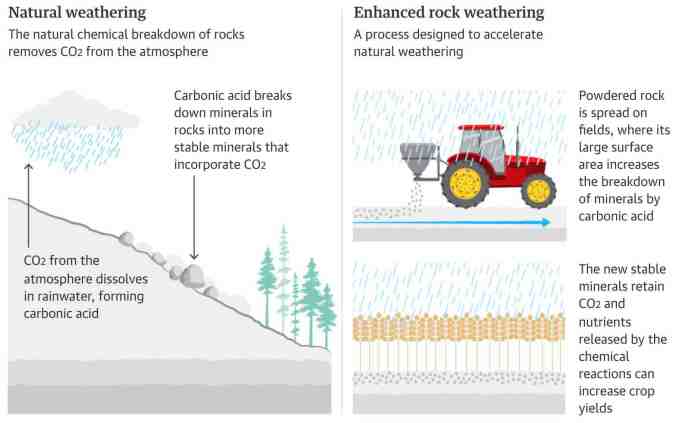
Guardian graphic. Source: Guardian research
Damian Carrington, Environment editor at the Guardian, shares these findings:
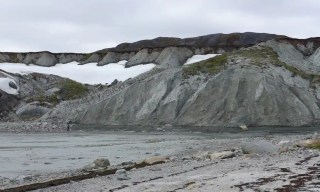
Eight-thousand-year-old marine deposits, exposed by the slow rise of Greenland after the last ice age. The cliffs are about 15 metres high. Photograph: Minik Rosing
Rock ‘flour’ from Greenland can capture significant CO2, study shows
Powder produced by ice sheets could be used to help tackle climate crisis when spread on farm fields
Rock “flour” produced by the grinding under Greenland’s glaciers can trap climate-heating carbon dioxide when spread on farm fields, research has shown for the first time.
Natural chemical reactions break down the rock powder and lead to CO2 from the air being fixed in new carbonate minerals. Continue reading
 Organikos