Oats, Health & Planet

5100

My eye is always caught by updated research findings on various food choices that are found to be either more environmentally friendly or healthier to consume–better for the planet or better for the human body–or both. I started a month-long test of my ability to give up foods and beverages that strain the environment and my body, so this article was on my to-read list the last few days:

5472 (4)

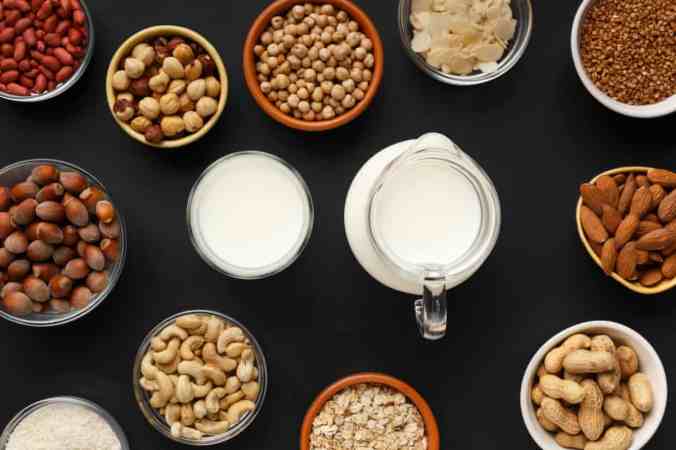
Plant-based milk is better for the planet than dairy, but it can have a dark side. Photograph: Prostock-studio/Alamy Stock Photo

Almonds are out. Dairy is a disaster. So what milk should we drink?

A glass of dairy milk produces almost three times more greenhouse gas than any plant-based milk. But vegan options have drawbacks of their own Continue reading

Know Your Cup of Tea

While tea has an impressive history stretching back 5,000 years, iced tea has a history stretching back only as far as the discovery of preserving ice. PHOTO: darter.in

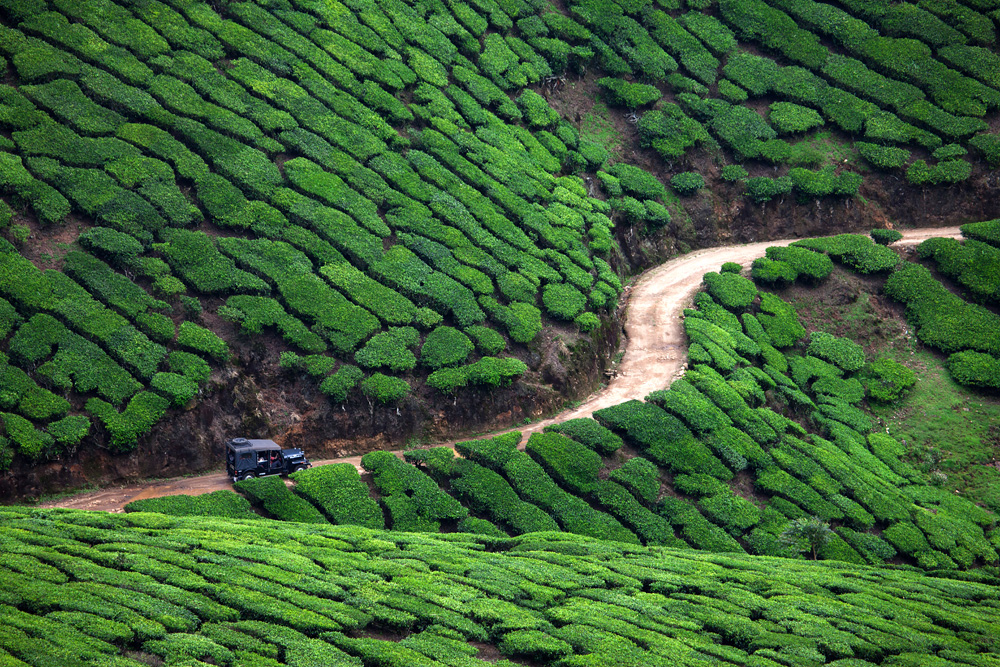
While tea has an impressive history stretching back 5,000 years, iced tea has a history stretching back only as far as the discovery of preserving ice. Picture of a tea garden in Munnar, Kerala. PHOTO: darter.in

Having spent the weekend maneuvering through tea plantations in Munnar, the drive brought back memories of conversations over tea here. There was the post on the complete tea experience – from planting a seed to hand plucking the tender green “silver tips” of the tea, to hand roasting and finally enjoying the “fruits” of one’s labor in distant Thailand. The one on the history of tea, too. And here is the account of how America popularized iced tea (we are betting on it being one of your go-to drinks), courtesy NPR’s The Salt: 

You’d be forgiven for not knowing this, but Wednesday was National Iced Tea Day. And while it’s only an unofficial food holiday, it makes sense that Americans would set aside a day to celebrate this favorite summertime sip: We popularized it. Tea itself, of course, has been consumed in America since Colonial times. (Remember the Boston Tea Party?) But before you could drink iced tea, you needed ice — and that was a rare summer luxury until the early 1800s. New Englanders could cut large chunks of ice from frozen ponds and lakes in winter, then insulate it with sawdust so that it could last into the warmer months. But in the hot South, snow and ice didn’t exactly abound.

Continue reading

Reducing Waste While Contributing to Communities

When “first world” travelers are planning a trip to the “third world”, their doctors often require them to take a handful of vaccinations, and a few prescriptions. This summer, about 40 students from a graduate program at the University of Western Ontario interned in Kerala, hosted by Raxa Collective; many of them, to err on the side of caution brought medicines for tropical diseases, including malaria. However, most of those medications are not needed in Kerala, whose health profile is comparable to Costa Rica, and which happens to be malaria-free.

As weeks progressed, many of the interns stopped taking their pills and consequently they were left with an excess, which are worth much more to those in need than in the garbage can back home. Continue reading

Ayurveda in Kerala: getting back in shape

Ayurveda, India’s traditional medicine is a major presence in healthcare in Kerala. My colleague Lissi has ten years of experience practicing ayurvedic massage. She started her training at an ayurvedic hospital before enrolling at an ayurvedic institute. There, she pursued her apprenticeship while practicing at the hospital. Continue reading

Simple health tips to travel in Kerala from our Ayurvedic doctor

The first aid kit I packed to come here in Kerala is the size of a small shoebox. Except for mosquito repellent and cold cream I have yet to use it, and although I should be relieved, I am annoyed. It’s the heaviest part of my luggage and I’ll probably carry it all back home ! A lot of this medication treats tummy-aches and Kerala has a strong system of traditional medicine, Ayurveda, that handles those issues well and without the long tail of potential side effects.

“You were right to take precautions, when traveling you never know where you’re going to land and what you’re going to find.  Kerala is rich in water sources and is not at risk for Malaria. But you may want to travel to other parts of India which are less fortunate in those regards.” Dr Sulficker reminded me. Dr Pameela Sulficker is the Ayurvedic doctor here at Cardamom County, she introduces travelers to ayurveda at the Ayura Wellness Center. Continue reading

So I’ve arrived at Cardamom county #2: Eating as a physical activity

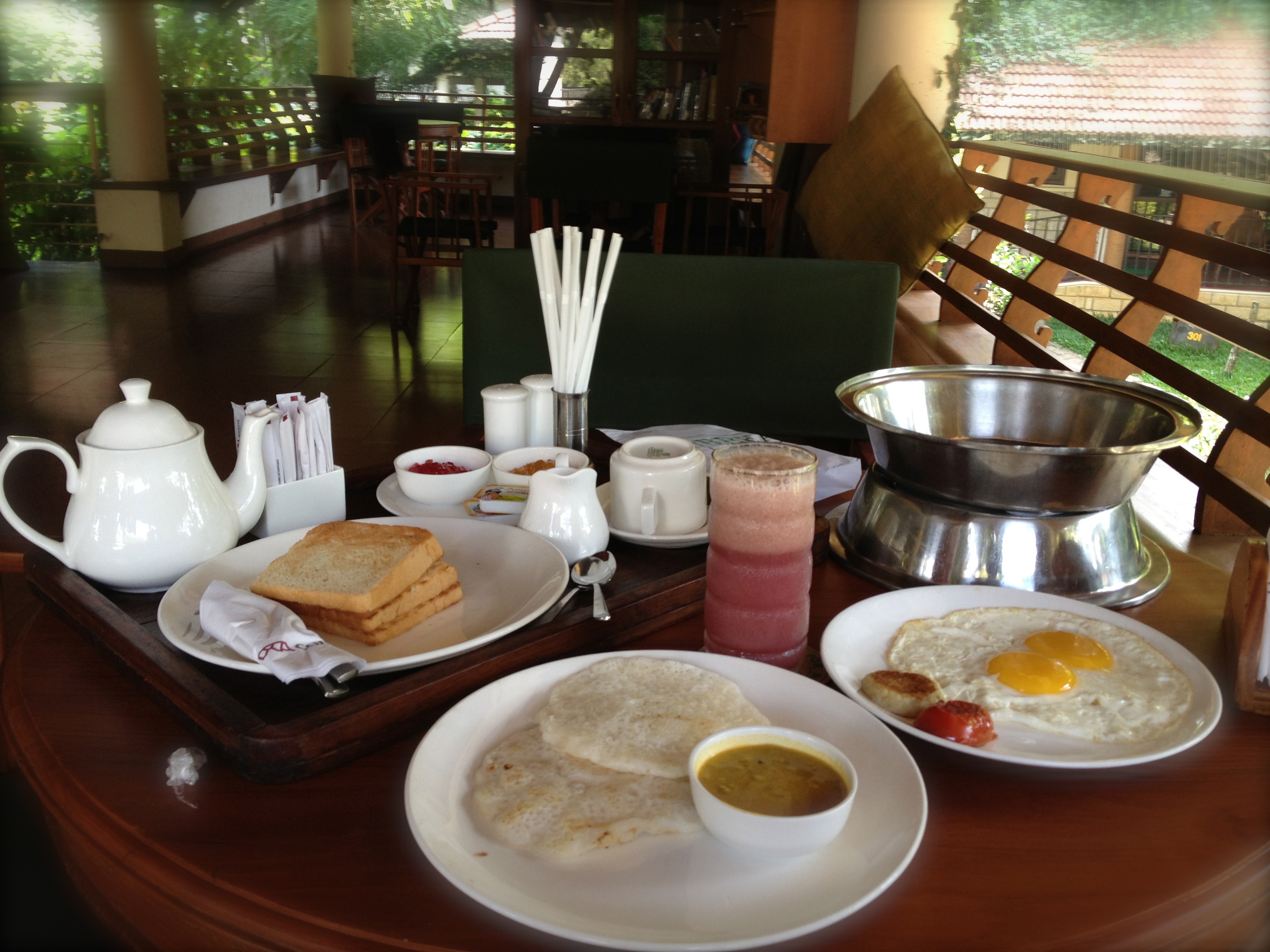
Sunday breakfast indian-style: a meal that just requires to be eaten with the hands

I was about to start my meal at the canteen with my colleagues yesterday when I decided it was time to take the dive and eat with my hands. Boy, was it an exercise, I mean a physical exercise.

As a first-timer I was quite slow: I’ve read it is most polite to use your thumb, pointer and middle finger, and to let only the first two joints of those fingers touch the food.  I’m not sure that I did all that. Also you only eat with your right hand,  even if you’re a lefty. The left hand will take care of menial things such as wiping your tears of eyes after a spicy curry. The whole meal activates so many muscles that it left me exhausted.  It got me thinking about the lack of thought and the lack of physical effort me and my folks, in  westernized countries, put into the act of eating. Eating with the hands is common in many areas of the world, including parts of Asia and much of Africa and the Middle East and it has plenty of health benefits. Continue reading

The Case Against Red Meat

Are you trying to eat healthier? Then stop eating red meat.

That’s the message that we’ve see in the past few years: dozens of news articles and medical journals tell us the dangers of red meat–beef in particular. The recent scare over pink slime has further increased distaste and caution around ground beef, and the suspicion is beginning to spread to other types of meat as well. Amidst all of the hype about meat in our diets, sustainability- and health-conscious consumers might wonder why scientists are focusing on red meat. Why not chicken, pork, or fish? The answer is two-sided: one relates to health concerns, and the other relates to environmental impacts of cattle-raising. Let’s briefly look at both.

Want to dig in? Not so fast, suggests the results from a study of the Harvard School of Public Health. Eating just a few ounces of red meat every day can increase your risk of colon cancer and heart disease.

Continue reading

Ayurveda v. Allopathy

A quick word before my note on this weekend’s three-day perambulation through tiger territory:

From this morning’s Hindu

Personalised Ayurvedic interventions have demonstrated clinically significant improvement in rheumatoid arthritis on a par with allopathy treatment with the added advantage of lesser side-effects, according to a study…

“We cannot make any tall claims with the results since it was a pilot study and the sample size was small. However, the study got a major stimulus when Dr. Edzard Ernst, the first professor of complementary medicine, called it a blueprint for research in Ayurveda,” Dr. Ram Manohar told The Hindu over telephone…

While the study was specific to rheumatoid arthritis, it also looked into whether complex Ayurvedic interventions could be studied in a clinical trial. The double-dummy, double-blind randomised clinical study has clearly shown the feasibility of further studies of this kind.

I haven’t mentioned in previous posts (though Gourvjit has) that Cardamom County Resort houses an Ayurvedic center, nor have I spent time detailing the history of this local art of healing and wellness. I ought to have, however, because this ‘alternative medicine’ is a conspicuous presence in Kerala, and is one reason many travelers are compelled to come here. Although this study doesn’t prove Ayurveda’s general validity from a scientific perspective, it is a first step in bridging the acceptance-gap between allopathic, Western medicine and this traditional, holistic approach.

Take a look at the article, and look out for future studies on Ayurveda’s efficacy!