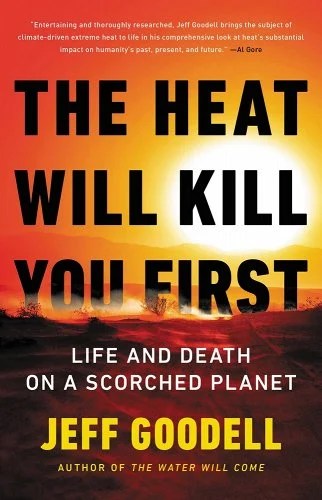
Why Are We Not More Afraid Of The Heat?

Jeff Goodell shares his opinion in the newspaper of record in the USA. It will serve as a preview of his book to the right, reviewed here. He has also spoken about this topic. There is no pleasure to be had here. Only awareness, and the question why we are not doing more:

In Texas, Dead Fish and Red-Faced Desperation Are Signs of Things to Come

In 2019, I happened to be visiting Phoenix on a 115-degree day. I had a meeting one afternoon about 10 blocks from the hotel where I was staying downtown. I gamely thought I’d brave the heat and walk to it. How bad could the heat really be? I grew up in California, not the Arctic. I thought I knew heat. I was wrong. After walking three blocks, I felt dizzy. After seven blocks, my heart was pounding. After 10 blocks, I thought I was a goner. Continue reading

Heat & Humanity

Last week, researchers at nasa and noaa found that “the earth is warming faster than expected.” Photograph by Kyle Grillot / Bloomberg / Getty

This week’s newsletter ponders how adaptable we are and serves as a reminder that we cannot take for granted that we are sufficiently so for the changes upon us:

It’s Not the Heat—It’s the Humanity

Rising air temperatures remind us that our bodies have real limits.

By Bill McKibben

It’s hard to change the outcome of the climate crisis by individual action: we’re past the point where we can alter the carbon math one electric vehicle at a time, and so activists rightly concentrate on building movements large enough to alter our politics and our economics. But ultimately the climate crisis still affects people as individuals—it comes down, eventually, to bodies. Which is worth remembering. In the end, we’re not collections of constructs or ideas or images or demographics but collections of arteries and organs and muscles, and those are designed to operate within a finite range of temperatures. Continue reading

How Cities Can Adapt to New High Temperatures

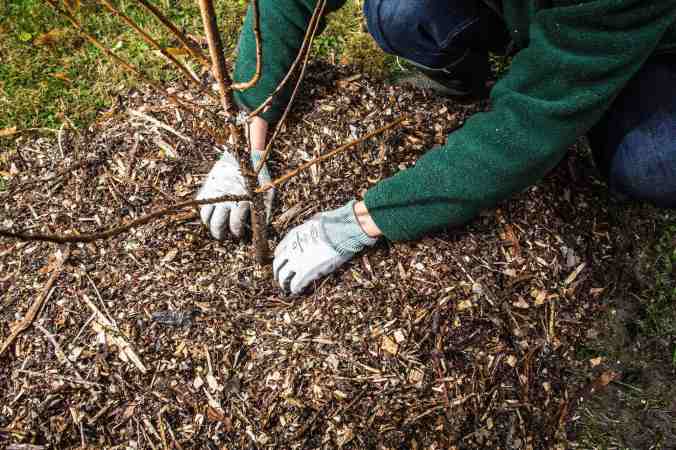
A community-gardening and forestry organization called Louisville Grows has planted city-hardy tree species on private land, churchyards, roadways, and curb strips to help the city cool its heat island. Photograph by Mark Peterson / Redux

We already know that climate change is no longer something to be concerned about for the future, but rather a very present danger. There are ways they can adapt, and part of that involves becoming more sustainable, as some are already doing. But one thing we hadn’t learned much about until now is the impact of increasing heat on the urban environment. Madeline Ostrander writes:

Katy Schneider, the former deputy mayor of Louisville, Kentucky, lives near Eastern Parkway, which forms one strand of her city’s necklace of green. Spending time on the leafy boulevard can make Louisville seem deceptively lush and shady, even when midsummer heat bakes the downtown. But about five years ago, Schneider was surprised to learn that the city had a shortage of trees. In the spring of 2011, students at the University of Louisville surveyed the local canopy and found that it had about thirteen per cent fewer trees than the average for metropolitan areas in the region.

Continue reading