Power Rangers With A Different Approach

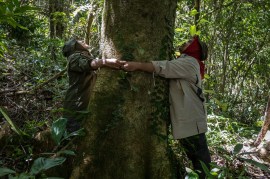
Women rangers hugged a tree while collecting data during a forest patrol near the village of Damaran Baru, in Aceh Province, Indonesia. Ulet Ifansasti for The New York Times

We thank Muktita Suhartono for the story and  Ulet Ifansasti for the photographs:

Female Rangers ‘Don’t Go All Alpha Like the Men’ to Protect a Forest

Rather than take a confrontational approach with trespassers looking to farm or log in a tropical rainforest in Indonesia, teams of women rangers try dialogue first.

Asmia, one of 15 rangers whose job is to protect nearby forests from squatters who want to clear trees for timber or to farm the fertile soil.

Riding her motorbike while balancing a backpack, a wok and a sharp cleaver, Asmia expertly maneuvered her way up a dangerous cliffside: a three-mile trip along a precipitous dirt path, barely 40 inches wide, to reach the mouth of the forest.

Asmia is one of the 15 members of a team of rangers — 10 of whom are women — whose job is to protect their village forest in Aceh Province in Indonesia from the squatters who want to clear the trees for timber or to farm the fertile soil.

Two teams of rangers, each consisting of five women and two men, take turns each month on five-day forest patrols.

“Here, we once fought with a squatter, asking him to stop the encroachment,” Asmia said, pointing as she walked beneath the thick canopy of trees that shadow her rounds. “He insisted on clearing the land, as he wanted to grow coffee. He was persistent. But we talked him out of it.” Continue reading

Forests, Deforestation & Climate Change

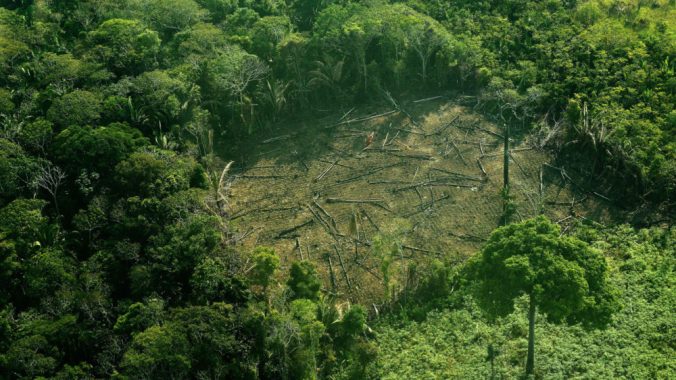
Trees cleared in the western Amazon region of Brazil in September 2017. CARL DE SOUZA / AFP / GETTY IMAGES

If you have been following the news recently, you may have noticed a report that indicates the urgency from climate change is greater than scientists previously thought. Everyone who cares has been digesting the science and we appreciate every effort to clarify what the science is saying. Fred Pearce, writing for Yale e360, has this:

Conflicting Data: How Fast Is the World Losing its Forests?

GP0STRVIX_PressMedia_web.jpg

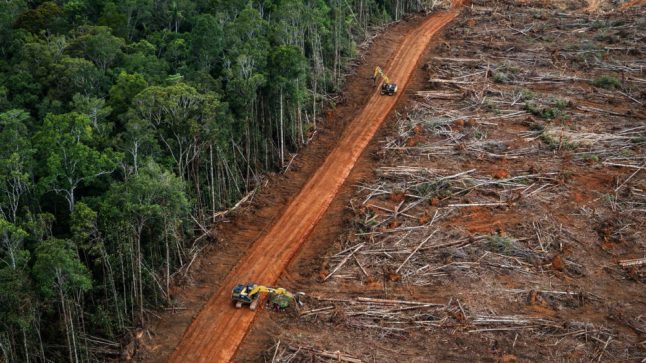
Forest cut to make way for an oil palm plantation in Papua, Indonesia in April 2018. ULET IFANSASTI / GREENPEACE

The latest UN report on climate says reducing deforestation is crucial to slowing global warming. But researchers must first reconcile two contradictory sets of statistics on tree loss in order to determine whether promises made by nations to protect and restore forests are on target.

The world is losing trees faster than ever. An area the size of Italy disappeared last year. Or did it? New research suggests three-quarters of those lost forests may already be regrowing. That hardly means we are out of the woods. Fighting climate change and protecting biodiversity still needs a global campaign to reforest the planet. But it does suggest that, given the chance, nature will do much of the work. Continue reading

World Orangutan Day

tnc_56625009_preview_cropped

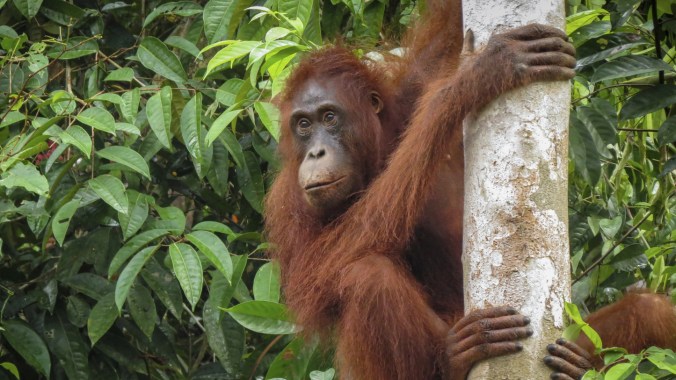
An orangutan in Tanjung Puting National Park in Borneo, Indonesia. All photos from: The Nature Conservancy

About a week ago we celebrated World Lion Day. Today we celebrate a different, long-limbed animal that likes to climb trees, the Orangutan. There are two species of this magnificent arboreal ape, both of which are facing potential extinction due to deforestation, poaching, the illegal pet trade and forest fires. As of last month, the status of the Bornean orangutan was classified as “critically endangered,” but conservationists are not giving up and are taking significant measures to improve forest management by working together with local communities and developing public-private partnerships.

The harmony between humans and apes began to unravel with the arrival of European explorers, who hunted them extensively during the 19thcentury. But it was not until the mid-20th century that human activities began to imperil orangutans’ existence. Extensive deforestation not only directly threatened orangutan habitat, it made the forest more easily accessible to humans. This led to both conflicts with orangutans, as the apes will eat crops, and made it easier for poachers to hunt the animals.

Continue reading

A Lone Couple, a Desert Island, and Turtles

Despite living in utter isolation on a desert island for 40 years, one inspirational couple has overcome disability and blindness to make a difference. PHOTO: BBC

Despite living in utter isolation on an island for 40 years, one couple has overcome disability and blindness to make a difference. PHOTO: BBC

Isn’t there a line about finding heroes in the most unlikely places? This is the setting of Daeng Abu’s and his wife Daeng Maida’s inspirational story: a desert island off the coast of Sulawesi in Indonesia, disabilities in Abu being blind and facing leprosy, their days spent raising sea turtles and speaking against the cyanide and dynamite fishing that is devastating Indonesia’s reef.

Neither knows how old they were when they entered their arranged marriage on nearby Pulau Pala (Nutmeg Island) – they currently believe they’re in their 80s – but Abu thinks he was older than 20 and Maida remembers it was the dry season. Her uncle fired three shots in the air; she walked over to his family’s home; Abu built a shack from bamboo and palm leaf; and married life began. Little did they know at the time – the couple was bound to become a rather unlikely pair of environmental activists.

Continue reading

Natural Capital Valuation and Protection of Marine Megafauna – Update on Manta Ray Protection

Photo by: Ray Van Eden http://www.kuredu.com/maldives-underwater-world-manta-rays-kuredu/

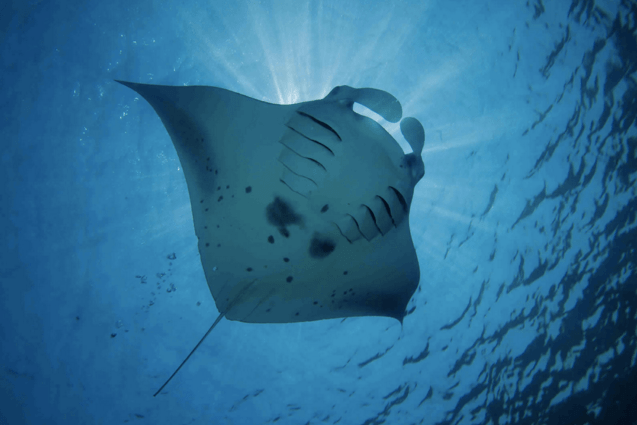
Photo by: Ray Van Eden

In a post last year I pointed to the action by the Indonesian government to make its entire 6 million square kilometer exclusive economic zone a sanctuary for manta rays as an example of growing recognition by governments of the ecosystem service value of natural capital.

The threat to mantas through hunting was highlighted in a haunting new documentary, Racing Extinction, which debuted worldwide on Discovery Channel earlier this month. The film followed the efforts of photojournalist/ marine conservationist Shawn Heinrichs to document the manta hunts in Lamakera, in a remote region of Indonesia. Heinrich learned that the hunts have a long tradition in this area, but until recently the number of mantas taken each year was relatively small. It was only in the last decade that the traditional hunting was transformed into a large-scale commercial fishery, fueled by the demand for manta gill rakers as an ingredient in Chinese medicine.

When the first images of a giant manta lit up the screen, a hush fell over the stunned crowd…Even the most hardened of the manta hunters were transfixed by beauty of a world they had only witnessed from the other end of a harpoon shaft. I noticed a row of small children, their wide eyes soaking up the images on the screen. For these children, a seed was planted and a brilliant transformation was already taking place.  Continue reading