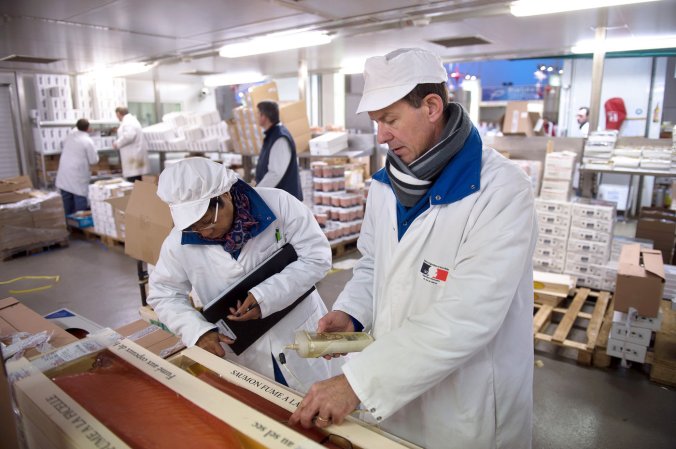
Food fraud is a common issue all over the world. Inspectors of veterinary services and fraud inspect seafood products at the Rungis international market, located near Paris. Martin Bureau/AFP/Getty Images
In just under four minutes, this story (National Public Radio, USA) gives a cogent briefing on one dimension of food transparency, a topic commonly addressed in these pages:
If you’ve been following any of the big news stories on food fraud lately — you’ll know that it’s tough to know what exactly is in our food — and where it’s been before it makes onto our dinner plates.
Earlier this year, Wal-Mart was sued for stocking tubs of Parmesan cheese that contained wood pulp filler. Olive oil is often mixed with sunflower oil and sold as “extra virgin.” And you might recall the great European horse meat scandal of 2014: Traces of horse meat were found in Ikea meatballs and Burger King beef patties, in cottage pies sold at schools in Lancashire, England, and in frozen lasagna sold all over Europe.
And that’s “just the tip of the iceberg,” says Chris Elliott, the founder of the Institute for Global Food Security, a laboratory in Northern Ireland that tests food from all over the world in order to uncover fraud. Continue reading

