Airborne Wind Energy

An airborne wind turbine at the SkySails Power’s pilot site in Klixbüll, Germany. AXEL HEIMKEN / PICTURE ALLIANCE VIA GETTY IMAGES

Wind energy, as we have pictured it, was in a race between fixed and floating models. We did not know about the airborne model. Nicola Jones, writing in Yale e360, gives a clear picture of why it faltered and how it is recovering:

After a Shaky Start, Airborne Wind Energy Is Slowly Taking Off

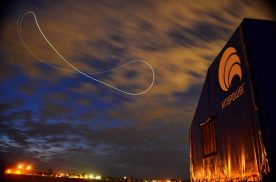
This long-exposure nighttime photograph shows the figure-eight flight pattern of Kitepower’s airborne wind system. KITEPOWER

Numerous companies are developing technologies, such as large kites, that can harvest wind energy up to a half-mile above ground. While still in its nascent stages, airborne wind power could potentially be used in remote locations or flying from barges far offshore.

Look up over the white sand beaches of Mauritius and you may see a gigantic sail, much like the kind used by paragliders or kite surfers but the size of a three-bedroom apartment, looping figure-eights overhead. Continue reading
While Considering The Switch To EV

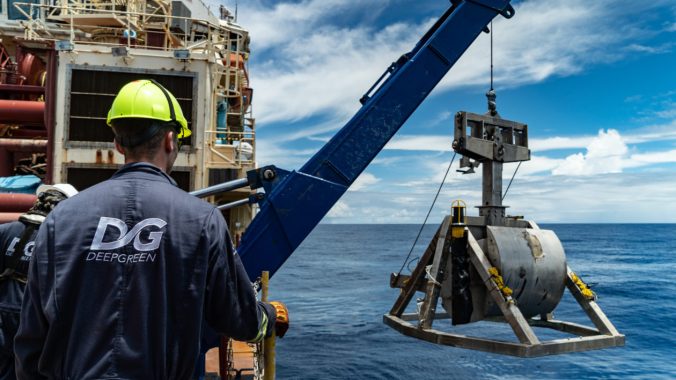
Researchers with DeepGreen Metals deploy a box core tool to capture a sample of the seafloor. THE METALS COMPANY

As more and more households and businesses and governments plan their switch to electric vehicles, considering the ripple effects is as important now as it was in the age of fossil-fueled vehicles:

The Race for EV Parts Leads to Risky Deep-Ocean Mining

The electric vehicle boom is driving a surge in demand for prized metals needed for batteries and other components. Some companies say the solution lies in mining the deep oceans, but scientists say that could irreversibly damage a vast, largely pristine ecosystem.

A polymetallic nodule containing manganese, nickel, cobalt and copper gathered from the seafloor. THE METALS COMPANY

Nauru, lying about halfway across the vast expanse of the Pacific Ocean between Australia and Hawaii, is the world’s smallest island nation. But in the emerging industry of deep-sea mining, it punches far above its weight.

This June, Nauru gave notice to the International Seabed Authority (ISA), the UN agency charged with regulating mining in international waters, that it was triggering the so-called two-year rule: The agency will have to consider any application for a deep-sea mining license two years from now, under whatever regulations are on the books at the time. This effectively forces the ISA’s hand to finalize a regulatory mining code before that deadline. With this latest development, a once-fanciful idea may soon become a global industry. Continue reading

A 2020 Bright Spot

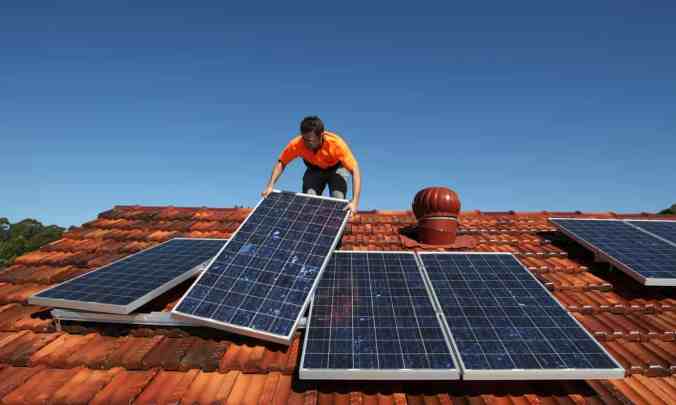
Solar panels are installed on to the roof of a house in Sydney, Australia. Almost 90% of new electricity generation in 2020 will be renewable, the IEA says. Photograph: Reuters

Thanks to the Guardian’s Environment editor Damian Carrington for this sunny news:

International Energy Agency expects green electricity to end coal’s 50-year reign by 2025

Global renewable electricity installation will hit a record level in 2020, according to the International Energy Agency, in sharp contrast with the declines caused by the coronavirus pandemic in the fossil fuel sectors. Continue reading