When a Way of Life Melts With the Ice

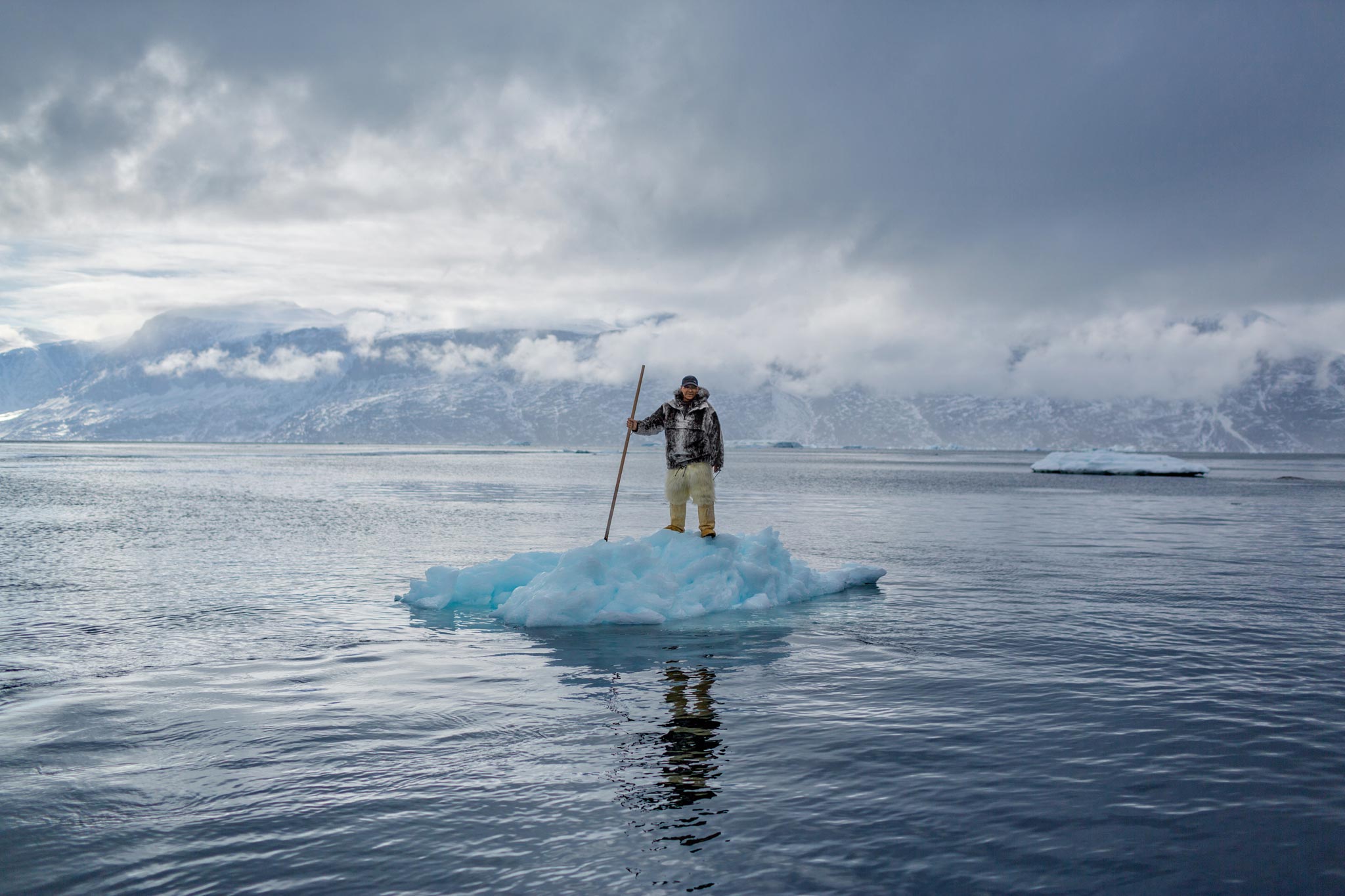
Albert Lukassen’s world is melting around him. When the 64-year-old Inuit man was young, he could hunt by dogsled on the frozen Uummannaq Fjord, on Greenland’s west coast, until June. This photo shows him there in April. PHOTO:  Ciril Jazbec

Albert Lukassen’s world is melting around him. When the 64-year-old Inuit man was young, he could hunt by dogsled on the frozen Uummannaq Fjord, on Greenland’s west coast, until June. This photo shows him there in April. PHOTO: Ciril Jazbec

Climate change – a situation that choices can better, but circumstances see it go from bad to worse. Much talk, much less done. Temperatures rise, glaciers melt, and seas begin to usurp shores. Also, people like the natives of Kiribati and now the Inuit are forced to rethink ways to survive on their lands which once provided for all. And did not threaten their lives. National Geographic reports from the North:

Something else is vanishing here too: a way of life. Young people are fleeing small hunting villages like Niaqornat. Some of the villages struggle to support themselves. And now a culture that has evolved here over many centuries, adapting to the seasonal advance and retreat of sea ice, is facing the prospect that the ice will retreat for good. Can such a culture survive? What will be lost if it can’t?
Continue reading

For the Love of the Beautiful Game

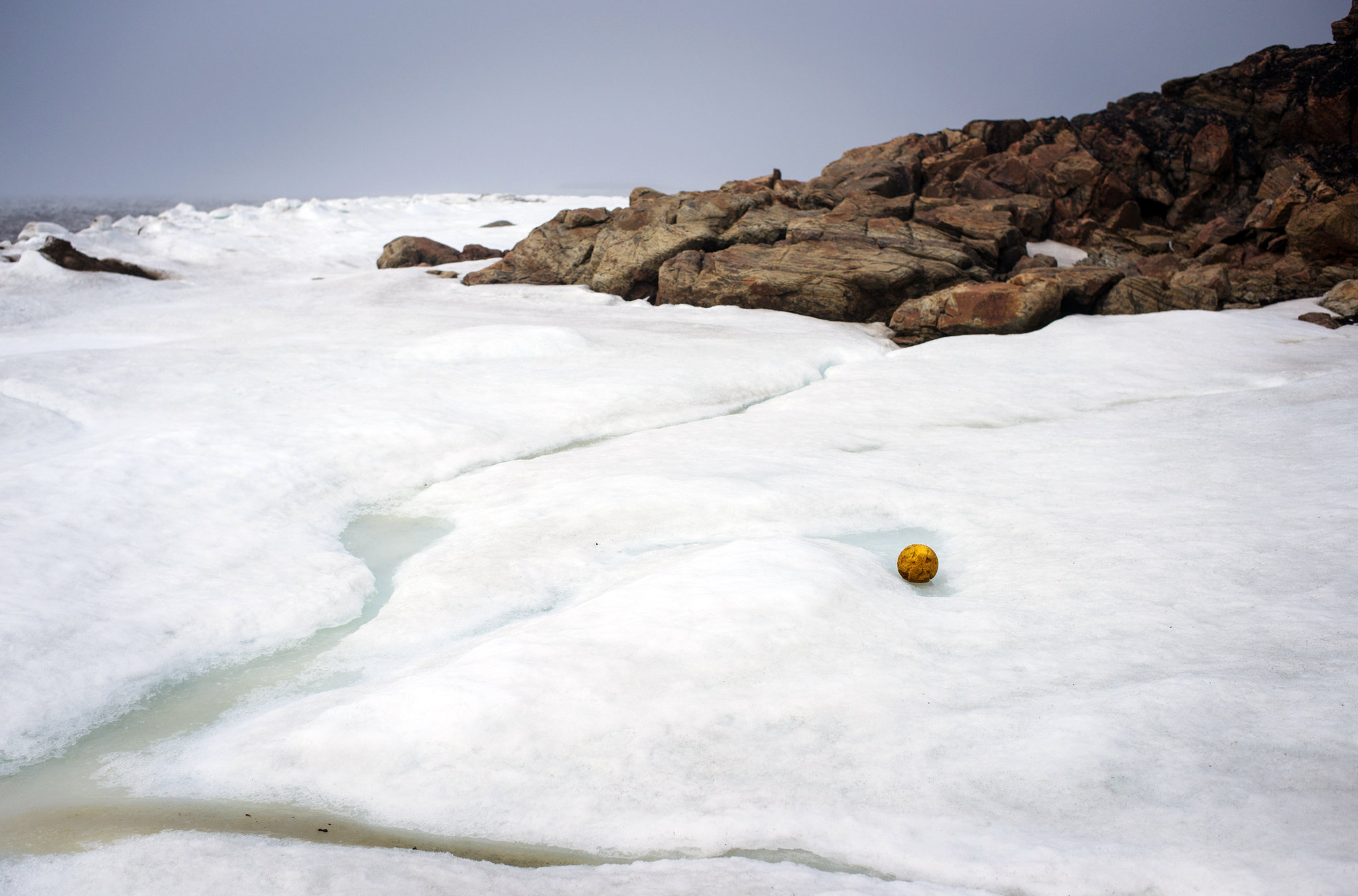
Even in late June, ice clotted Frobisher Bay in Iqaluit, where teams from across Nunavut met to compete in a soccer tournament.PHOTO: Ian Willms for The New York Times

Even in late June, ice clotted Frobisher Bay in Iqaluit, where teams from across Nunavut met to compete in a soccer tournament.PHOTO: Ian Willms for The New York Times

Sports, like most aspects of life, are not easy in the Canadian Arctic. But a major youth tournament recently revealed soccer’s importance to the area. Sports, like everything in the Arctic, demand constant, patient improvisation. Nunavut makes up about 20 percent of Canada’s land mass and is more than twice the size of Texas, but it has only an estimated 36,000 inhabitants, predominantly Inuit. There are no roads connecting the 25 communities in this vast territory. Every trip requires a snowmobile, a dogsled, an all-terrain vehicle, a boat or an airplane. Contingencies must be made for immense distance, mercurial weather, extravagant costs and geographic paradox. Soccer is best played on plush grass, but nearly all of Nunavut is tundra. So the sport has adapted.

Continue reading