The Underwater Greenhouse

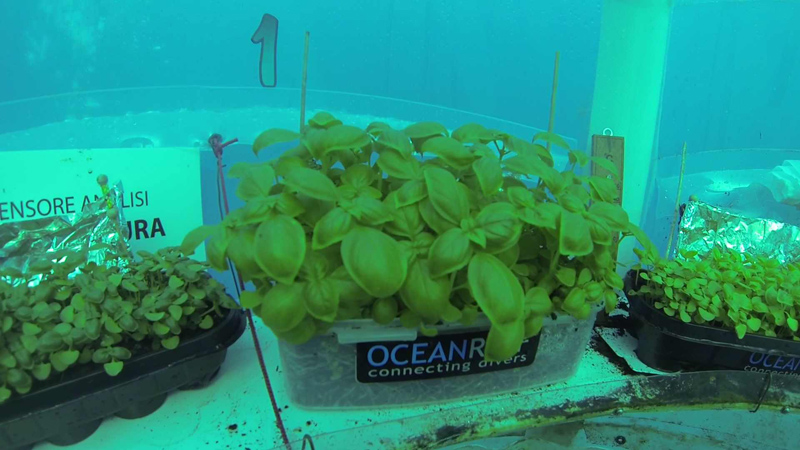
The Orto di Nemo project—Nemo's Garden, as it's called in English—resides 30 feet under the waves, off the Noli Coast in in Italy.

The Orto di Nemo project—Nemo’s Garden, as it’s called in English—resides 30 feet under the waves, off the Noli Coast in in Italy.

Basil, strawberries and lettuce are being grown 30-feet underwater off of the Noli coast in Italy. A team of ‘diver gardeners’ have taken advantage of a surprising opportunity and have found that actually, a least on a  small scale, growing vegetables underwater can be highly successful. There are a number of advantages to growing underwater – a steady temperature, the absence of aphids and the atmosphere is CO2 rich. The products are grown in oxygen filled ‘bubbles’, which are tethered to the ocean floor.

Continue reading

Are You Looking at My Shoes?

An ongoing exhibition at the Victoria and Albert Museum explores extremes of footwear from around the globe, in 200 pairs of shoes

An ongoing exhibition at the Victoria and Albert Museum explores extremes of footwear from around the globe, in 200 pairs of shoes

If you happen to be on Cromwell Road in London, United Kingdom, then let your feet take you to the Victoria and Albert Museum. To be more precise, to this exhibition titled Shoes: Pleasure and Pain. Among the 200 plus pairs of footwear exhibited until January, 2016 are a sandal decorated in pure gold leaf originating from ancient Egypt and contemporary creations from Jimmy Choo, Manolo Blahnik and Christian Louboutin. The exhibit explores three different themes: transformation, status and seduction. Transformation looks at the mythical aspect of shoes in folklore. Status examines how impractical shoes are worn to represent a privileged lifestyle. Finally, seduction explores the concept of footwear as a representation of sexual empowerment and pleasure. Talk about history meeting its contemporary.

Continue reading

Encased in Ash

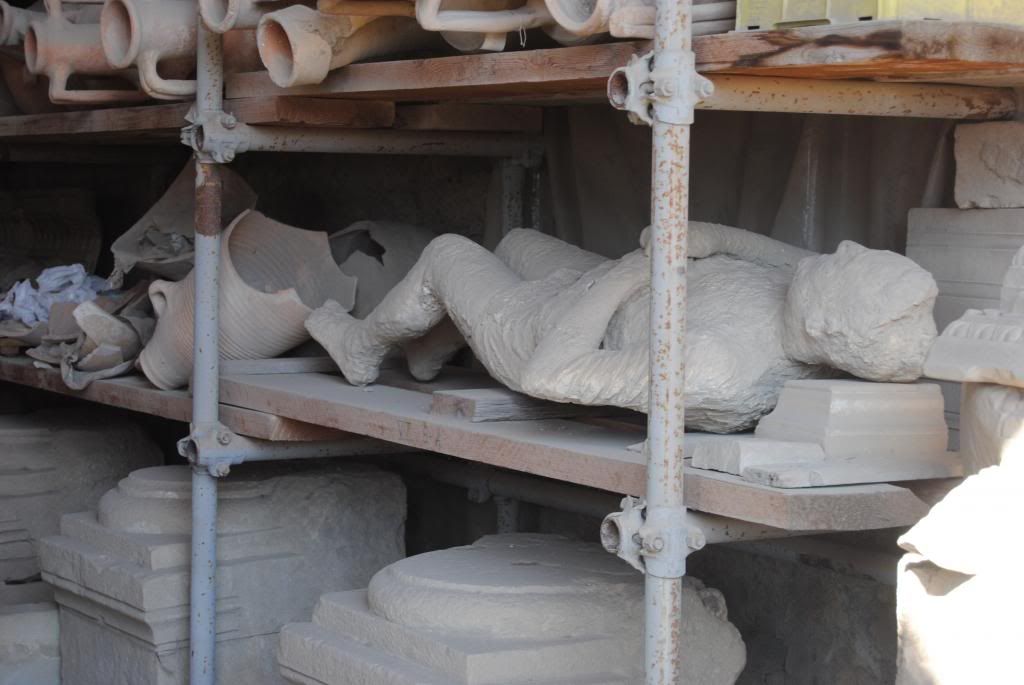
Encased in Ash – Body Mold from Pompeii

In 79AD, Mt. Vesuvius erupted with disastrous consequences for the residents of nearby Pompeii, Herculaneum, and other cities in the Campania region. Flows of boiling mud and rock rushed down the slopes, clouds of noxious fumes billowed upwards in the wind, and thousands of tons of rock and ash rained down upon the countryside. Pliny the Younger saw the eruption and likened it to a pinus, a pine tree. This may baffle some American readers, who may be accustomed to see pine trees that taper from a wide base to a narrow point Continue reading

The Hut of Romulus

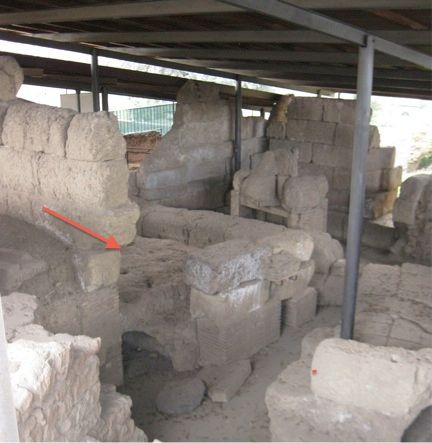
Hut of Romulus (Post holes where arrow is pointing.)

Today, all that remains of the so-called “Hut of Romulus” are the holes you see in the picture above (the slight indentations on the platform where the arrow is pointing). When intact, Romulus’ humble wattle-and-daub dwelling, located in the southwest corner of the Palatine Hill in Rome, might have looked something like this. One might have expected that the passing of nearly three millennia would not have treated well the wood, straw, and twisted bark ties of the hut, but even in its own day the Hut was prone to accidental destruction. One particularly ignominious story has a crow dropping Continue reading