Cornell University Campus Pursues Geothermal Heating

© Cornell Marketing Group

© Cornell Marketing Group

In 2009, Cornell faculty, staff, and students came together to create a Climate Action Plan that made a goal of making the Ithaca campus carbon neutral by 2035. Since then, gross emissions have already been reduced by about 30% through several measures, such as installing solar farms and ceasing the use of an old coal-powered energy plant. Now, a new initiative to keep the campus warm in winter with a geothermal project called Earth Source Heat might help reduce emissions by another 38%. Syl Kacapyr reports for the Cornell Chronicle:

Cornell is pursuing a project that has the potential to eliminate an estimated 82,000 metric tons of carbon from its annual footprint and establish one of the country’s most advanced geothermal systems to heat the 745-acre Ithaca campus – an effort that could demonstrate a new scalable model for using this sustainable energy source throughout the U.S. and almost anywhere in the world.

Continue reading

Ithaca Featured in NatGeo’s Intelligent Travel Section

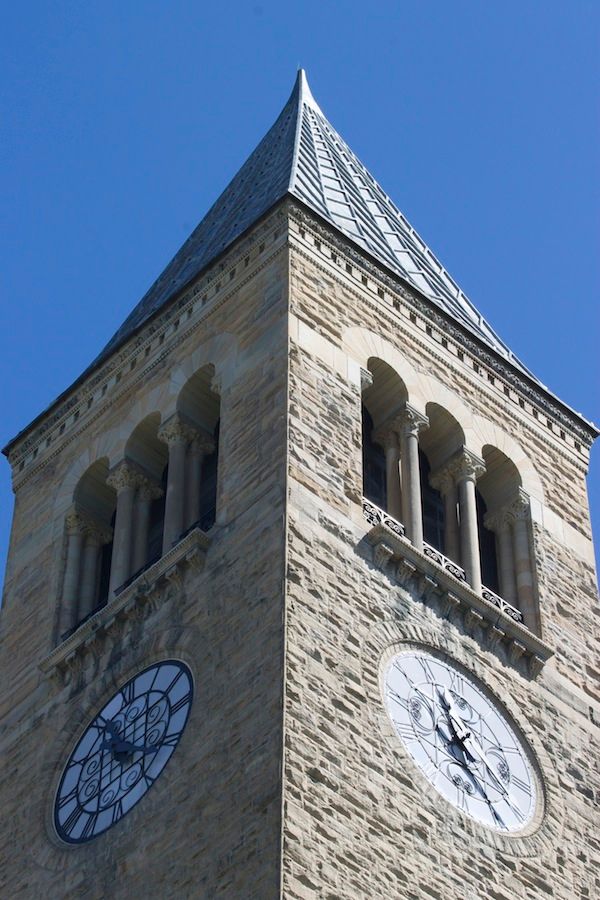
Cornell’s McGraw Tower. Photo by S. Inman

Over the last several years, dozens of our interns have been Cornellians, and some have even been born-and-bred Ithacans. It is often said that Ithaca is “ten square miles surrounded by reality,” for reasons that we won’t go into here and might be gleaned from the text below. But if Ithaca is sometimes seen as a bubble, then it can be expected that students at Cornell University or, to a lesser degree, Ithaca College live in an even more insulated shell that separates them from the city of Ithaca.

So it’s somewhat refreshing to see a descriptive post by an Ithaca resident–but McGill University graduate–in National Geographic’s Intelligent Travel section. Under the “Beyond the Guidebook” category, Alizé Carrère wrote a quick but information-packed list of things that she loves about her city, which you can read below or here:

Summer is the best time to visit my city because that’s when Ithaca really comes to life. Many of the college students leave for summer break, so the city opens up and all of the best outdoor attractions are in their prime. You can enjoy waterfall hikes, summer concerts in the park, patio happy hours, fresh produce in local restaurants, and twilights that stretch into the nine o’clock hour.

You can see my city best from the top floor of Cornell University’s Johnson Art Museum, which reveals a near 360-degree view of Ithaca, including Cornell’s beautiful campus and the south end of Cayuga Lake. The museum itself, which looks like a giant sewing machine, was designed by renowned architect I.M. Pei, the creative mind behind the striking (and once controversial) glass pyramid in front of the Louvre.

Continue reading