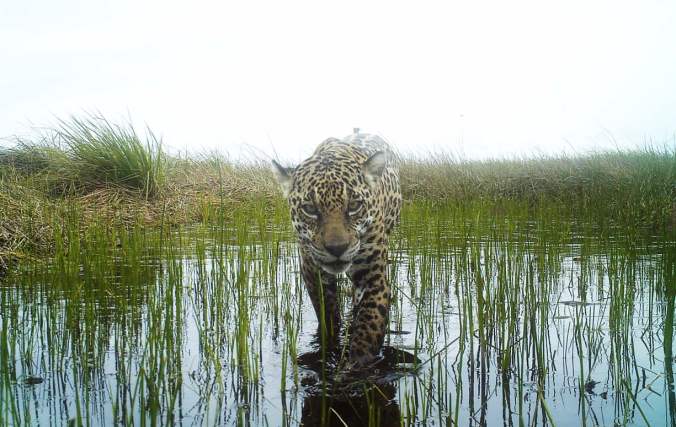
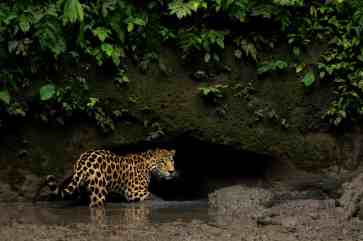
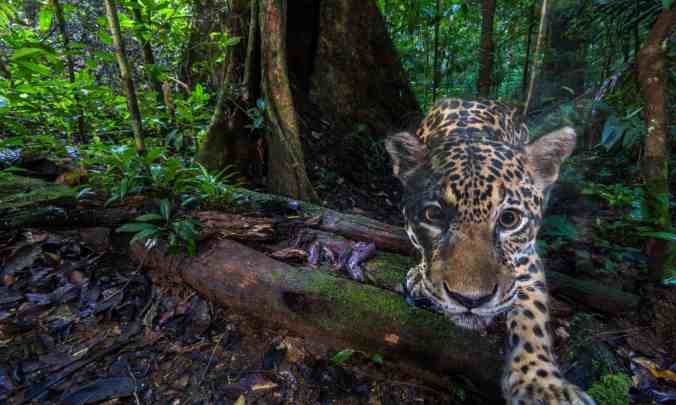
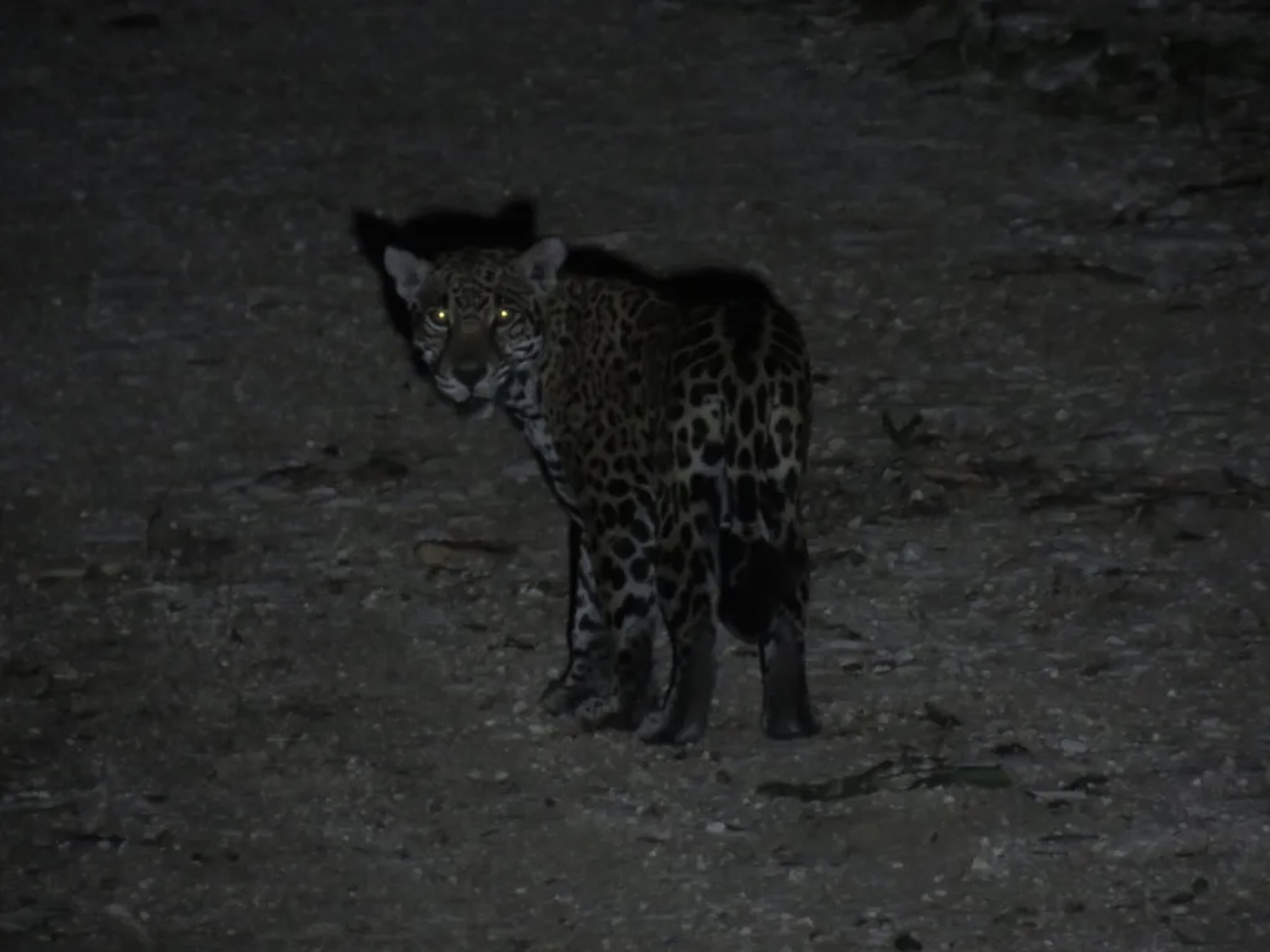
A jaguar captured by a camera trap on the island. The WWF researchers plan to set more traps in 2020. Photograph: WWF Brazil
Jaguar and other wild cats, big and small, have been a topic of interest on this platform since we began back in 2011. We have also featured many stories where WWF is the hero, carrying out important work that needs support. Phoebe Weston somehow escaped our attention until now, so special thanks to the Guardian for maintaining their commitment to quality coverage of nature and environmental issues, which I depend on for my daily exercise in awareness:
The big cats’ resourceful new behaviour was recorded by a WWF study on a remote island off the coast of Brazil
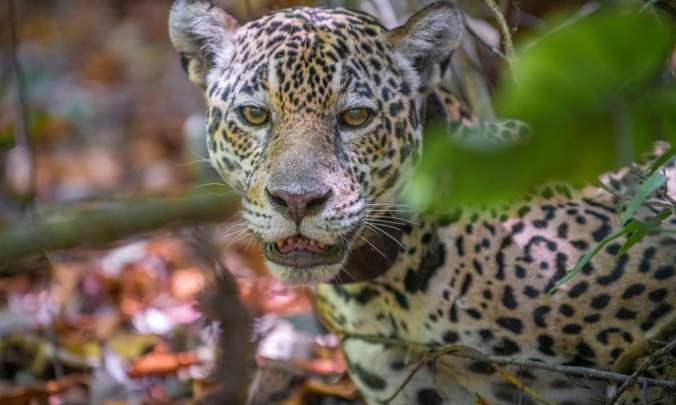
A jaguar on the Maracá-Jipioca Ecological Station island reserve, shortly after being fitted with a GPS collar by WWF conservationists. Photograph: André Dib/WWF Brazil
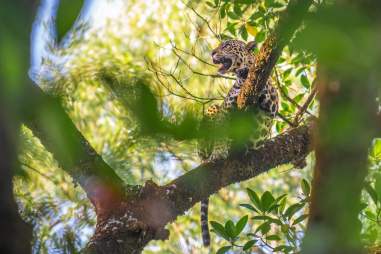
A jaguar resting on a tree on Maracá-Jipioca. The WWF hopes to collar two more cats next year.
Photograph: André Dib/WWF Brazil
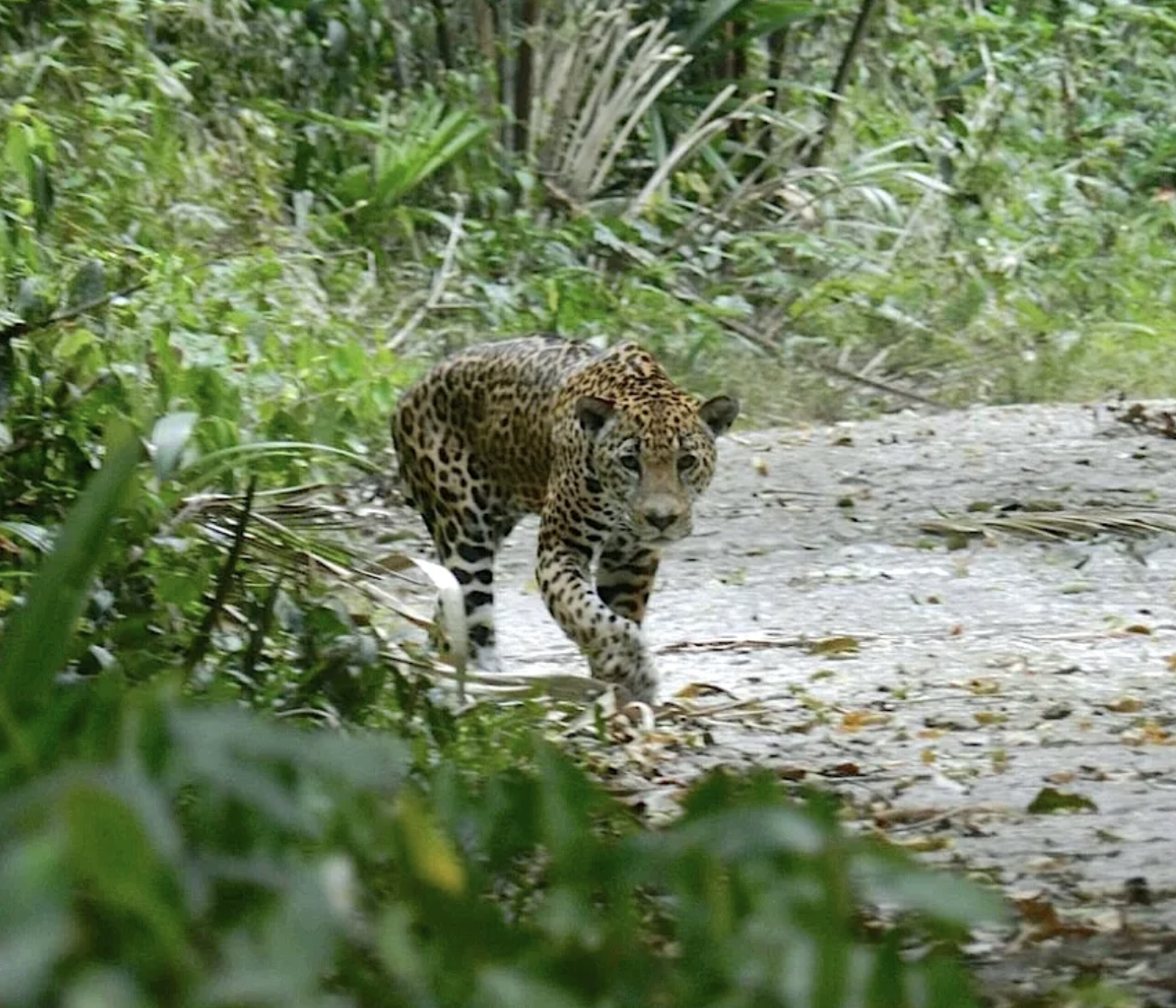
A thriving population of jaguars living on a small, unspoilt island off the coast of the Brazilian Amazon has learned to catch fish in the sea to survive, conservationists have found.
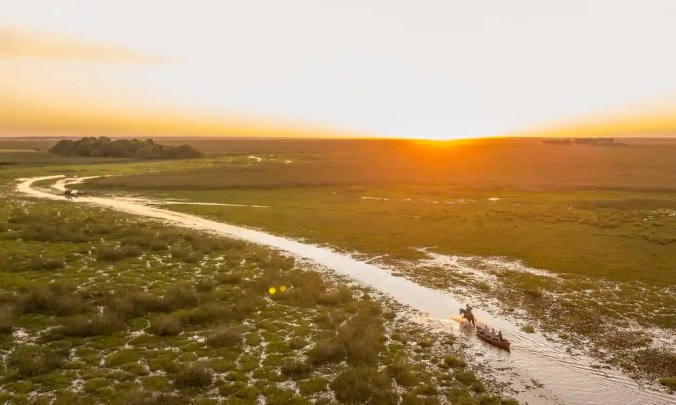
The Maracá-Jipioca Ecological Station island reserve, three miles off the northern state of Amapá, acts as a nursery for jaguars, according to WWF researchers who have collared three cats and set up 70 camera traps on the remote jungle island.
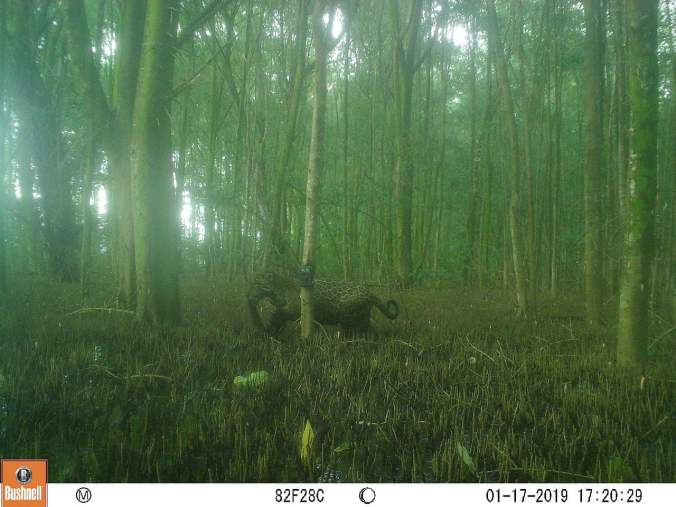
A jaguar caught on camera with a fish in its mouth. Photograph: WWF Brazil
Although jaguars have previously been spotted catching fish in Brazil’s Pantanal wetlands, this is believed to be the first evidence the elusive creatures have been jumping in the sea to catch prey.
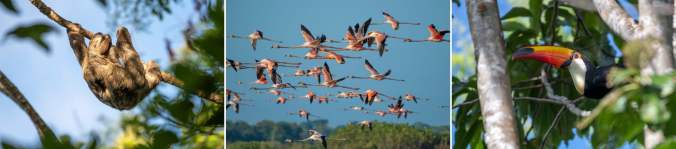
A three-toed sloth, a flock of flamingos, and a toco toucan, all inhabitants of the Maracá-Jipioca Ecological Station reserve. Photograph: André Dib/WWF Brazil
“This is the first time that behaviour has been spotted in the Amazon,” said Marcelo Oliveira, senior programme officer at WWF Brazil, who is leading the NGO’s first jaguar-collaring research. Continue reading →
 Organikos