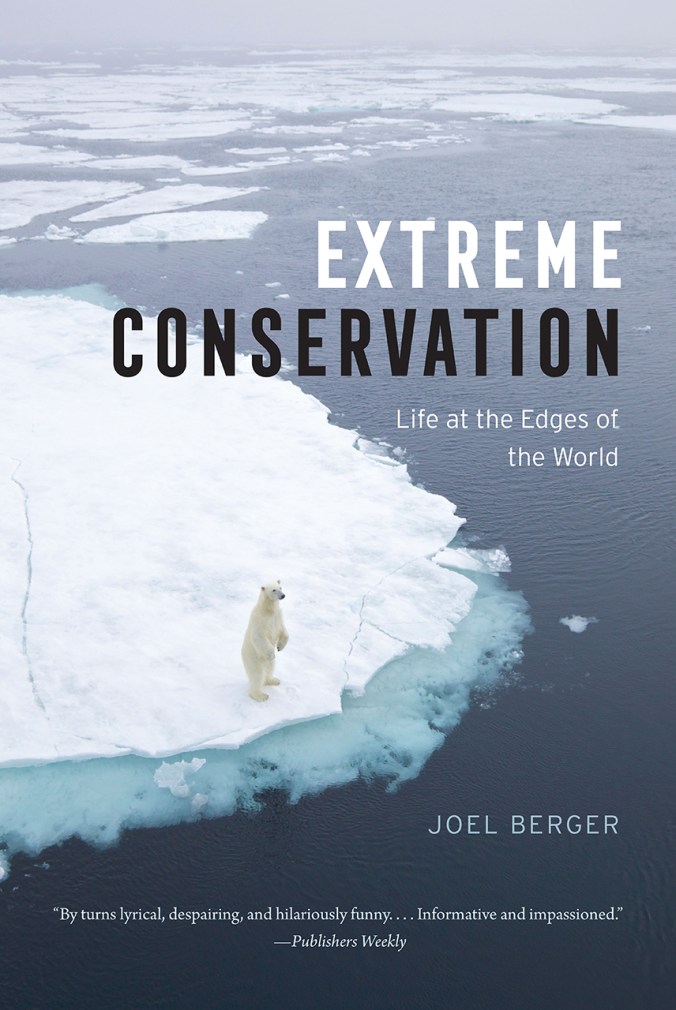
We recommend this interview in the Atlantic, with the author of the book above, a veteran conservationist reckoning with his career studying animals in the most extreme places on Earth:
In the winter of 2011, Joel Berger and his colleague Marci Johnson happened upon a ghostly Arctic death scene. Body parts and tufts of brown fur poked out of a frozen lagoon. This was all the biologists could find of a herd of 55 musk oxen they had been following.
The cause of mass mortality, they later determined, was an ice tsunami, the result of an unusual storm that slammed seawater and ice into the lagoon where the unfortunate musk oxen stood. Berger is a conservationist who works in some of the most hostile environments in the world, and he studies the enigmatic species, like musk oxen, that live there. His new book, Extreme Conservation, chronicles his career in Alaska, Siberia, Namibia, Tibet, Mongolia, and Bhutan. He is now a biologist at Colorado State University and a senior scientist at the Wildlife Conservation Society. Continue reading
 Organikos