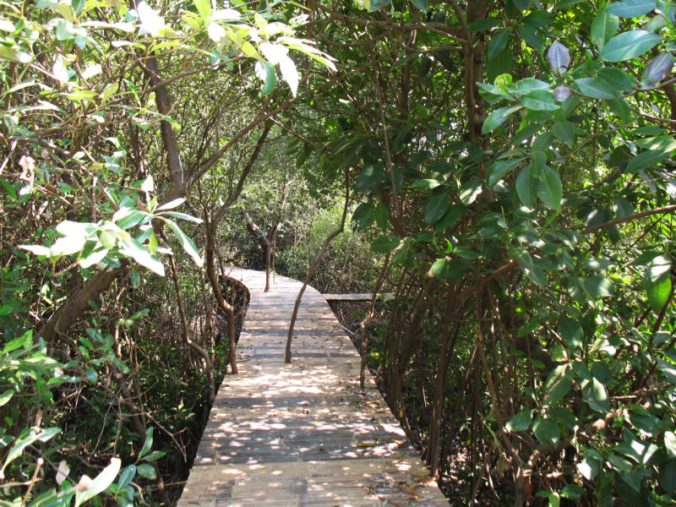
Cambodian Mangrove Wonders

A fishing cat in Peam Krasop wildlife sanctuary. Photograph: Fauna & Flora/FCEE

Thanks to Robin McKie, now Science Editor at the Guardian, for this news from Cambodia:

‘We found 700 different species’: astonishing array of wildlife discovered in Cambodia mangroves

Smooth-coated otters in the mangroves. Photograph: Fauna & Flora/FCEE

Hairy-nosed otters and cats that catch fish are among the startling diversity of creatures making their home in threatened habitats

One of the most comprehensive biodiversity surveys ever carried out in a mangrove forest has revealed that an astonishing array of wildlife makes its home in these key, threatened habitats. Continue reading

Colombia’s Blue Carbon Initiatives

Thanks to YaleE360 for this brief explanatory note on Blue Carbon Projects from a Colombian perspective:

New Approach to Blue Carbon Projects Underway in Colombia

A mangrove preservation project along Colombia’s Caribbean coast is using a more comprehensive method to calculate how much carbon is stored in coastal and marine ecosystems, potentially boosting global efforts to conserve so-called blue carbon. Continue reading

Mangrove Mathematics

Mangroves play an essential role in maintaining healthy life on earth, and we’ve been privileged to work in many locations where we’ve seen their impact on biodiversity levels first-hand, including India.

Frequently these ecosystems are under threat of habitat loss, whether for agricultural or land development. Thanks again to Anthropocene for adding up the facts in such clear terms.

Intact mangroves worth twice as much as rice paddies

Conservationists frequently say that ecosystems are worth more when they’re left untouched. But to whom? Local communities who could potentially farm the land might wonder, what’s the real benefit of leaving wild areas intact?

In the Bhitarkanika mangrove in Odisha, India, a group of Indian researchers grappling with this question have arrived at a surprising answer. By leaving the mangrove intact, they say, Bhitarkanika’s surrounding communities can in fact reap almost double the economic benefits they’d get from simply converting the mangrove to crops. Continue reading

The Estuary Part Two: Update

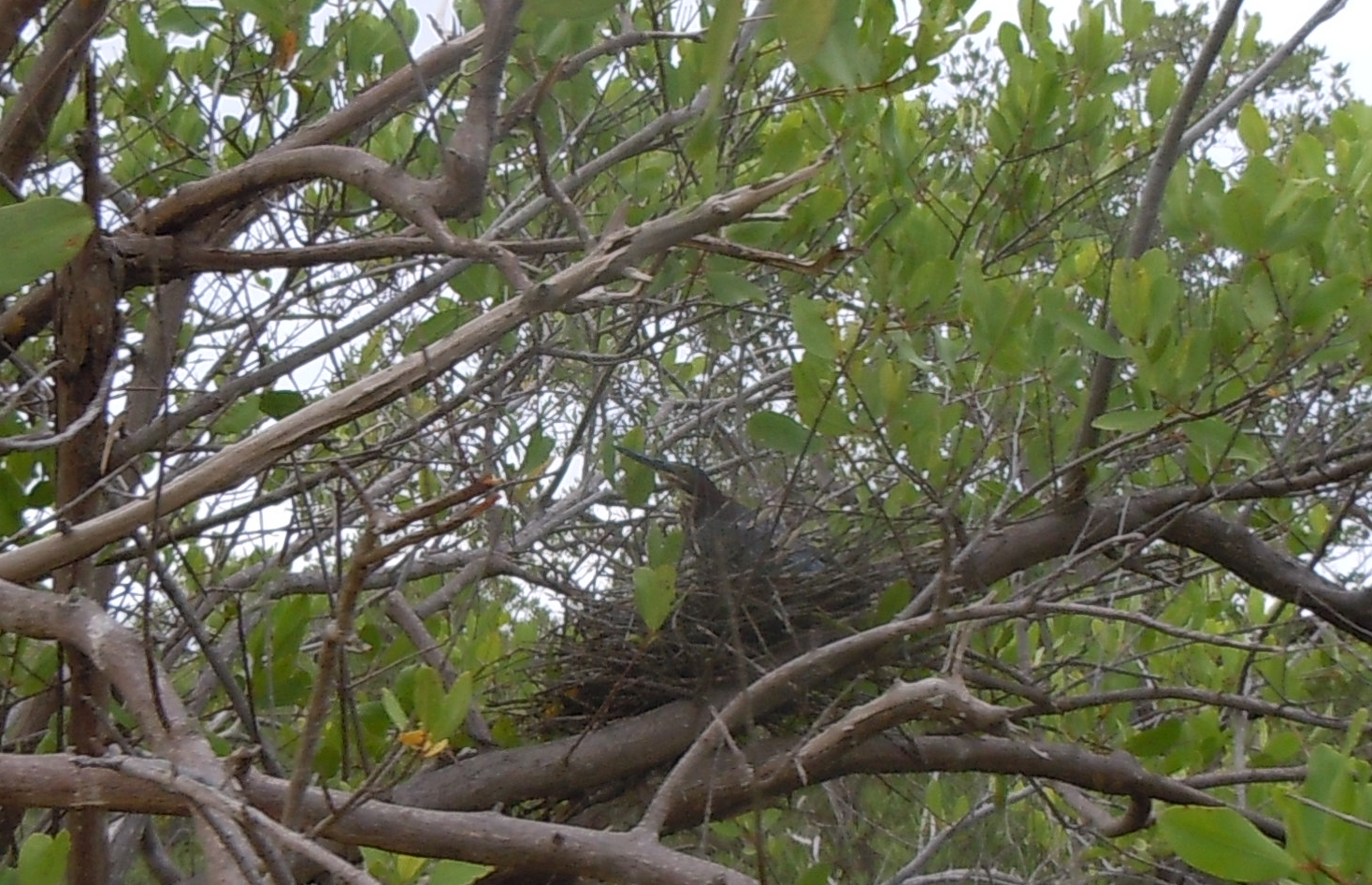
*The nested bird in my last post was a Green-backed Heron, and the woodpeckers were Lineated Woodpeckers. Other birds I’ve encountered are Great Blue Herons, White-tipped Doves, Muscovy Ducks, several hummingbirds and kingfishers, and more.

My kayak trip was the same as usual, with constant bird sightings and several howler monkeys in the trees above me. What changed was the end of the excursion. I decided to try kayaking down the stream of estuary water flowing into the ocean and see if I couldn’t catch a few waves close to shore before calling it a day. The stream of water was fairly shallow, with little piles of sand causing tiny swells of the sort seen over rocks in whitewater rivers. I had fun navigating these “water-bumps” and eventually made it into the ocean after a bit of shimmying past the shallower spots where I got grounded. I immediately set to getting past the already-broken waves so that I could catch one as it rose, like one does while boogie boarding or surfing. After getting buffeted around a bit by the incoming waves, I managed to turn the kayak around just in time to catch a small wave back to shore, paddling as I neared the sand so that momentum would carry me up the beach. Delighted by these first results, I continued to attempt kayak surfing for the next fifteen minutes before it got dark. Once it did, I dragged my kayak in and looked forward to doing the same the next day.

However, the estuary was a completely different place the next day. Very much open to the ocean, the mangrove sanctuary was continuously losing water. Slightly wary, I entered my kayak and paddled forwards. At first, the differences I noticed didn’t seem too grave: the water was shallower, but also very clear – I could actually see the bottom at some points. As I continued into deeper waters, the water darkened again but stayed quite shallow at some points. Once I got to the open area with the mangrove trees dotted around, I was able to distinctly see the effects of an estuary at a different point in its cycle: the mangrove trees had water-markings on them showing that the water levels had descended well over a foot. Here are some before-and-after shots: Black mangrove tree with distinct water markings, and branch before and after.

To read more about estuaries and their cycles, you can visit the National Oceanic and Atmospheric Administration’s educational tutorial. Follow the links on the right-hand column to learn about their importance ecosystem services and more.
 

The Estuary Part One

The estuary waters are always flat and calm, with practically no current apart from what the wind kicks up, and the OceanKayaks’ sensitivity to motion allows you to maneuver very adeptly around mangrove trees or floating logs. All the kayaks are doubles, but I have only gone out alone in the back, and later the middle, seats, joined either by Harvey in another kayak or by the winged microfauna (who tag along even when Harvey is keeping me company).

The estuary runs for over a kilometer and a half in a winding path, but there is also a larger open area with mangrove trees dotted inside it. The trees in this wide space are lower and farther apart, allowing you to get up close to the tree and check out the birds’ nests within. A couple times I have been able to see birds sitting in the nests up close, and it is fun to test how slowly you can approach them without scaring them away.

Paddling the estuary is a great activity because you can choose your pace very easily. If you want to take two strokes and then slowly glide along for a minute while looking for birds in the trees, then you can do so, as long as you make sure not to drift too far to one side and bump into a mangrove. If it is already getting dark and the mosquitoes are taking advantage of this fact, then you can see how much of a wake you can leave as you speed towards the beach and watch fish jump out of the water to get out of your way. I generally use the slow and photograph-friendly method on the way in to the estuary, where I can get shots of caterpillars or woodpeckers, and reserve the faster cardio-workout for the way back. I have been thinking about taking a kayak out onto the cove, where the waters seem pretty calm once you get past the first couple waves. I’ve never been on a sit-on-top kayak in the ocean before, so I’ll let you know how that goes.