Snake Kings And Other Discoveries

01-calakmul-maya-pyramid.adapt.1900.1.jpg

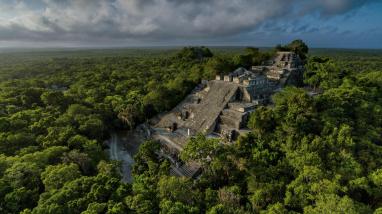
CALAKMUL In the seventh century A.D. the Snake rulers presided over this capital city—in what today is southern Mexico—and its largest structure, a pyramid 180 feet tall. From Calakmul they managed an intricate web of alliances. CONSEJO NACIONAL PARA LA CULTURA Y LAS ARTES (CONACULTA), INSTITUTO NACIONAL DE ANTROPOLOGÍA E HISTORIA (INAH), MEXICO

Discoveries in the lands once populated by the Maya continue apace. As Chan Chich Lodge completes three decades of archeological exploration, the wonders of three millennia are uncovered. The stories that capture my interest the most, related to the Maya, are about the man-nature relationship.
SnakeKingMap.jpg

JEROME COOKSON, NG STAFF
SOURCE: DAVID FREIDEL, WASHINGTON UNIVERSITY IN ST. LOUIS

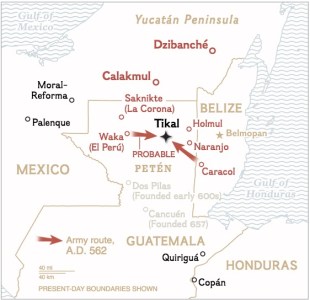
For example, Erik Vance’s story from last year. I remember thinking that it was the best article I had ever read in National Geographic. Partly, the graphics are better, if that is possible, than the typically excellent quality the magazine is known for. Also, the topic is more topical for me now. Chan Chich Lodge is situated exactly where the o in Holmul is on the map to the left. The lodge’s Maya foundations are situated at the periphery of where the snake kings once ruled.

And we now have an ethnobotanical initiative linking Maya foodways to our surrounding nature conservation. That initiative is linked to the lodge’s food program, with some high expectations related to our abundant forests. But mainly, with regard to this article, the writing illuminating the topic is excellent:

…Two warring city-states were locked in perennial conflict, grappling for supremacy. For a brief period one of those city-states prevailed and became the closest thing to an empire in Maya history. It was ruled by the Snake kings of the Kaanul dynasty, which until just a few decades ago no one even knew existed. Thanks to sites around this city-state, including Holmul, archaeologists are now piecing together the story of the Snake kings…
35 composite of 2 and 3.adapt.1190.1.jpg

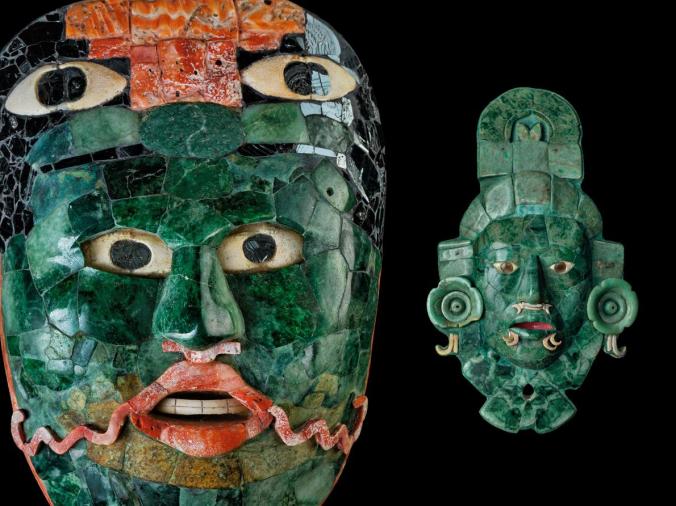
Masks from the tombs at Calakmul were meant to ease the passage of the Snake elite into the next world. Royal visages made of green jade, more valuable than gold to the ancient Maya, evoked the annual agricultural cycle and regeneration. CONACULTA, INAH, MEXICO (BOTH) PHOTOGRAPHED AT (LEFT TO RIGHT): NATIONAL PALACE, MEXICO CITY; MUSEO DE SITIO DE COMALCALCO, MEXICO
Sustainable Village Highlight: San Juan la Laguna, Guatemala

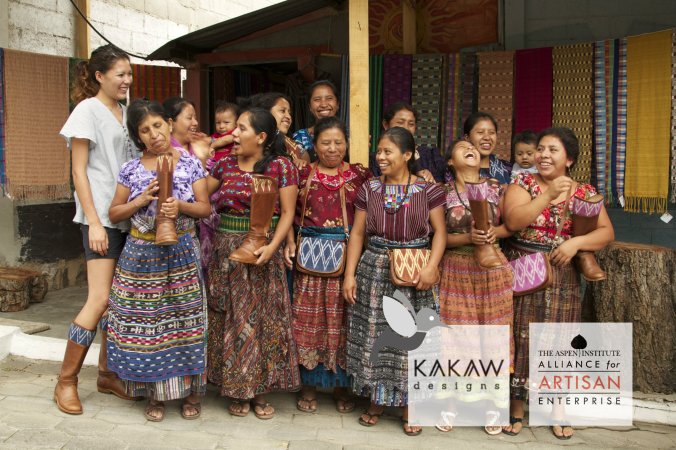
Hi, there! I’m Mari Gray, founder of artisan-made brand Kakaw Designs, based in Guatemala. After studying International Relations and Spanish at UC Davis and then working for several non-profits in Latin America, I became disillusioned and decided to focus on sustainable development through a social enterprise, partnering with talented artisan communities in Guatemala.

I feel incredibly fortunate to work with different artisan groups in Guatemala through Kakaw Designs (pronounced <kekao> like the cacao tree), an artisan-made brand I started about four years ago.  We currently work with several different artisan groups: two weaving, one embroidery, two teams of leathersmiths, and one silversmith; all to make our designs come to life.  But it was for a good reason that we started with the weaving cooperative Corazón del Lago in San Juan la Laguna, at Lake Atitlán.

Kakaw Designs Alliance logo

We would never have been able to launch Kakaw Designs without this group of forward-thinking, professional weavers from this small Maya village.  The community itself is exceptional, with sustainability clearly a focus through:

  • Use of natural dyes in textile production, also using local traditional techniques such as backstrap weaving and ikat designs  <<Learn more by watching our video>>
  • Organization of weavers in cooperatives or associations, where women work together and can therefore take larger orders and offer quality control
  • Up-and-coming development of community ecotourism, especially birding

Continue reading

Food Sleuthing

00Apples-2-superJumbo.jpg

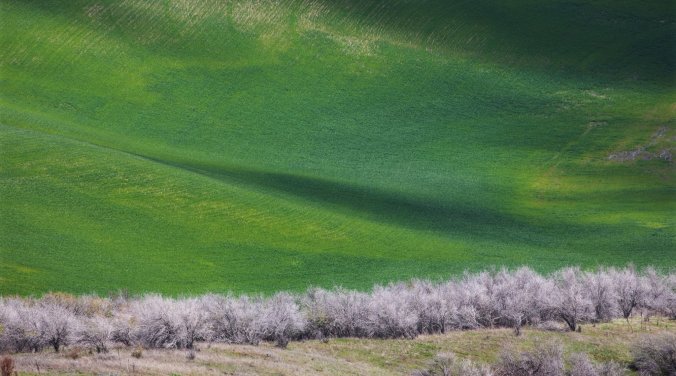
The remnant of an old apple orchard among wheat fields in Steptoe Butte State Park in Washington. Credit Ruth Fremson/The New York Times

Yesterday magic happened. After sharing in the morning a quick mention of why my thoughts are on agriculture, I was walking with a member of Chan Chich Lodge’s groundskeeping team to review some work he had completed. On the way, we encountered a tree showering small fruits onto the ground. Fragrant. I asked him what it was and he said a word I did not recognize that sounded like “yo”.

About the size of a blueberry but not a berry, nor resembling anything I could identify. Until I opened it and its inside looked exactly like that of my favorite fruit. And then I realized my colleague had said higo, the Spanish word for fig. He then told me that in his village the old Mayans use this to make a flour, something they have done since olden times. He paused a moment, a bit of reverie I could tell, and then he continued about how the tortilla made from this is the best. It’s got me thinking. Thanks to Kirk Johnson for this second unexpected pleasure of a story:

Hunting Down the Lost Apples of the Pacific Northwest

STEPTOE, Wash. — David Benscoter honed his craft as an investigator for the F.B.I. and the United States Treasury, cornering corrupt politicians and tax evaders. The lost apple trees that he hunts down now are really not so different. People and things, he said, tend to hide in plain sight if you know how and where to look. Continue reading

Milpa To Mesa

Masienda.png

My foraging around about food leads me to many small pleasures, and here is one. Thanks to Florence Fabricant for bringing my attention to Masienda, whose founder has the kitchen credibility you would expect to have a company have such a huge leap forward in such a short timeframe: Continue reading

Climate, Change & Mayan Foodways

casanova-and-yam-moo-1-57-add46e959487e457c4f775d87f6b1a404fb955fa-s1400-c85.jpg

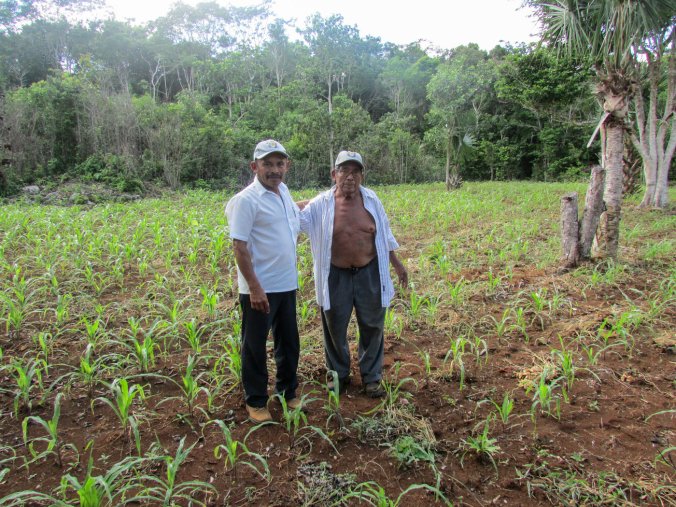
Farmers Gualberto Casanova (left) and Dionisio Yam Moo stand among young corn plants in Yam Moo’s improved milpa plot. Gabriel Popkin

We are grateful as always to our friends at the salt, one of National Public Radio (USA)’s great occasional series, for this story (the photo after the jump is a beauty, so read on):

Mayans Have Farmed The Same Way For Millennia. Climate Change Means They Can’t

by Gabriel Popkin

Dionisio Yam Moo stands about four-and-a-half-feet tall, and his skin is weathered from years in the tropical sun. A “proudly Mayan” farmer, he grows corn, beans and vegetables on a six-hectare farm in Mexico’s Yucatán peninsula. The farm is surrounded by dense tropical forest, and crops grow amid fruit trees in thin soil, with the peninsula’s limestone bedrock protruding in places. Continue reading