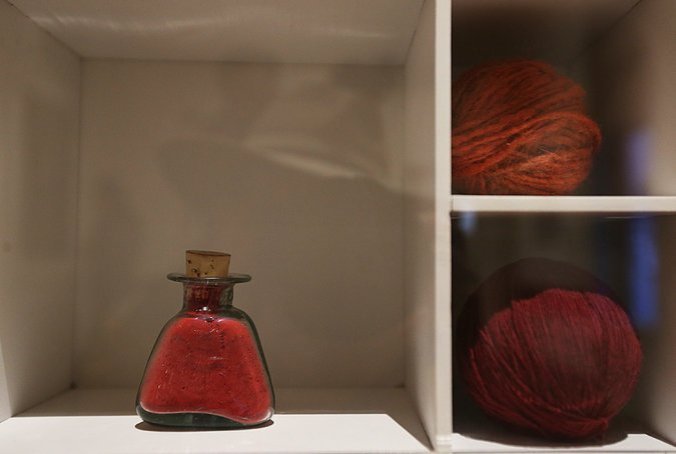
A jar of dye and some red yarn colored by cochineal, part of the Mexico City show. Credit Marco Ugarte/Associated Press
Colors used in dyes and paints in earlier centuries came from various organic and inorganic sources, and this particular red comes from an insect. An exhibit with this “Mexican red,” highlighting the relationship between nature’s sources, artists and their patrons, strikes us as as good a reason as any to curate a show:

Van Gogh’s “Bedroom in Arles, Third Version” (end of September 1889), which uses cochineal. The artist likened the color to the “red of wine.” Credit Musée d’Orsay, Paris
MEXICO CITY — Along with silver and gold, the first ships that sailed from the New World after the Spanish Conquest carried another treasure: a natural dye that produced a red so intense that European artists quickly embraced it as their own.
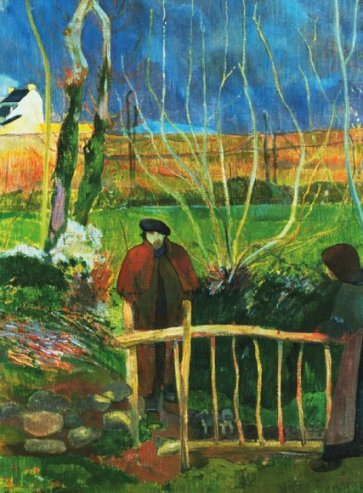
“Bonjour, Monsieur Gauguin” (1889), by Gauguin, is on display in “Mexican Red,” though its use of cochineal has not been confirmed. Credit Hammer Museum, Los Angeles
The trade in this dye reaped vast riches for the Spanish crown and supplied the crimson palette that would color the sacred and secular art of Europe for more than three centuries.
An exhibition that runs through Feb. 4 at this city’s Palace of Fine Arts, “Mexican Red, the Cochineal in Art,” traces the journey of the color from the highlands of pre-Hispanic Mesoamerica to Europe. There, it became increasingly associated with the projection of power in the 17th and 18th centuries. Cochineal fell into decline in the 19th century, as synthetic dyes were introduced, but was sought out later by the Impressionists. Continue reading
 Organikos