The Prize for Energy Storage

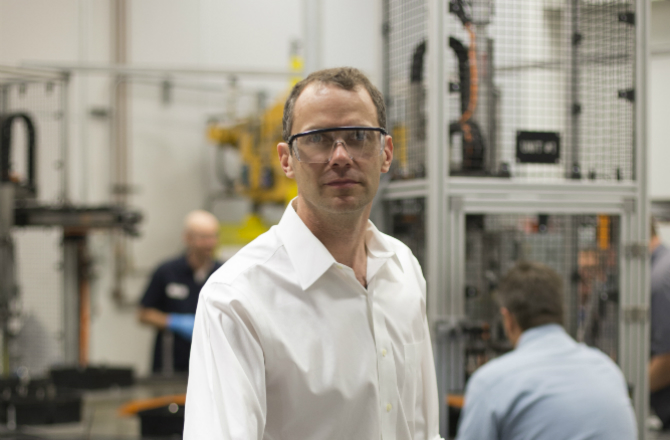
Jay Whitacre is the latest recipient of the prestigious $500,000 Lemelson-MIT Prize, which honors remarkable mid-career inventors who have also demonstrated a commitment to mentorship in science, technology, engineering and mathematics (STEM). PHOTO: LEMELSON-MIT PROGRAM

Jay Whitacre is the latest recipient of the prestigious $500,000 Lemelson-MIT Prize, which honors mid-career inventors who have also demonstrated a commitment to mentorship in science, technology, engineering and mathematics (STEM). PHOTO: LEMELSON-MIT PROGRAM

The Aqueous Hybrid Ion (AHI™) Batteries are based on a simple idea: in order to meet the challenges of the world’s growing energy needs and increase the use of renewable power, we need large-scale energy storage systems that are high performance, safe, sustainable and cost-effective. Jay Whitacre set out to solve this problem and discovered a simple and elegant solution that is a twist on a 200 year-old technology: saltwater batteries. Using abundant, nontoxic materials and modern low cost manufacturing techniques, the AHI batteries are now ready to take on the global energy storage challenge. And have also won Whitacre the prestigious $500,000 Lemelson-MIT Prize.

Continue reading

New York, Have a Sunny Day!

With New York packing so many buildings into a small area, the rooftops offer seemingly limitless potential to take homes off the grid. PHOTO: Business Insider

With New York packing so many buildings into a small area, the rooftops offer seemingly limitless potential to take homes off the grid. PHOTO: Business Insider

For the average homeowner, there’s more benefit to going solar than ever before. With the sun being a consistent source, of energy, those investing in photo-voltaic panels can be assured of seeing returns. There’s bound to be questions about feasibility, yes. About how much space is required, the type of structures involved, whom to contract for setup, etc.That’s where Mapdwell, a spin-off company from MIT that is creating incredibly detailed maps of the solar potential for each and every building in various cities, comes in.

“Solar energy has all this baggage, in a way. Solar panels have been out there for 30 to 40 years, but most homeowners still believe panels are “complicated, expensive, not-for-me kinds of things,” says CEO Eduardo Berlin, an architect and designer who is based in Cambridge, MA. “Solar is a real possibility for many people now, but somehow that got missed. It never got rebranded. The idea that you can put something on a roof and create energy from the sun, it’s pretty amazing.”

Continue reading

A Brick to Breathe Easy?

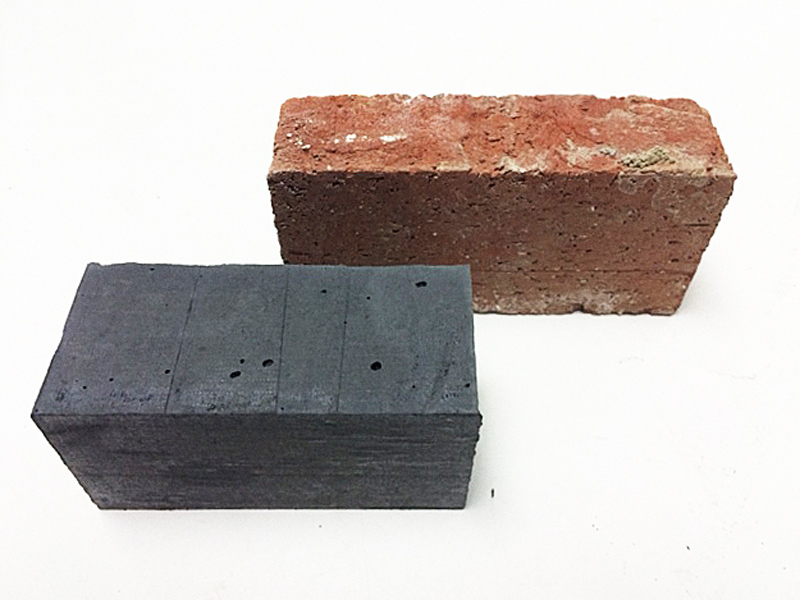
MIT students have created a brick that could end pollution from dirty brick kilns. PHOTO: CoExist

MIT students have created a brick that could end pollution from dirty brick kilns. PHOTO: CoExist

India’s brick industry, spread out over 100,000 kilns and producing up to 2 billion bricks a year, is a big source of pollution. To fire to hot temperatures, the kilns use huge amounts of coal and diesel, and the residue is horrendous: thick particulate matter, poor working conditions, and lots of climate-changing emissions. MIT students have created an alternative. The Eco BLAC brick requires no firing at all and makes use of waste boiler ash that otherwise clogs up landfills.

Continue reading