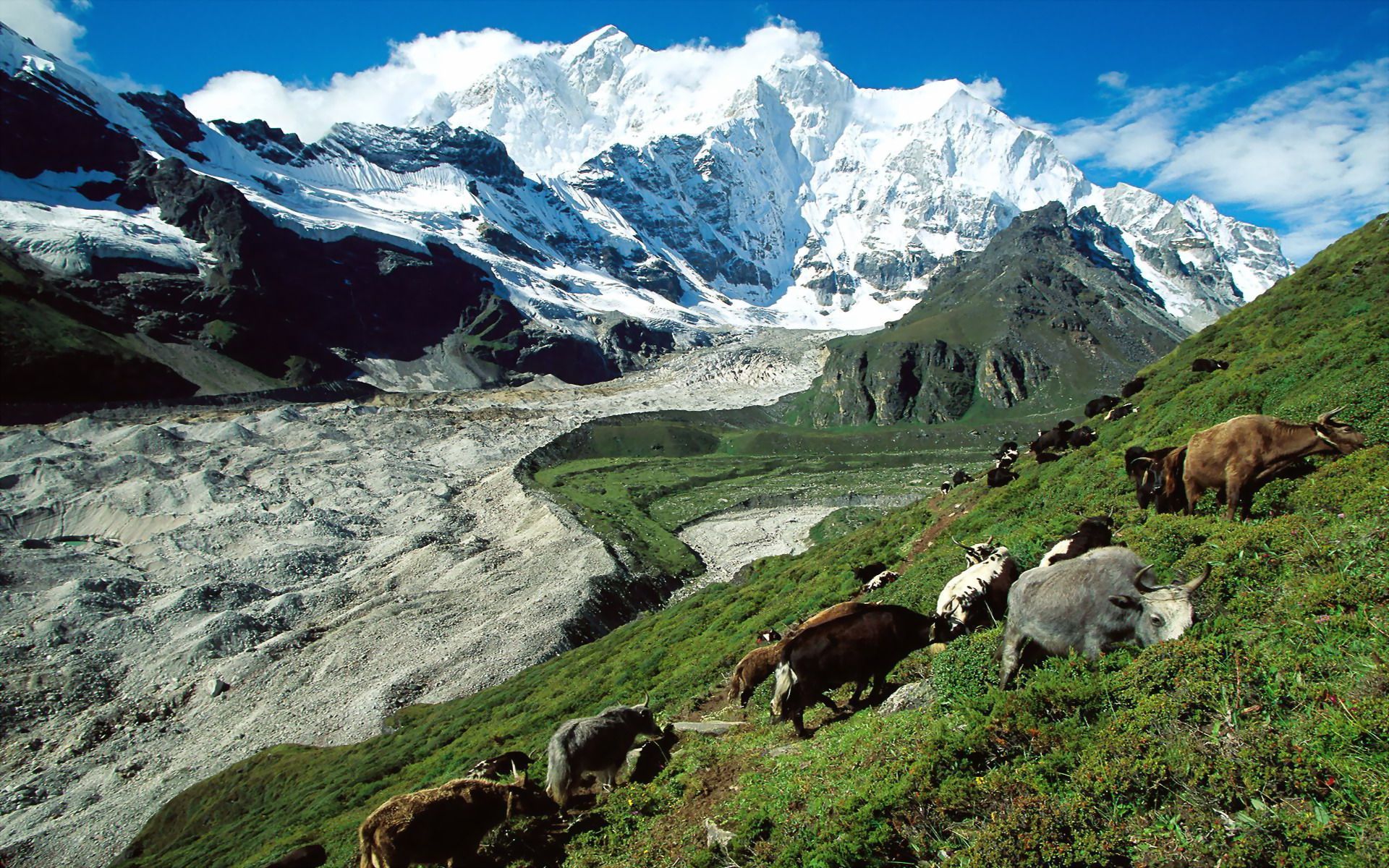
New research challenges stereotypical views of Tibet as an isolated and inward-looking society before the British and Chinese arrived. PHOTO: Maxi Science
Tibet. It’s called the ‘Roof of the World’ with good reason — the Tibetan Plateau stands over 3 miles above sea level and is surrounded by imposing mountain ranges that harbor the world’s two highest summits, Mount Everest and K2. While the world’s mountaineers regularly attempt to summit the forbidding peaks, the remote area is home to a rich variety of cultures. Less well-known is the story of how the Tibetan Plateau and the craggy peaks that surround it formed. The geologic tale is familiar to many schoolchildren: About 50 million years ago, the Indian subcontinent began to collide with Eurasia, and as it slammed into the bigger landmass, the plateau and the Karakoram and Himalaya ranges were born.
Only recently did Tibetan scholar Lobsang Yongdan revisit a long-ignored section of a historic text to reveal how Tibetans were engaging with western scientific knowledge two centuries ago. His research into a geography of the world, first published by a lama (Buddhist spiritual leader) in 1830, challenges stereotypical views of Tibet as an isolated and inward-looking society.
 Organikos