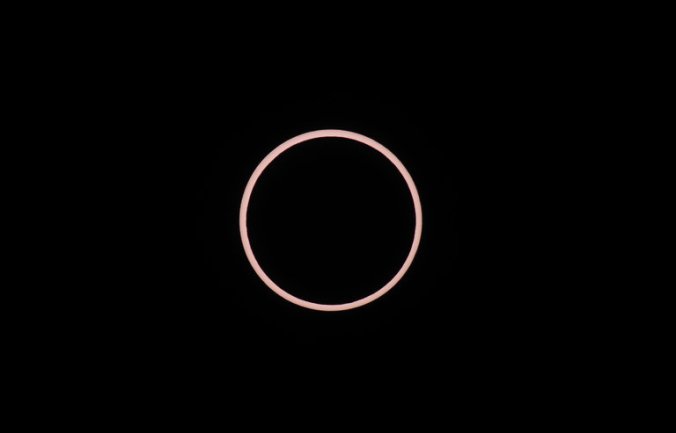
An annular solar eclipse as seen in Utah in May 2012. A similar “ring of fire” eclipse will be visible in the southern hemisphere on Sunday. CreditRobyn Beck/Agence France-Presse — Getty Images
For our friends and colleagues in the south, both in the Americas and in Africa, an astrophysical rarity will be in the night sky, not to be missed:
Cue the Johnny Cash music. On Sunday, a “ring of fire” eclipse will blaze over parts of South America and the southern and western tips of Africa. Scientifically known as an annular eclipse, this solar phenomenon occurs when the moon moves in between the sun and the Earth but is too far away to completely block the sun as it would during a total solar eclipse.
“Because you have this thin little ring around the edge of the moon where the sun pokes out, it gives it that ring of fire effect,” said C. Alex Young, a solar astrophysicist from NASA. Continue reading
 Organikos