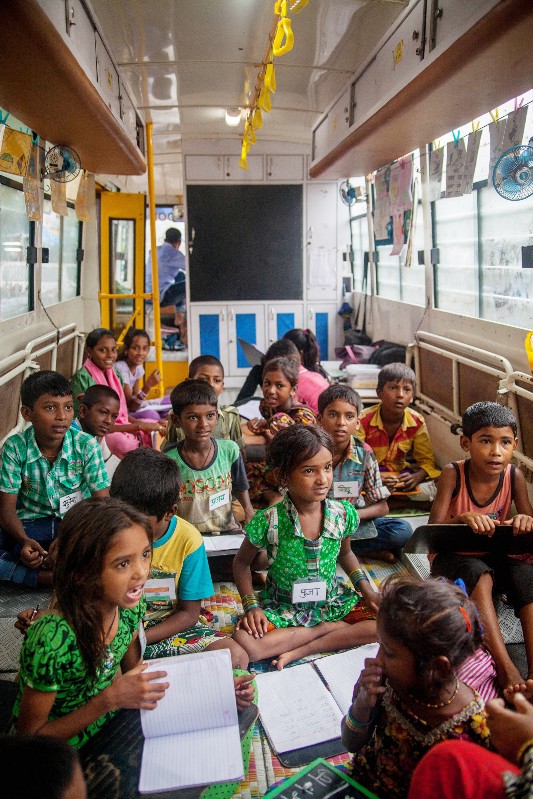
The buses can only hold 20 students, without much space to wiggle around or store books. But they have unique benefits — like their ability to reach many of Mumbai’s poorest migrants who live on illegal plots of land where schools can’t be built. PHOTO: Karen Dias
Mumbai’s education system has fallen gravely short of absorbing its children. Only 400,000 children were enrolled in municipal schools in 2014, according to a report by Praja, a non-partisan research and advocacy organization. That number actually dropped 11 percent since 2009, despite increased government spending on education.That leaves more than half of the children in Mumbai either out of school or learning in private institutions. At least 37,000 kids in Mumbai live on the streets and work with their parents to earn a few cents a day, according to advocacy organization Action Aid.
Medium brings you more on how a collaborative system of volunteers, activists and NGOs is transforming the darkness of ignorance in one of India’s largest cities.


 Organikos