Pipeline, Refuge & Court

24Harlen1-mobileMasterAt3x

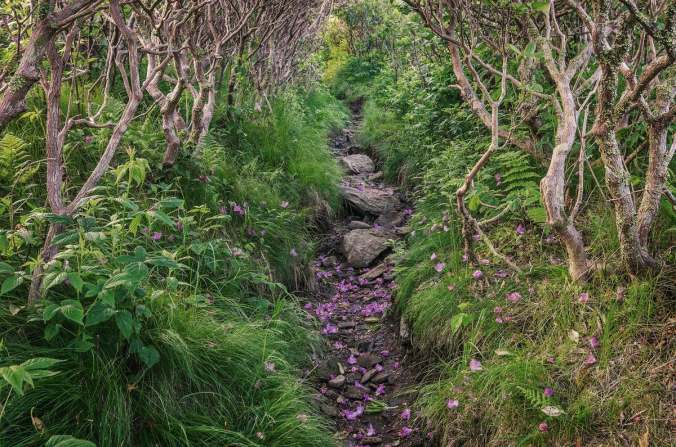
Rhododendron petals line the Appalachian Trail at Roan Mountain State Park in Tennessee. Aheflin/iStock, via Getty Images Plus

Thanks to Will Harlan, a journalist, for this opinion:

Will the Appalachian Trail Stop an $8 Billion Pipeline?

It’s up to the U.S. Supreme Court.

BIG IVY, N.C. — I live in Appalachia, and on Sunday mornings I hike the Appalachian Trail across the mountains I call home. It is my church. I drink from its springs and rest in the shade of its ancient forests.

For decades, the trail has been my refuge. I have run for miles through tunnels of rhododendron, crossed paths with bears and camped with my children beneath starry skies.

A few years ago, however, the 600-mile Atlantic Coast Pipeline broke ground, and crews began clear-cutting a scar across the mountains to move fracked natural gas from West Virginia to customers in Virginia and North Carolina. On my trail treks in Virginia, I watched the bulldozers creep closer.

Then suddenly, on a crisp fall morning in 2018, the bulldozers stopped. The U.S. Court of Appeals for the Fourth Circuit vacated a permit allowing the pipeline to cross the trail deep beneath the ground. Continue reading
Model Mad, NPS

4212

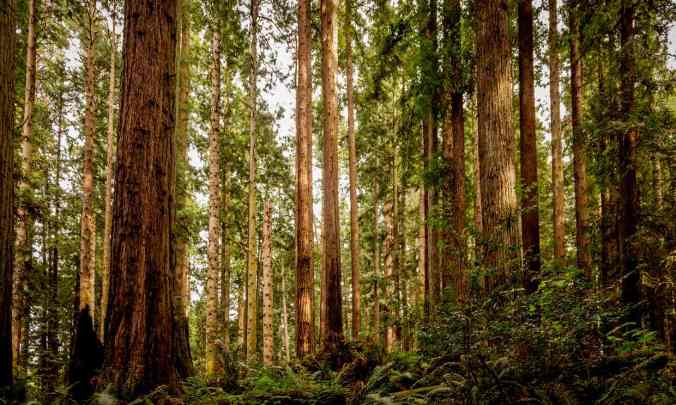
Redwood national park in California. Photograph: Jeffrey Schwartz/Alamy

We like what we see of the madly determined folks risking their professional careers in the interest of the environment and social justice:

National Park Service climate change Twitter campaign spreads to other parks

A day after three climate-related tweets sent out by Badlands National Park were deleted, other park accounts have sent out tweets that appear to defy Trump

The National Park Service employees’ Twitter campaign against Donald Trump spread to other parks on Wednesday, with tweets on climate change and a reminder that Japanese Americans were forcibly interned in camps and parks during the second world war.

A day after three climate-related tweets sent out by Badlands National Park were deleted, other park accounts have sent out tweets that appear to defy Trump. One, by Redwood national park in California, notes that redwood groves are nature’s number one carbon sink, which capture greenhouse gas emissions that contribute to global warming…

…Golden Gate national park in California said in a tweet that 2016 was the hottest year on record for the third year in a row. The tweet directed readers to a report by Nasa and the National Oceanic and Atmospheric Administration, also known as Noaa…

…The tweets went beyond climate change.

Death Valley national park tweeted photos of Japanese Americans interned there during the second world war, a message that some saw as objecting to Trump’s pledge to ban Muslims from entering the country and a proposal to restrict the flow of refugees to the United States…

Read the whole story here.

The Legacy of U.S. National Park System

glaciernationalpark_davesizer800

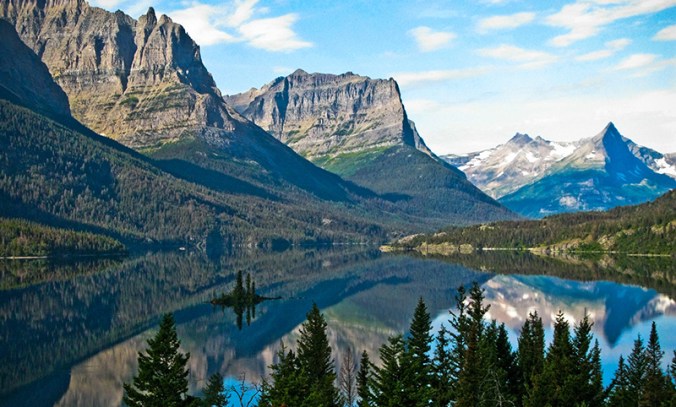
Saint Mary Lake in Glacier National Park, Montana. All images from: Yale News

Thanks to Yale News for a wonderful commemoration to the history and value to the scientific community of the U.S. National Park system – visit our National Parks category page for over a hundred posts on the subject – as we celebrate its centennial today (US time, it’s still August 25th):

As the United States marks the centennial of the National Park Service, which was officially established 100 years ago this week, the nation’s parks are being widely celebrated for their natural grandeur and vistas, their wildlife, and their abundant recreational opportunities.

Far less appreciated though is the critical role that the U.S.’s 59 national parks and hundreds of other park service units play in scientific research, providing unspoiled, protected, and accessible landscapes that host research that can be done few other places. In fact, with a long history of data and field study on everything from wildlife to wildfires, the national parks offer scientists an incredibly rare living outdoor lab. And the high profile of the parks in the American imagination often provides an avenue for conveying that research to the public.

Continue reading

The History of America’s National Parks through Maps

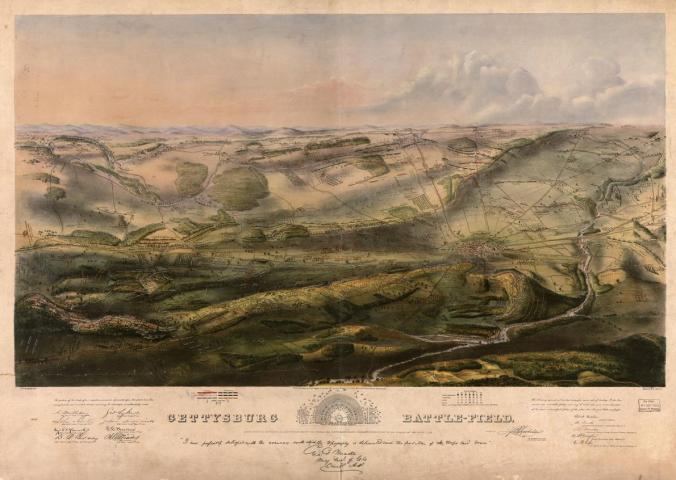
03_gettysburg_battlefield-adapt-1190-1

A map depicting the three-day battle of Gettysburg. Source: Library of Congress

Later this week, on August 25th, will be the U.S. National Park Service centennial (more about that on the day in question). So for all history buffs out there, you might enjoy the following article by National Geographic that provides a historical context to several topographical maps of the national parks (a somewhat contrasting view to yesterday’s post on fictional map creation) and their uncharted contribution to historians many years later.

By Betsy Mason

CAMBRIDGE, Mass.—John Badger Bachelder arrived at Gettysburg before the soldiers’ bodies were buried. He spent the next 84 days studying the battlefield by horseback and filling notebooks with the accounts of injured soldiers from both sides of the battle. He even took some of the wounded back to the scene so they could point out their positions and recount what had happened.

Continue reading

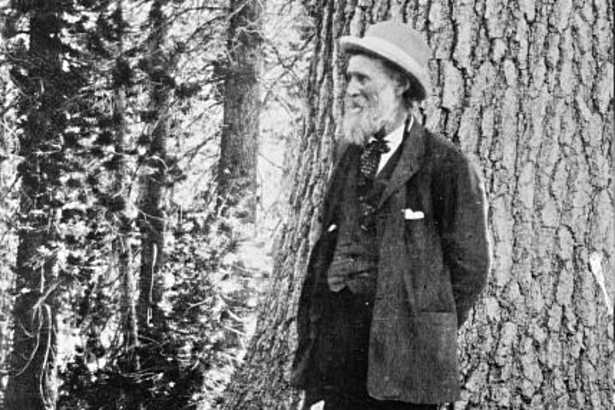
John Muir’s Writings About Yosemite

lead_large (3).jpg

Library of Congress

We posted about John Muir’s writings in the Atlantic four years ago, once we realized they were so accessible in that magazine’s archives. In that post, two years into our foray in India, we simply wanted to share our amazement that Muir had written about India as an example relevant to the case for protecting the forests of North America. We have also posted about Muir indirectly, including a lovely photo-documented post about his visit with Teddy Roosevelt to several wilderness areas that would become iconic national parks.

As we prepare for the expansion of our activities in India, and in advance of our announcement of two exciting new conservation initiatives in Mesoamerica that we will embark upon next month, I have been going back through our archives, enjoying some examples of the historical perspective this platform has allowed us to share.

Today, in the spirit of the centenary of the National Parks Service, and considering this past weekend’s visit to Yosemite by the President of the USA, it makes sense to share another of Muir’s several contributions to The Atlantic, this one specifically about the first national park (which predates the creation of the NPS):

The Yosemite National Park

“All the world lies warm in one heart, yet the Sierra seems to get more light than other mountains.”

JOHN MUIR   AUGUST 1899 ISSUE

Of all the mountain ranges I have climbed, I like the Sierra Nevada the best. Though extremely rugged, with its main features on the grandest scale in height and depth, it is nevertheless easy of access and hospitable; and its marvelous beauty, displayed in striking and alluring forms, wooes the admiring wanderer on and on, higher and higher, charmed and enchanted. Benevolent, solemn, fateful, pervaded with divine light, every landscape glows  Continue reading

Exploration in Yellowstone Lake

Yellowstone Lake at dawn by Wikimedia contributor Seglea

We like national parks, and are surprised to learn that the body of water pictured above hasn’t actually been explored much. The good news is that there are efforts underway to send an underwater drone down into the lake’s depths to better study this interesting site of thermal activity. Jeffrey Marlow reports for Discover Magazine’s blog:

2016 marks the 100th anniversary of the National Park Service, a milestone that has set off a year of celebration for what historian Wallace Stegner called “the best idea we ever had.” The first park, Yellowstone, predates the Service itself, and despite its 4.1 million yearly visitors that are putting real stress on a highly interconnected ecosystem, certain portions of the park remain a nearly unadulterated wilderness.

One of these sites is the floor of Yellowstone Lake, a 350 square-kilometer body of water that reaches depths of 120 meters. And while much of Yellowstone’s thermal activity manifests on the surface – think rainbow-colored hot springs, gooey mudpots that smell of sulfur, and spurting geysers – the same forces create heated water and unique oases of microbial life at the lake bottom.

Continue reading

National Park Week

http://www.youtube.com/watch?v=0ykvO8UN3g0

On August 25th this year, the United States National Park Service will turn 100 years old, and this week, from April 16th to the 24th, it’s National Park Week, when the US celebrates its natural and cultural heritage with special events and free admission to any national park.

Continue reading

California Condors, Better Births, Incredible Intervention

California Condor chick being fed by a puppet as part of the captive breeding program. Photo by Ron Garrison at the San Diego Zoo for the US Fish and Wildlife Service, via WikiMedia Commons.

Back in 1973 when the Endangered Species Act put the California Condor under protection, the species’ numbers were still dwindling at an alarming rate. In the following decade the remaining population was captured and bred in captivity, so as to protect chicks and release them into the wild. And last year, more condors were born and raised in the wild (14) than the number of adult wild condors that died (12), which represents success in the breeding program. There are now over 250 California Condors in the wild, a vast improvement over the 22 surviving birds that were captured for the start of the breeding program.

Officials also counted 27 wild condor nests last year. Nineteen were in California, three in the Arizona-Utah border area and five in Mexico’s Baja Peninsula. Grand Canyon National Park in Arizona has a condor nest, officials said, as do Zion National Park in Utah and Pinnacles National Park in central California.

The captive breeding program continues with the Peregrine Fund‘s World Center for Birds of Prey near Boise being the top egg producer, with six eggs laid this spring and nine more expected.

“So far it’s going fantastic,” said Marti Jenkins, condor propagation manager at the facility.

She said two eggs laid at the facility last year were placed in wild nests in California where eggs were either infertile or damaged. The replacement eggs produced fledglings that officials count in the wild population.

Continue reading

The Power of Parks

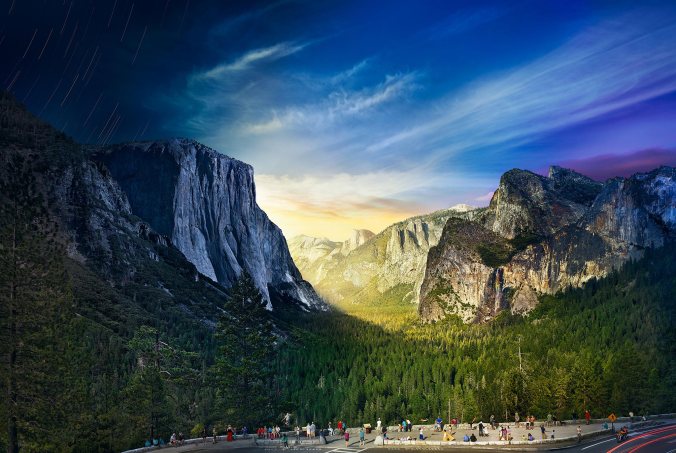
yosemite

Photographs of Yosemite National Parks composed by Stephen Wilkes. Courtesy: National Geographic

Which side are you on – the one that believes national parks are the past or to the side that sees the future in these stretches? As long as national parks figure on your maps and feature in your scheme of things, you must know that the National Park Service is celebrating its centennial this year.  In commemoration, National Geographic looks at how to preserve these wild spaces:

“In March 1868 a 29-year-old John Muir stopped a passerby in San Francisco to ask for directions out of town. “Where do you wish to go?” the startled man inquired. “Anywhere that is wild,” said Muir. His journey took him to the Yosemite Valley in California’s Sierra Nevada, which became the spiritual home of Muir’s conservation movement and, under his guidance, the country’s third national park. “John the Baptist,” he wrote, “was not more eager to get all his fellow sinners into the Jordan than I to baptize all of mine in the beauty of God’s mountains.” Today around four million people a year follow their own thirst for the wild to Yosemite.”

Continue reading