To Hunt a Newt

Dr. Grant holds a red-spotted newt from Beebe Pond in Sunderland, Vt., this month. Credit Jim Cole/Associated Press

Salamanders and newts have shown up on the blog before as an important environmental health indicator, an animal family that is fun to look at and look for, and a group of species at risk due to imported/exported diseases made possible by the pet trade. From the New York Times Science section this week, we’re learning even more about these slippery amphibians:

Warren Pond in southern Connecticut, bordered by shady oaks and maples, is a lovely place to fish for bass or sunfish. Or, if the mood strikes you, to hunt the Eastern red-spotted newt.

Why one would want to hunt newts is a valid question. But for Evan Grant, who was stalking the banks of Warren Pond this month, scanning the water through polarized sunglasses, the answer is that many species of salamander in the United States, including the newts he was seeking, may be on the brink of a deadly fungal assault, much like one that has devastated some frog and toad populations worldwide.
Continue reading

Salamanders Announce Arrival of Spring in Ithaca

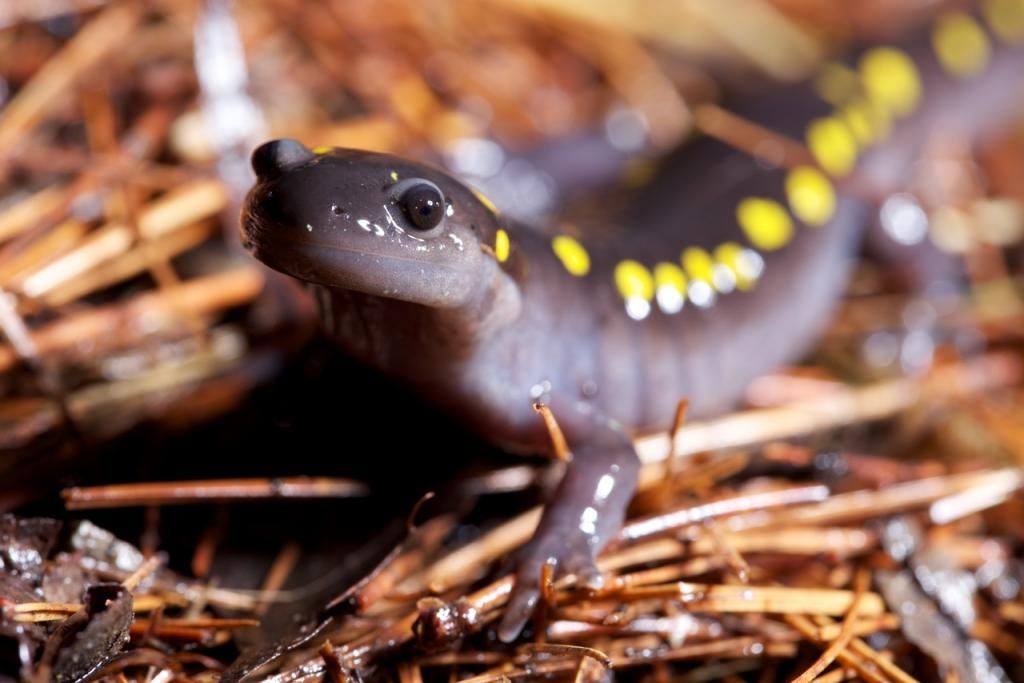
Spotted Salamander by Brian Magnier

Last night, at forty-odd degrees Fahrenheit and under a light drizzle, the salamanders of Ithaca’s Bull Pasture Pond signalled that spring has come. Before I explain, let me tell you a little bit about salamanders:

“The Americas have far more kinds of salamanders than all the rest of the world put together,” the Conant and Collins Field Guide to Reptiles and Amphibians reads in its introductory passage to the order Caudata. Species in eastern and central North America range from barely two inches to nearly four feet long, and some species are practically fully aquatic while others prefer only damp environments. Most of them are active at night and hide during the day, which is an easy way to differentiate them from lizards (except for the gecko family of lizards, which is primarily nocturnal). Other key differences are that lizards have scales on their bodies and claws on their toes, while salamanders have smooth or warty skin (just look at the slime in these photos) and no claws.

Continue reading