Mycology’s Expansive Boundaries

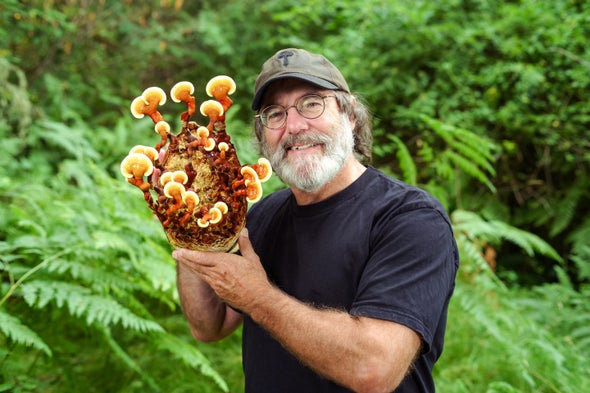
Paul Stamets. Credit: Trav Williams Broken Banjo Photography

In the media we scan for articles and podcasts to share here, some of the last year’s attention to fungi has been aimed at making them seem less alien by celebrating their very alien-ness. Up to now, this has all been earth-bound, but maybe that has been an arbitrary boundary. Thanks to Scientific American magazine for this conversation with the man who has been stretching fungi boundaries for much longer than we have been paying attention:

Future Space Travel Might Require Mushrooms

Mycologist Paul Stamets discusses the potential extraterrestrial uses of fungi, including terraforming planets, building human habitats—and providing psilocybin therapy to astronauts

The list of mycologists whose names are known beyond their fungal field is short, and at its apex is Paul Stamets. Educated in, and a longtime resident of, the mossy, moldy, mushy Pacific Northwest region, Stamets has made numerous contributions over the past several decades— perhaps the best summation of which can be found in his 2005 book Mycelium Running: How Mushrooms Can Help Save the World. But now he is looking beyond Earth to discover new ways that mushrooms can help with the exploration of space. Continue reading
Fungi, Bees & Future

30stamets-hope-jumbo.jpg

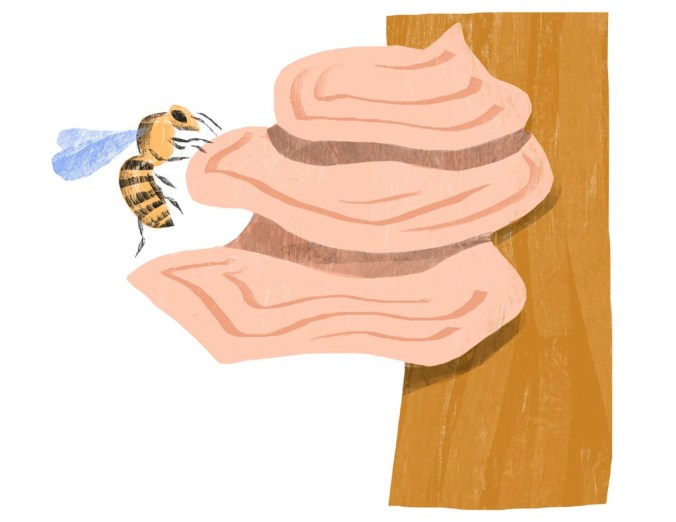
Lilli Carré

Fungi first appeared in our pages thanks to Milo. And the name of the essayist below was mentioned a couple times earlier as well. He deserves more attention, especially if his attention is focused on bees:

Will Mushrooms Be Magic for Threatened Bees?

We might be able to save honeybees from viruses transmitted by invasive parasites without chemical treatment.

By Paul Stamets

Mr. Stamets is a mycologist.

Sometime in the 1980s, microscopic mites that had been afflicting honeybees outside the United States found their way to Florida and Wisconsin and began wreaking havoc across the country. These parasites have invaded and decimated wild and domestic bee colonies. Along with other dangers facing bees, like pesticides and the loss of forage lands, the viruses these mites carry threaten the bees we rely on to pollinate many of the fruits, nuts and vegetables we eat. Continue reading

Citizen Science, Mushroom Edition

04-magic-mushrooms.w710.h473.2x.jpg

Photo: Johan Hansson/Creative Commons Attribution

We have a mycological leaning on this platform, which started due to Milo’s interest, which was infectious.  So, our news filters pick up stories like this; normally I avoid sharing the stories involving hallucinogens, though I read the serious ones myself. I do not expect stories like this one below from New York Magazine, so this was a pleasant surprise:

Meet the Citizen Scientists Who Think Mushrooms Have Superpowers

By

Last month, around 2,500 people with some connection to hallucinogenic drugs gathered at the Oakland Marriott City Center in Oakland, California for what might best be described as the psychedelics state of the union. Psychedelic Science 2017, as it was more formally known, drew professionals of all stripes: chemists who make the hallucinogens, neuroscientists who study their effects on the brain, therapists who discuss their after-effects on patients, shamans and healers who administer the drugs, and anthropologists like Joanna Steinhardt, who are trying to make sense of the meaning of psychedelic culture. Continue reading

Zombie Ants

African ant (Pachycondyla sp) attacked by an insect eating Fungus (Cordyceps sp) Guinea, West Africa. Photo © PIOTR NASKRECKI/ MINDEN PICTURES/National Geographic Creative

A few years ago I wrote about a curious and very specific relationship between some beetles and their wood-eating fungus symbiotic partner, and we’ve also shared other work on crazy parasitic creatures that can alter their hosts’ behavior, sometimes pretty radically (warning, creepy video). Believe it or not, the photo above isn’t some weirdly-antlered African ant–well, actually it is, but the antlers aren’t part of the ant’s body, they’re the spore-spreading apparatus of a parasitic fungus. Read on for more about the real-life World War Z that has been going on between ants (as well as other insects) and a family of zombifying fungi for millennia.

Earlier this week I went to a lecture hosted by Cornell’s Department of Neurobiology and Behavior titled “Zombie Ants: the precise manipulation of animal behavior by a fungal parasite.” The lecturer was David Hughes, Professor of Entomology at Penn State University, whose faculty webpage provides PDF links to most of the articles that he has contributed to if you’re interested in checking out the actual journal pieces on this topic.  Continue reading