Photosynthesis Mimicry Out Of Cambridge

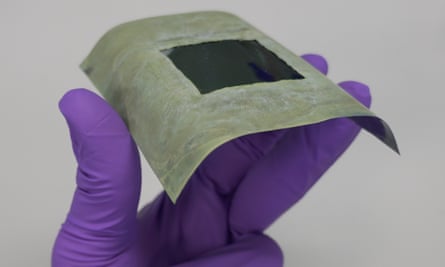
Researchers from the University of Cambridge designed ultra-thin, flexible devices, which take their inspiration from photosynthesis – the process by which plants convert sunlight into food.

Researchers from the University of Cambridge designed ultra-thin, flexible devices, which take their inspiration from photosynthesis – the process by which plants convert sunlight and CO2 into food. Photograph: Virgil Andrei

Photsynthesis comes in handy on this planet. This invention leverages the natural process into a technology to tackle a large scale challenge. We can only hope that it is not too little, too late:

Floating factories of artificial leaves could make green fuel for jets and ships

Cambridge University scientists develop a device to ‘defossilise’ the economy using sunlight, water and carbon dioxide

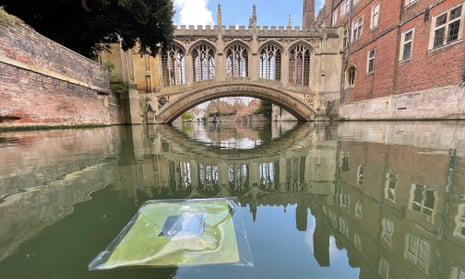
The artificial leaves were tested on the River Cam in and around Cambridge including sites such as the Bridge of Sighs.

The artificial leaves were tested on the River Cam in and around Cambridge including sites such as the Bridge of Sighs. Photograph: Virgil Andrei

Automated floating factories that manufacture green versions of petrol or diesel could soon be in operation thanks to pioneering work at the University of Cambridge. The revolutionary system would produce a net-zero fuel that would burn without creating fossil-derived emissions of carbon dioxide, say researchers. Continue reading
A Second Green Revolution?

It is often said that the world now needs a Second Green Revolution. Illustration by Derrick Schultz

Elizabeth Kolbert continues exploring the potential costs and benefits of mankind’s attempted mastery over nature:

Creating a Better Leaf

Could tinkering with photosynthesis prevent a global food crisis?

This story begins about two billion years ago, when the world, if not young, exactly, was a lot more impressionable. The planet spun faster, so the sun rose every twenty-one hours. The earliest continents were forming—Arctica, for instance, which persists as bits and pieces of Siberia. Most of the globe was given over to oceans, and the oceans teemed with microbes. Continue reading

Photosynthetic Solutions

wilerson-s-andrade

Wilerson S. Andrade/Flickr.com

Thanks to Anthropocene:

Could more efficient photosynthesis help feed the world?