Sticks + Time = Hummingbirds

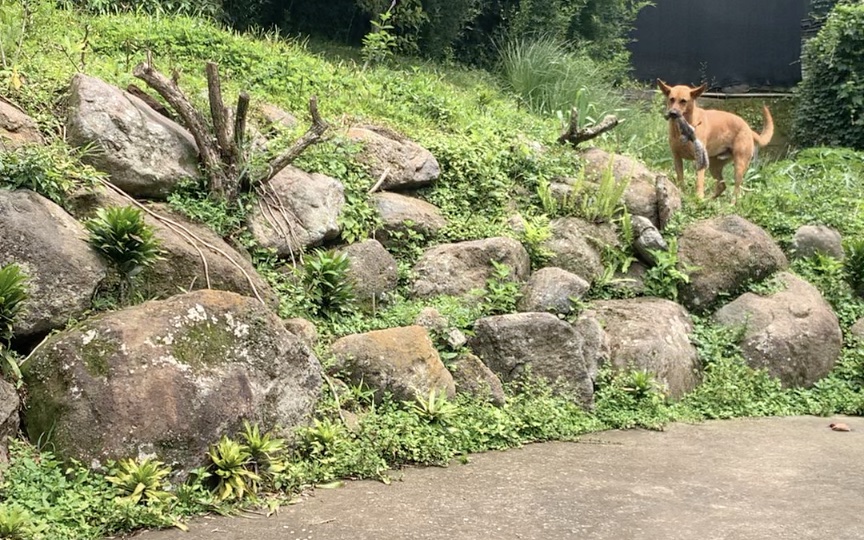
remaining branches of treacherous spine bush

14 months ago the pandemic still allowed, which is to say forced, creative use of abundant time and limited budget, so I took a day or so to rethink this pile of rocks. It curves around where we park our car and had been covered by a gigantic bush.
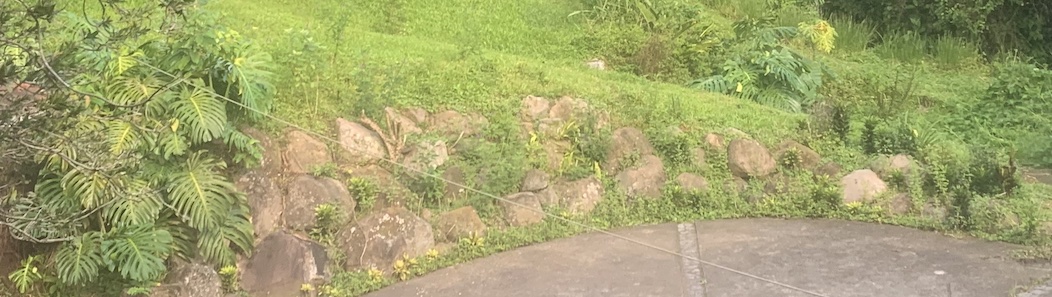
build back better

That bush produced spines abundantly and flowers sparingly. While spines may offer ecosystem services I have not yet learned about (other than self-protection for the plant itself), we are focused on regenerating bird habitat, so flowers count more in our calculus. In June, 2021 I cut the bush back to the short branches seen in these photos above.
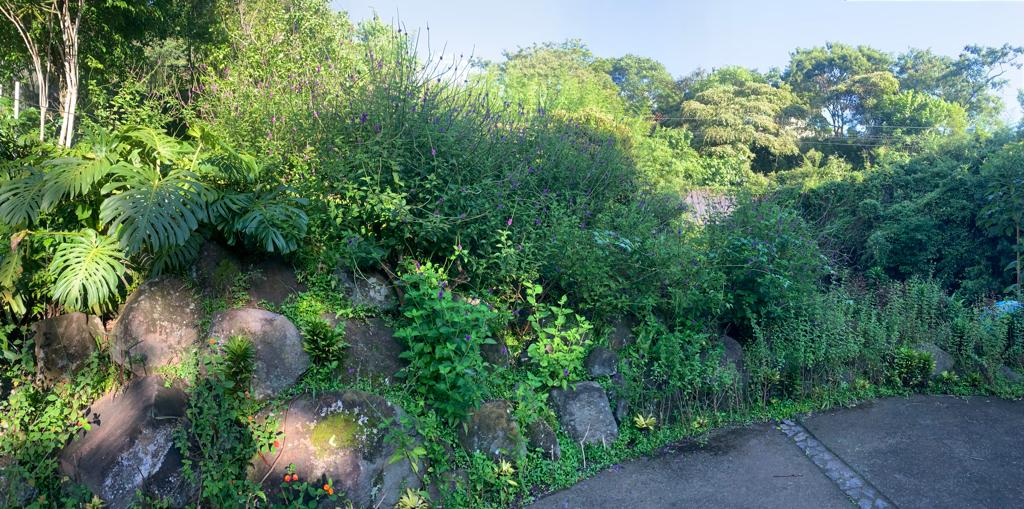
Spearmint, which can be seen growing straight up on the lower right side of this photo, is for scent, and then for tea; the rest is for the winged folk.

The treachery removed, the slate was blank, and the opportunity to build back better was clear. Hummingbirds and butterflies focus on the bushy abundance covering most of the area.
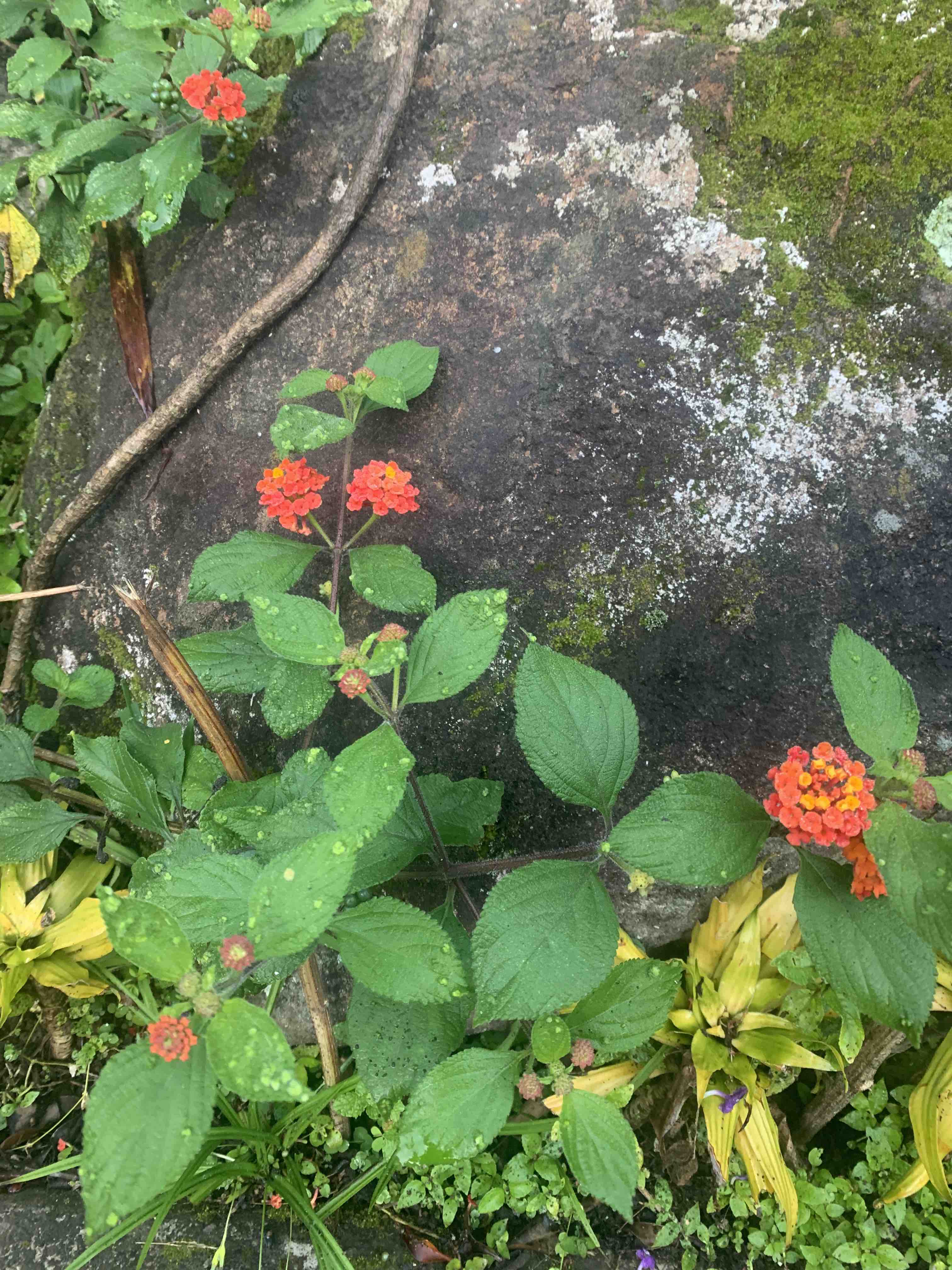
The bushes producing these orange flowers are slower to fill in

I went through the exercise that Ari described yesterday, trimming back a couple of bushes that hummingbirds and butterflies favor. I cut the branches into one foot long stalks and stuck about 100 of them into the soil in between all those rocks. 14 months later, here is what we have. Difficult to see from the macro view, flowers are constantly available for the pollinators. Every day, dozens of hummingbirds and numerous species of butterflies can be seen in these flowers. With a camera phone I am not well equipped to capture good photos of those, but when someone else does so we will share here.

Sticks + Time = Hummingbirds
Think Twice About Whatever It Takes For Honeybees

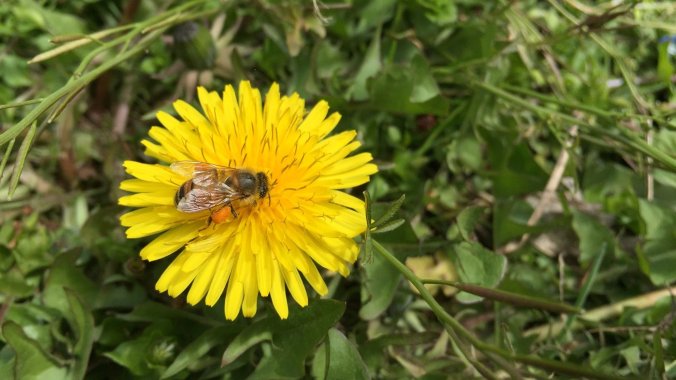
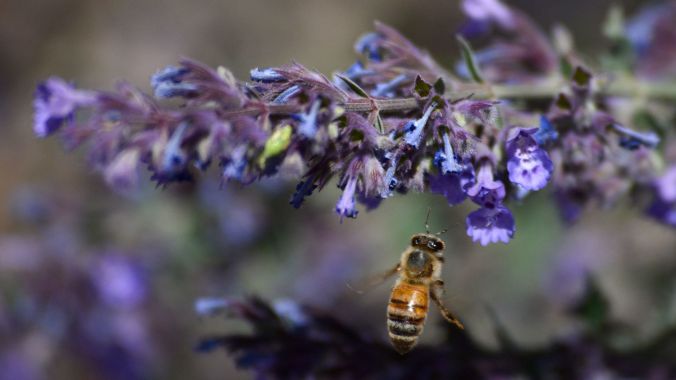
A honey bee visits a blooming catmint plant in New Mexico. ROBERT ALEXANDER/GETTY IMAGES

Since Milo’s 2011 post on this topic we have paid attention to the plight of honey bees and their human keepers, and might have had a “whatever it takes” perspective on letting those human keepers find solutions to keep their colonies alive. Jennifer Oldham’s article in Yale e360 has us thinking twice:

Will Putting Honey Bees on Public Lands Threaten Native Bees?

As suitable sites become scarce, commercial beekeepers are increasingly moving their hives to U.S. public lands. But scientists warn that the millions of introduced honey bees pose a risk to native species, outcompeting them for pollen and altering fragile plant communities.

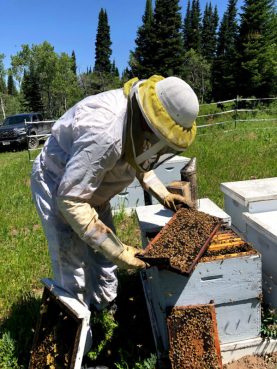
Beekeeper Dennis Cox checks his hives in Strawberry Valley, Utah in July. JENNIFER OLDHAM / YALE E360

Honey bees heavy with pollen and nectar foraged from wildflowers on Utah’s Uinta-Wasatch-Cache National Forest collide with tall grass and tumble to the ground. They are attempting to land alongside a hive, and I watch as they struggle to stand, fly into the box, and disgorge nectar to be made into honey.

The pollinators belong to a 96-hive apiary, trucked here to Logan Canyon for the summer to rest and rebuild their population, replenishing bees lost to disease and pesticides after months pollinating California’s almond groves. By Labor Day, the yard could house 5 million domesticated pollinators. Continue reading

How Sweet Is Your City?

2437

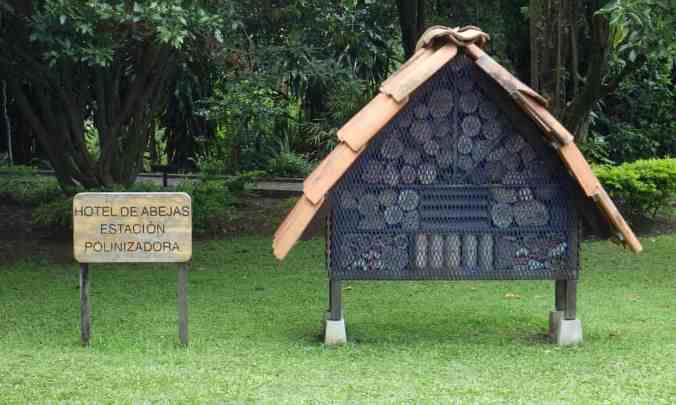
A bee hotel, part of Curridabat’s drive to welcome and protect pollinators. Photograph: Courtesy of Curridabat Municipality

Costa Rica is full of inspirational stories, some big picture and some more granular. Bee hotels are an example of the latter, and first came to my attention only this year. On a farm north of San Jose growing edible flowers, and then again on a cacao plantation in the Central Pacific zone where we source our line of Macaw Kakau chocolates–in both cases the “hotels” were specifically for melipona bees.  Thanks to the Guardian for putting some due attention on this forward-thinking municipality across the city from where I live and work, and especially for the reminder that I have not posted yet on the apicultural wonders I learned about at those two melipona bee hotels:

‘Sweet City’: the Costa Rica suburb that gave citizenship to bees, plants and trees

A suburb of the country’s capital is showing how urban planning can be harnessed to benefit both humans and wildlife

960 (1)

 ‘Biocorridors improve air quality, water quality and give people spaces to relax, have fun and improve their health,’ says Magalli Castro Álvarez. Photograph: Melissa Alvarez/Courtesy of GIZ/Biodiver_City Project

“Pollinators were the key,” says Edgar Mora, reflecting on the decision to recognise every bee, bat, hummingbird and butterfly as a citizen of Curridabat during his 12-year spell as mayor.

“Pollinators are the consultants of the natural world, supreme reproducers and they don’t charge for it. The plan to convert every street into a biocorridor and every neighbourhood into an ecosystem required a relationship with them.”

The move to extend citizenship to pollinators, trees and native plants in Curridabat has been crucial to the municipality’s transformation from an unremarkable suburb of the Costa Rican capital, San José, into a pioneering haven for urban wildlife. Continue reading

Better For The Bees

bee_wide-620b0e28784802026939d4d72fe1ae54cfa80f7d-s1400-c85

A bee gathers pollen from a park in Kensington, Md. With bee health in mind, home and garden products giant Ortho has announced it will phase out neonics, a class of pesticides, from its outdoor products. Allison Aubrey/NPR

We never expected to be publicly thanking a company like this one for an action it has committed itself to, but credit where it is due:

Home And Garden Giant Ditches Class Of Pesticides That May Harm Bees

A leading brand of home and garden pest-control products says it will stop using a class of pesticides linked to the decline of bees.

Ortho, part of the Miracle-Gro family, says the decision to drop the use of the chemicals — called neonicotinoids, or neonics for short — comes after considering the range of possible threats to bees and other pollinators. Continue reading

Pollinator Challenges & Our Self-Interested Responsibility

966911_1_0226-WPOLLINATORS_standard

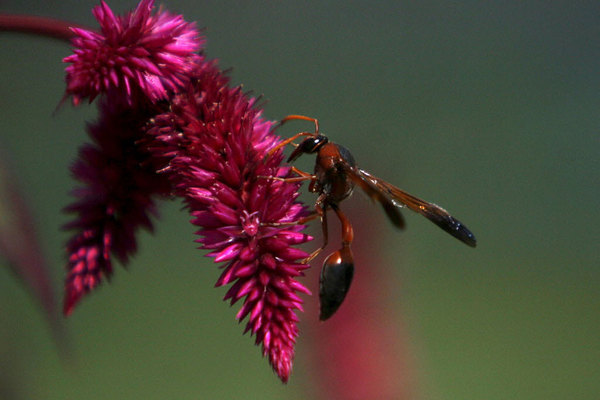
A wasp lands on a flower in a garden in Srinagar, India, Sept. 8, 2009. Bees and other pollinators face increasing risks to their survival, threatening foods such as apples, blueberries and coffee worth hundreds of billions of dollars a year, the first global assessment of pollinators showed on Friday.

It is worth seeing how various media outlets cover the same news we first linked to here. The CS Monitor, as always, has a thoughtful consideration of the news, asking the key question:

Earth’s bees and other pollinators need some human help: What can we do?

Pollinator populations around the world are declining, threatening hundreds of billions of dollars worth of agriculture. Humans are part of the problem, say scientists, but they can also be part of the solution.