 Last time I posted about pysanky at Xandari was about six months ago, when I showcased some new designs revolving around simple geometric patterns and Costa Rican soccer teams. A few months before that I made a video that displayed the process of making an egg sped up quite a bit. Now, as you can see from the egg photos above with before-and-after wax shots, I’m working Continue reading
pysanky
Xandari’s Latest Dozen+ Pysanky
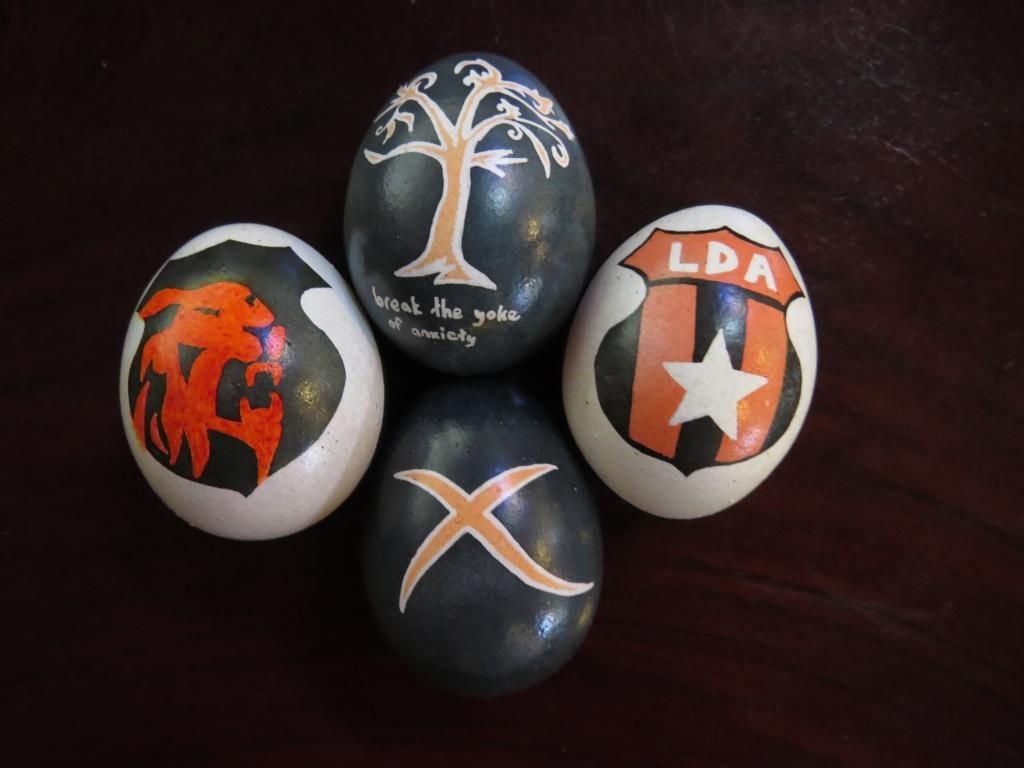 As my on-site time with Xandari wound down for the year early this week, I worked to make as many pysanky for the gift shop as possible, since an ornithological expedition in Jamaica will be taking up the first couple months of the new year. In the photo on the right, you can see that I finally got to one of the patterns I’d brainstormed when first starting this project, as well as a repetition of the Alajuelan soccer team insignia egg. Since the little tree for hanging the eggs in the gift shop is pretty full at sixteen eggs already, most of these eggs will stay in the office until an egg is sold or eggs are rotated.
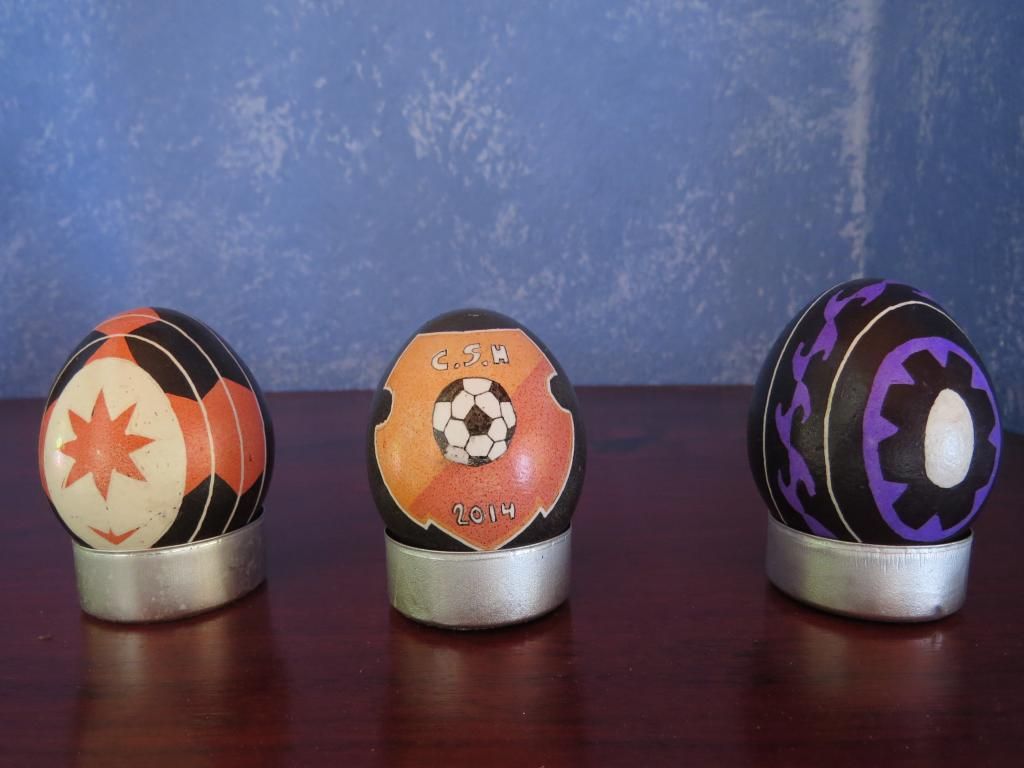
Two adaptations of earlier patterns I developed and another soccer-themed egg, this time for Heredia’s team.
I’m hoping all these eggs, some of which directly reference Xandari and others Continue reading
Speed Pysanky
In the video above, about four hours of working on two different eggs are condensed into six minutes of edited footage that has been sped up by 2000%. Continue reading
First Sale of Xandari Pysanky
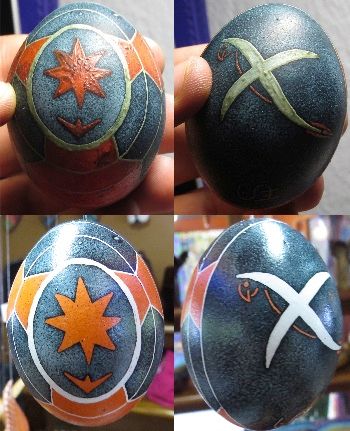 Last week, we had the good fortune of having some guests at Xandari who were interested in buying a few of the eggs on display in the gift shop. One guest purchased a Xandari coffee-stained egg like the ones featured in my previous post on the subject, as well as an egg that bore the insignia of San José’s soccer team, Saprissa, which is generally unpopular among fans of the Alajuelan team, La Liga Deportiva Alajuelense (La Liga for short).
As Xandari is located in the hills above Alajuela, most of the employees here are Liga fans, and it’s fun to joke with them about which team’s eggs will sell more in the future (so far the Liga egg is still hanging on the display tree, but that’s most likely because it doesn’t feature a fire-breathing dragon like Saprissa). The third egg that we sold this weekend was one featuring a new design of the Xandari ‘X’ with some extra lines to turn it into a flying bird. Continue reading
Xandari Pysanky
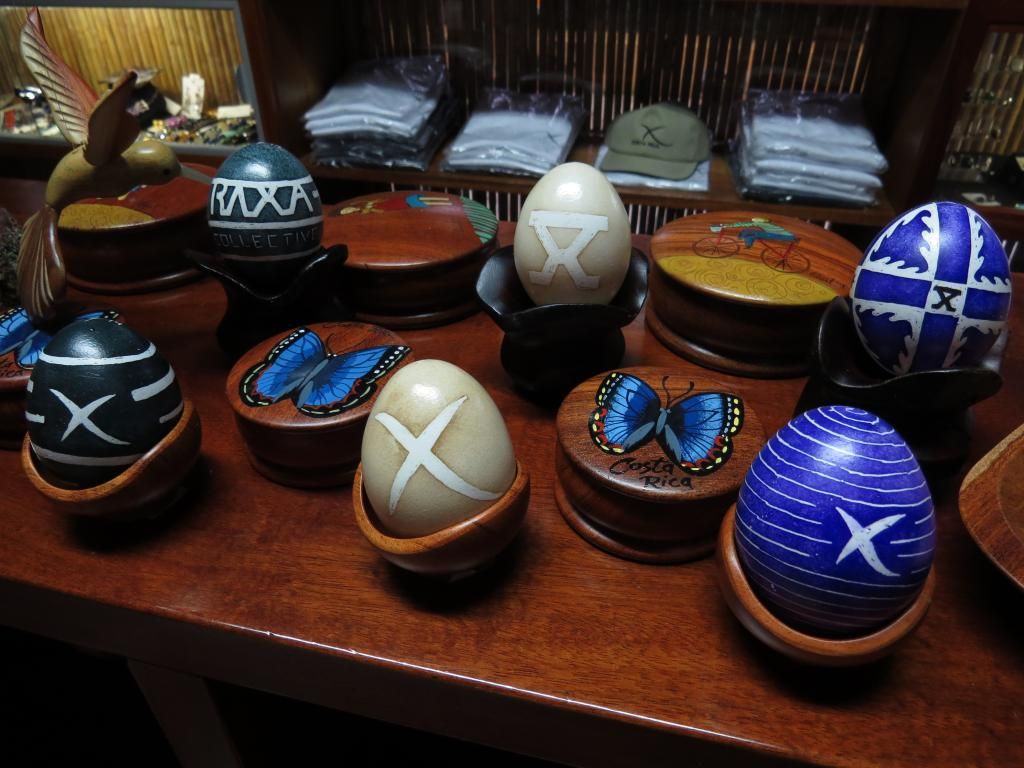
Sample eggs in the Xandari gift shop
Over the last four days, I made six sample eggs with parts of the designs I had drafted and shared in my last post on the subject. With a slightly limited palette of dye colors (black and purple so far) and an attempt at a home-made coffee-based dye (i.e. coffee), I followed three very simple color schemes and tried a couple different design themes.
I also tried my hand at some vinegar etching, which I had read about recently and seemed like a cool way to Continue reading
Pysanky (Part Three)
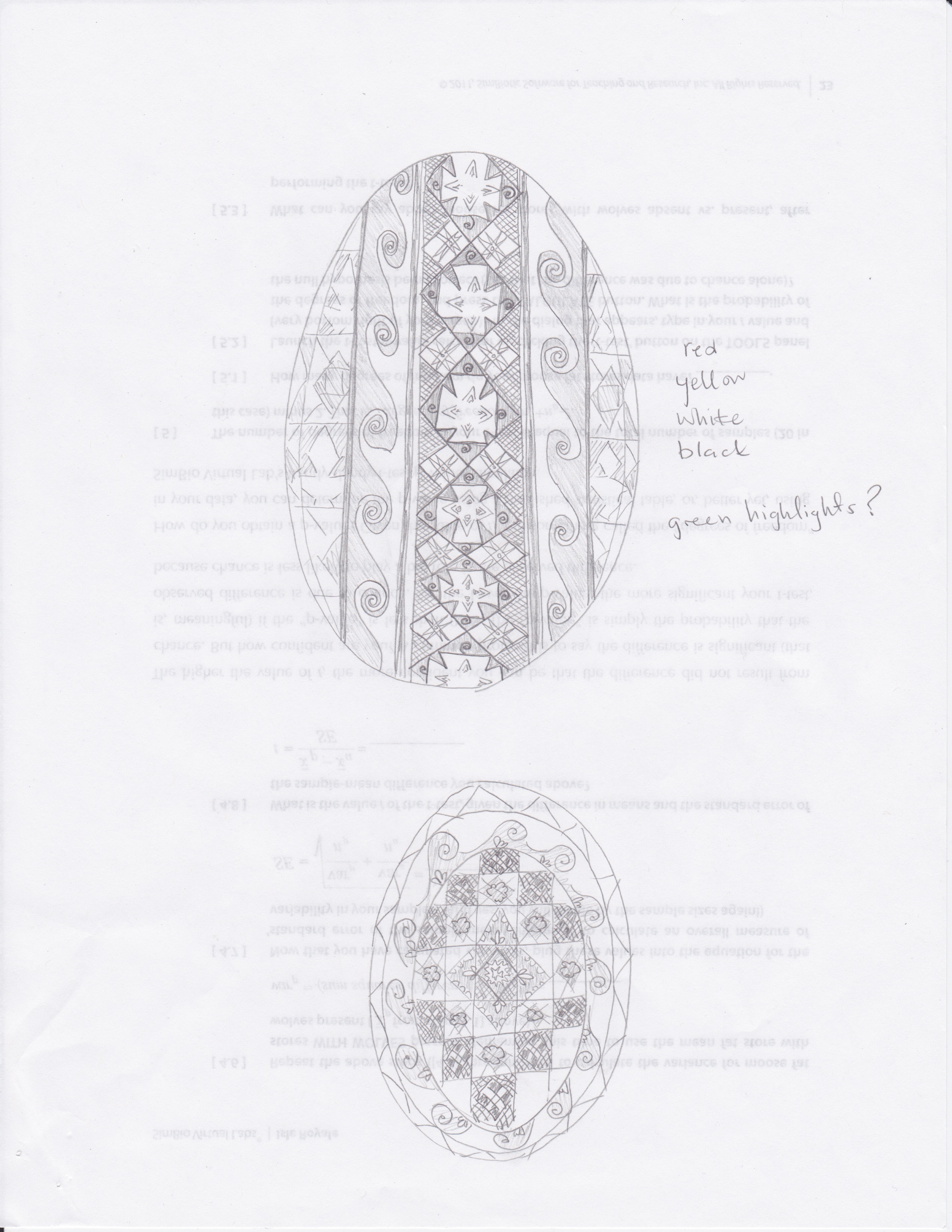
Egg blueprints for a previous project
Access Part One and Part Two if you haven’t checked them out yet!
As we reach the end of September, it may seem strange to be posting about a traditional art form that generally revolves around the festivities of Easter. Even though none of my egg creations have had religious foundations behind them, I’ve still always worked on them in the springtime around holy week because that’s the accepted time to be fashioning and gifting “Easter eggs.” Being at Xandari for the past several months, however, where the gift shop could always use another little shelf of locally-crafted artwork souvenirs, I’ve been thinking about making a round of trial eggs to put up for sale and see how it goes. After all, we could dedicate any profits to more artwork supplies for the Tacacorí school or another good local cause. Continue reading
Pysanky (Part Two)

A finished egg with most of its wax still present to give texture and a stained glass effect

my favorite traditional pysanky accomplishment so far

For my high school government teacher

a fun design

Darwinian

for a statistician

for a Northwestern University student

an unusual blue

an intense but rewarding design
To continue learning about the process of creating pysanky, Continue reading
Pysanky (Part One)
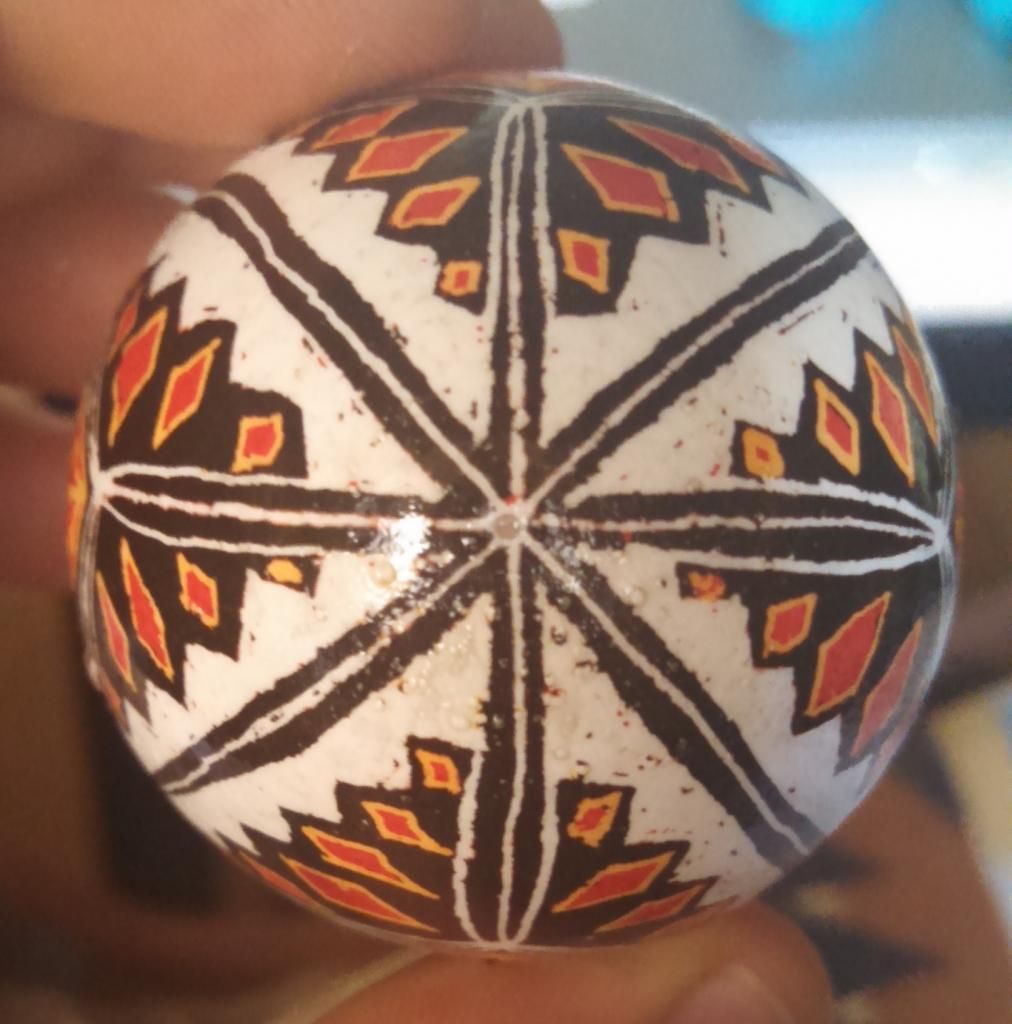 Several years ago, my aunt gave my mom and me a starter kit to make Ukrainian Easter eggs, knowing that the two of us enjoyed art and working on detail-oriented things. Included in the package was this book, which contains a great history of the tradition as it evolved in communities around the US through the work of Ukrainian immigrants. The book also, of course, explains how to make the eggs and includes many fantastic photos of eggs that the authors or their friends have created over the years, in countless patterns and color schemes. These exemplary eggs have served as perfect inspirational diving-boards for my mom and me as we create our own pysanky every year (when we have the time).
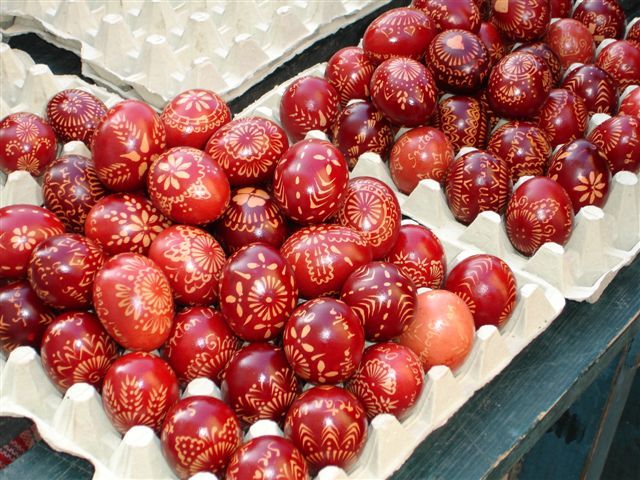
Croatian Easter eggs made for neighbors, friends, and family
The process always starts with creating the dyes. In Croatia, on the island of Koločep where my family lived for a year, we learned that villagers use a boiling water bath of red onion skins, walnuts, roots, and herbs. This creates a reddish dye that stains the egg a reddish color. The problem is that the boiling water also removes the wax that covered the egg before it was placed in the dye, so you only get two shades on the egg, but that’s Continue reading
 Organikos